0:00 / 0:00
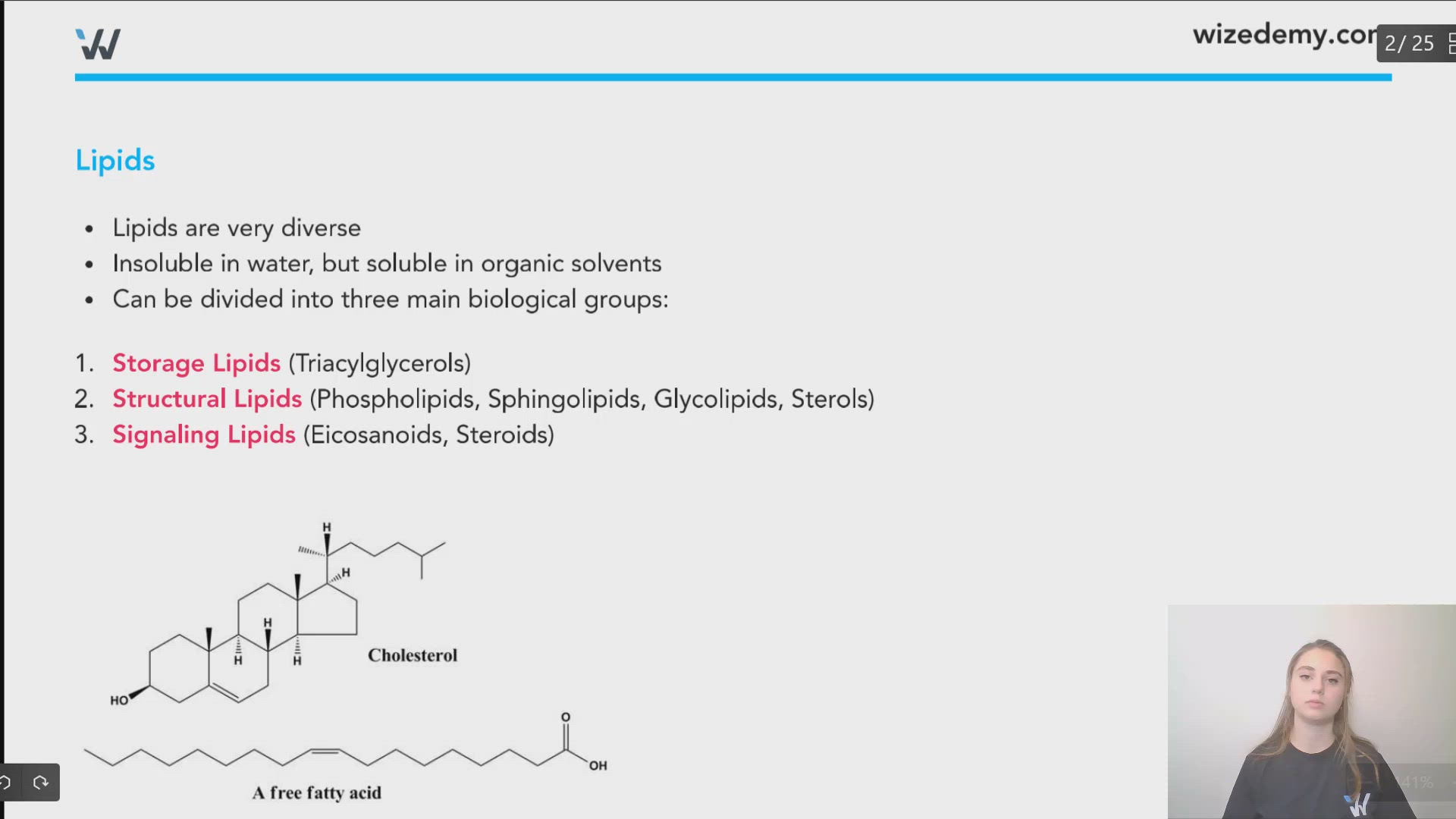
Lipids
- Lipids are very diverse
- Insoluble in water, but soluble in organic solvents
- Can be divided into three main biological groups:
- Storage Lipids (Triacylglycerols)
- Structural Lipids (Phospholipids, Sphingolipids, Glycolipids, Sterols)
- Signaling Lipids (Eicosanoids, Steroids)
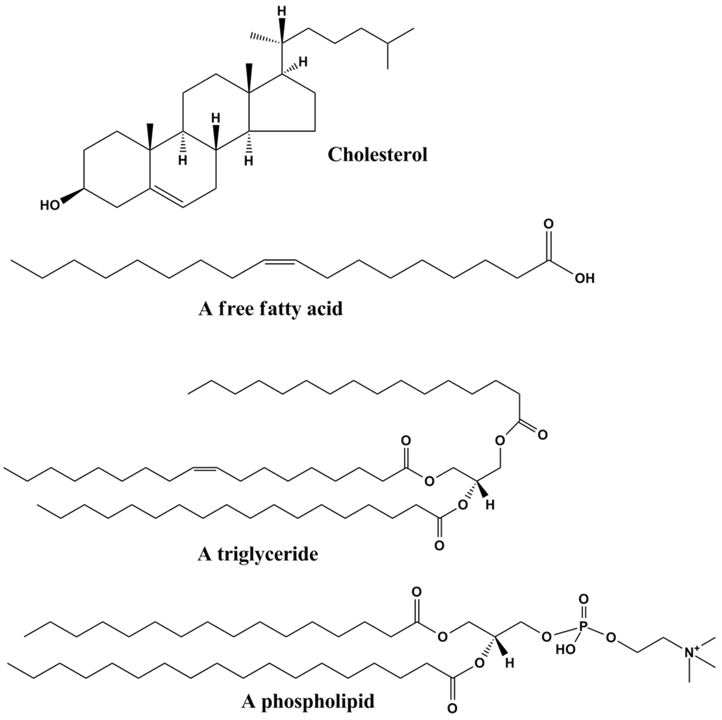
https://sco.wikipedia.org/wiki/File:Common_lipids_lmaps.png. Eoin Fahy. This file is licensed unner the Creative Commons Attribution-Share Alike 3.0 Unported license.
0:00 / 0:00
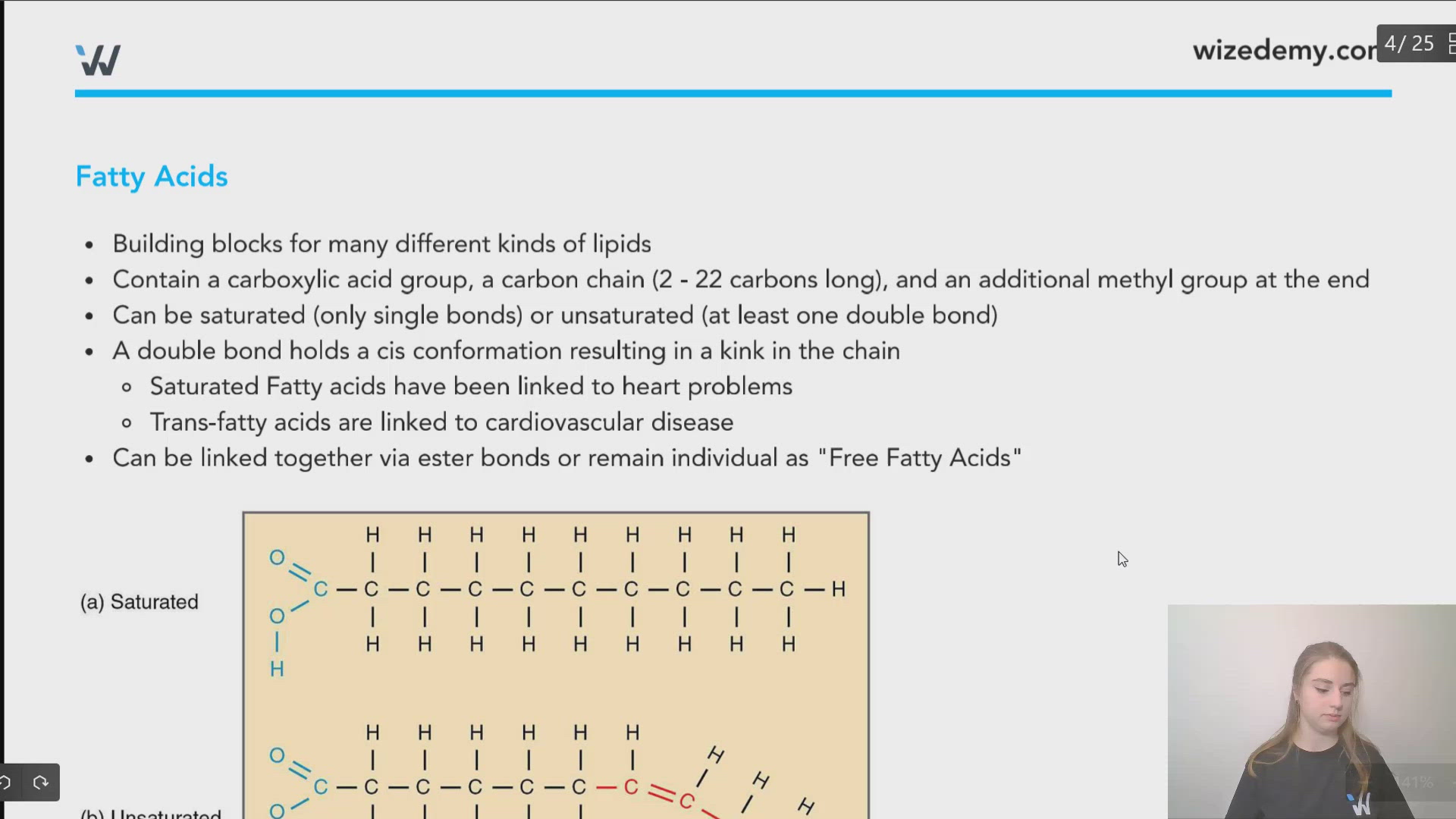
Fatty Acids
- Building blocks for many different kinds of lipids
- Contain a carboxylic acid group, a carbon chain (2 - 22 carbons long), and an additional methyl group at the end
- Can be saturated (only single bonds) or unsaturated (at least one double bond)
- A double bond holds a cis conformation resulting in a kink in the chain
- Saturated Fatty acids have been linked to heart problems
- Trans-fatty acids are linked to cardiovascular disease
- Can be linked together via ester bonds or remain individual as "Free Fatty Acids"
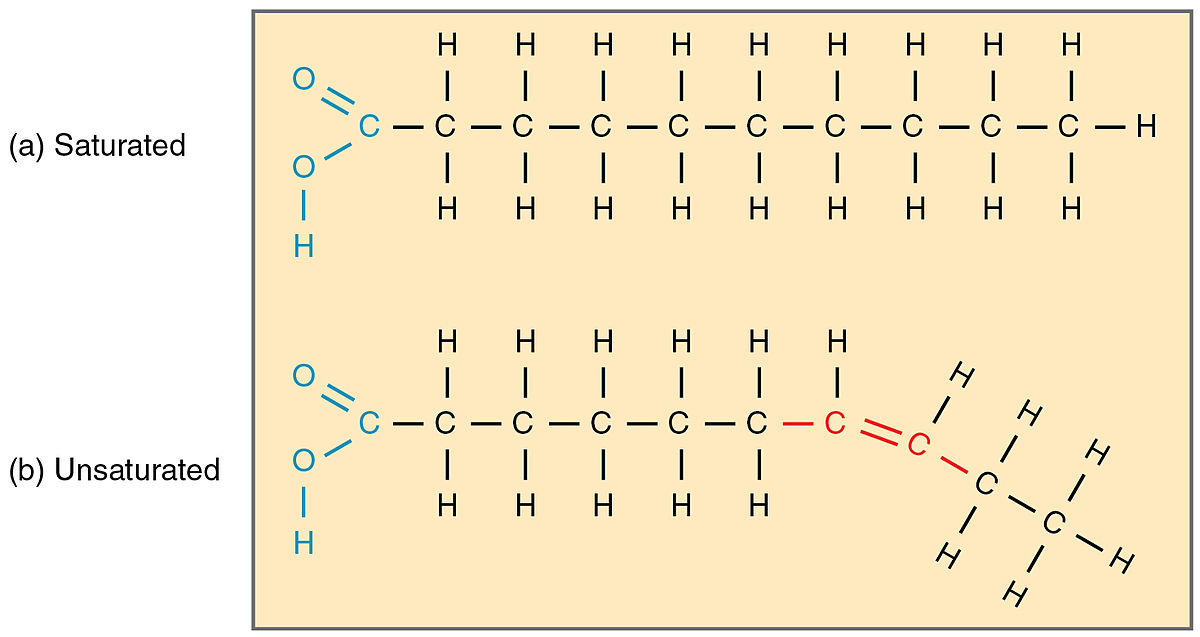
https://commons.wikimedia.org/wiki/File:221_Fatty_Acids_Shapes-01.jpg. OpenStax College. This file is licensed under the Creative Commons Attribution 3.0 Unported license.
Two ways of naming:
- Structural: [# C] : [# of Double Bonds]( ∆ position of double bond)
- i.e. for an fatty acid with 18 carbons (no double bonds): 18:0
- i.e. for the same fatty acid with two double bonds: 18:2 ( ∆ 6,8)
- Systematic (saturated): n-number of carbons-anoic acid
- i.e. for an fatty acid with 18 carbons: n-Octadecanoic acid
- Systematic (unsaturated): cis-position of carbon-enoic acid
- i.e. for the same fatty acid with a single double bond: cis-6-octadecenoic acid
- i.e. for the same fatty acid with two double bonds: cis-6,8-octadecadienoic acid
Effect of saturation on melting point:
- The longer the carbon chain, the higher the melting point of the fatty acid
- The more double bonds, the lower the melting point
Wize Tip
A more fluid membrane means more unsaturated fatty acids and a lower melting temperature
A less fluid membrane means less unsaturated fatty acids and a higher melting temperature
0:00 / 0:00
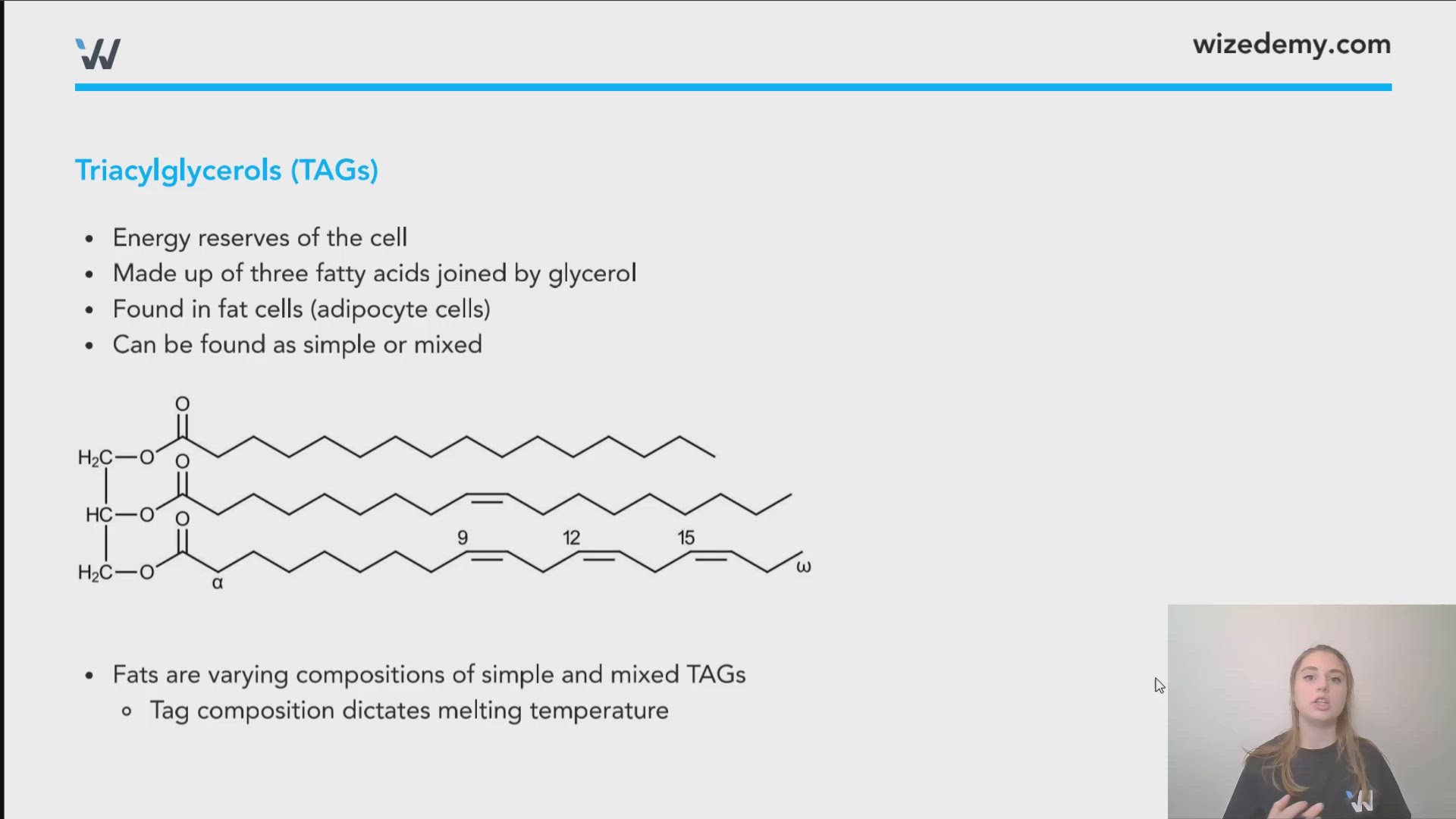
Triacylglycerols (TAGs)
- Energy reserves of the cell
- Made up of three fatty acids joined by glycerol
- Found in fat cells (adipocyte cells)
- Can be found as simple or mixed
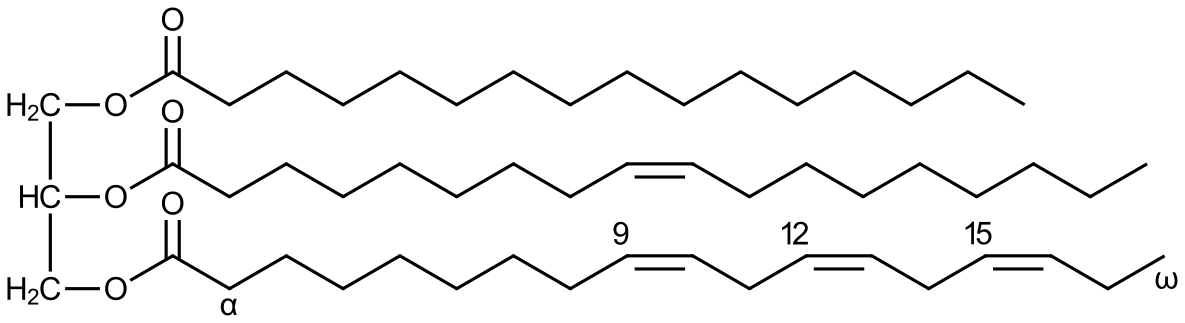
- Fats are varying compositions of simple and mixed TAGs
- TAG composition dictates melting temperature
0:00 / 0:00
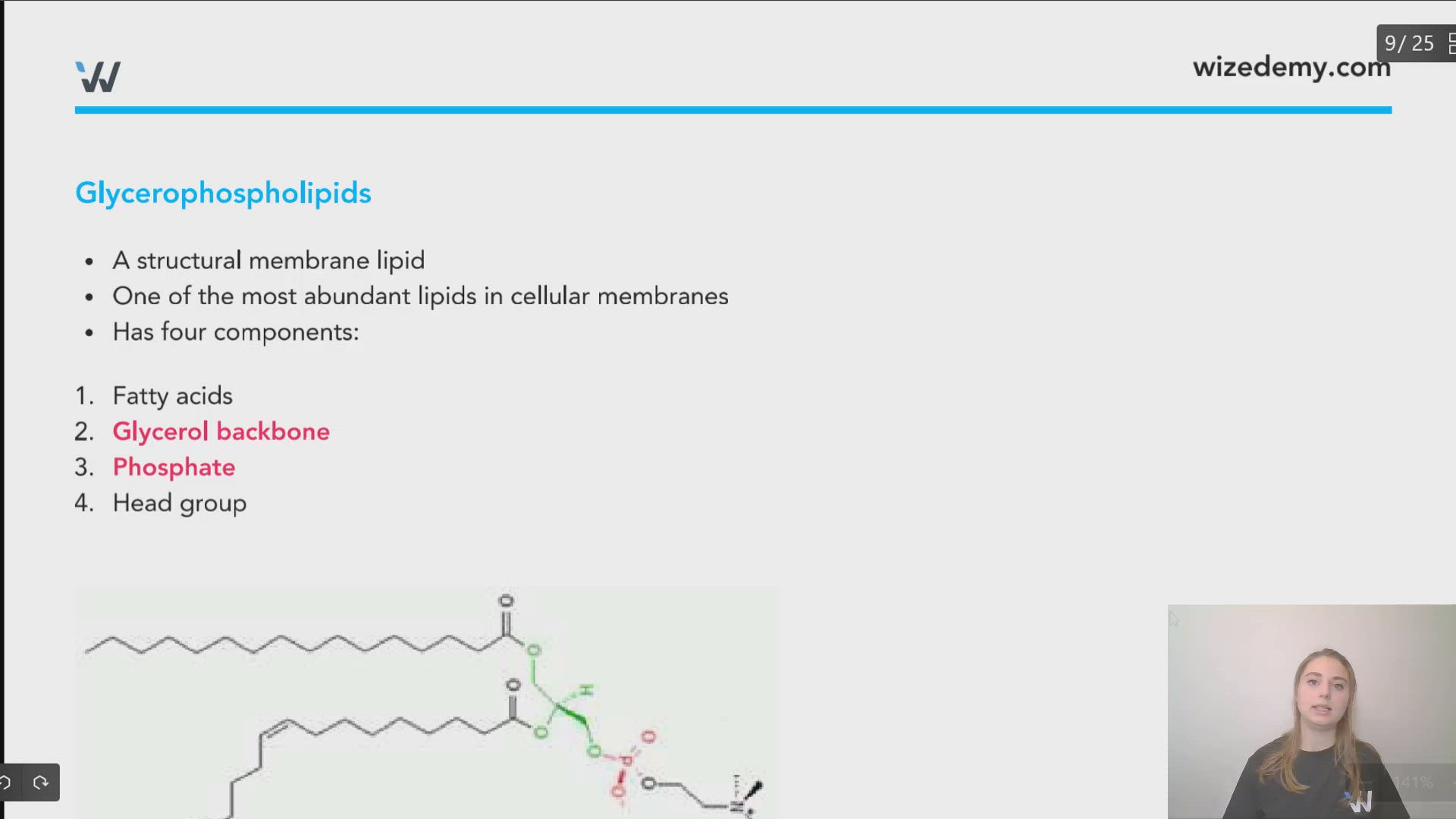
Glycerophospholipids
- A structural membrane lipid
- One of the most abundant lipids in cellular membranes
- Has four components:
- Fatty acids
- Glycerol backbone
- Phosphate
- Head group
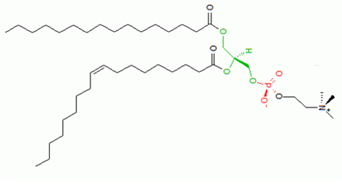
- Can be neutral (net neutral charge) or anionic (net negative charge)
0:00 / 0:00
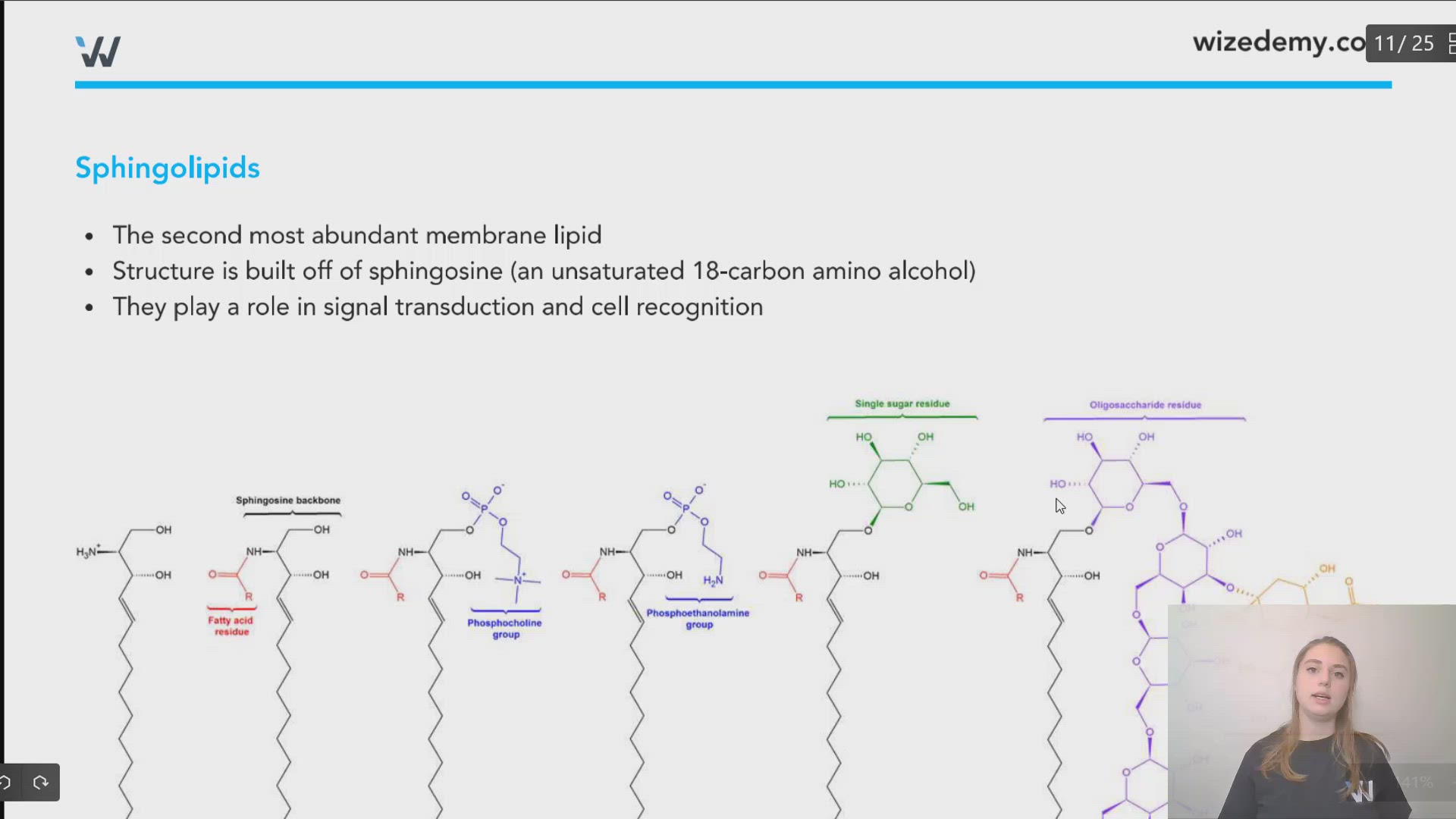
Sphingolipids
- The second most abundant membrane lipid
- Structure is built off of sphingosine (an unsaturated 18-carbon amino alcohol)
- They play a role in signal transduction and cell recognition
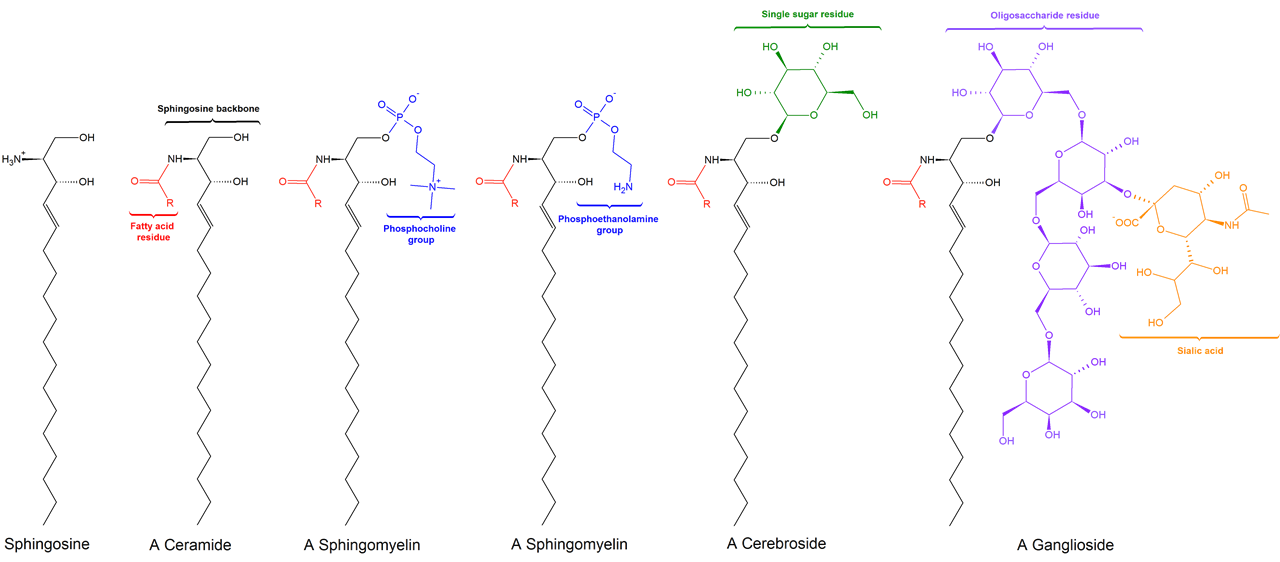
https://commons.wikimedia.org/wiki/File:Sphingolipids_general_structures.png. LHcheM. This file is licensed under the Creative Commons Attribution-Share Alike 3.0 Unported license.
- Sphingolipids are broken down in the lysosomes through hydrolytic enzymes (Glucosidase)
- Defects in these lipids or their metabolic processes often yield neurological disorders
- Gaucher disease
0:00 / 0:00
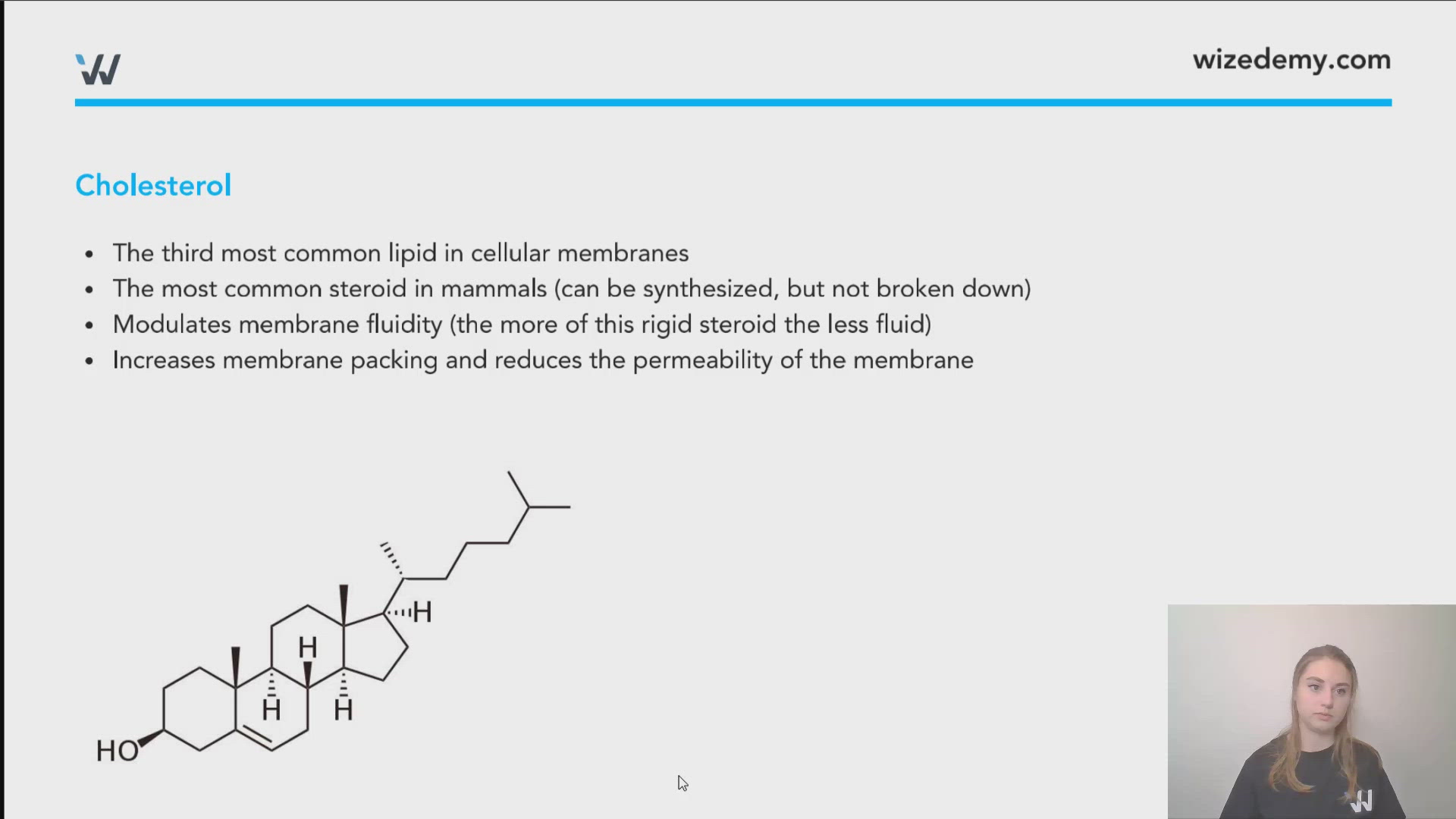
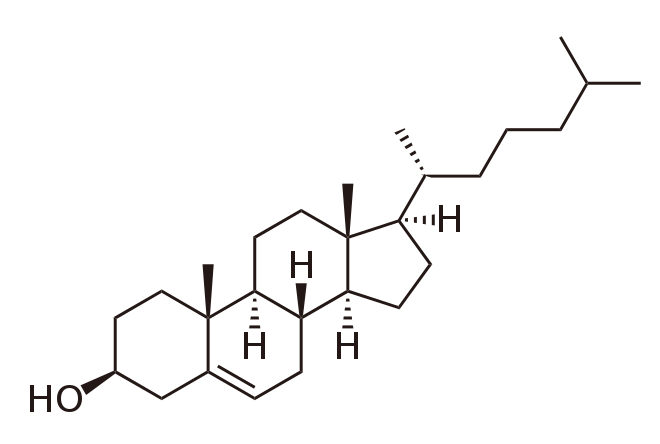
Cholesterol
- The third most common lipid in cellular membranes
- The most common steroid in mammals (can be synthesized, but not broken down)
- Modulates membrane fluidity (the more of this rigid steroid, the less fluid)
- Increases membrane packing and reduces the permeability of the membrane
Wize Tip
At low temperatures cholesterol prevents freezing by increasing fluidity
At high temperatures cholesterol reduces fluidity by adding rigidity
0:00 / 0:00
phospholipases hydrolyze ester bonds in glycerophospholipids converting them to fatty acids
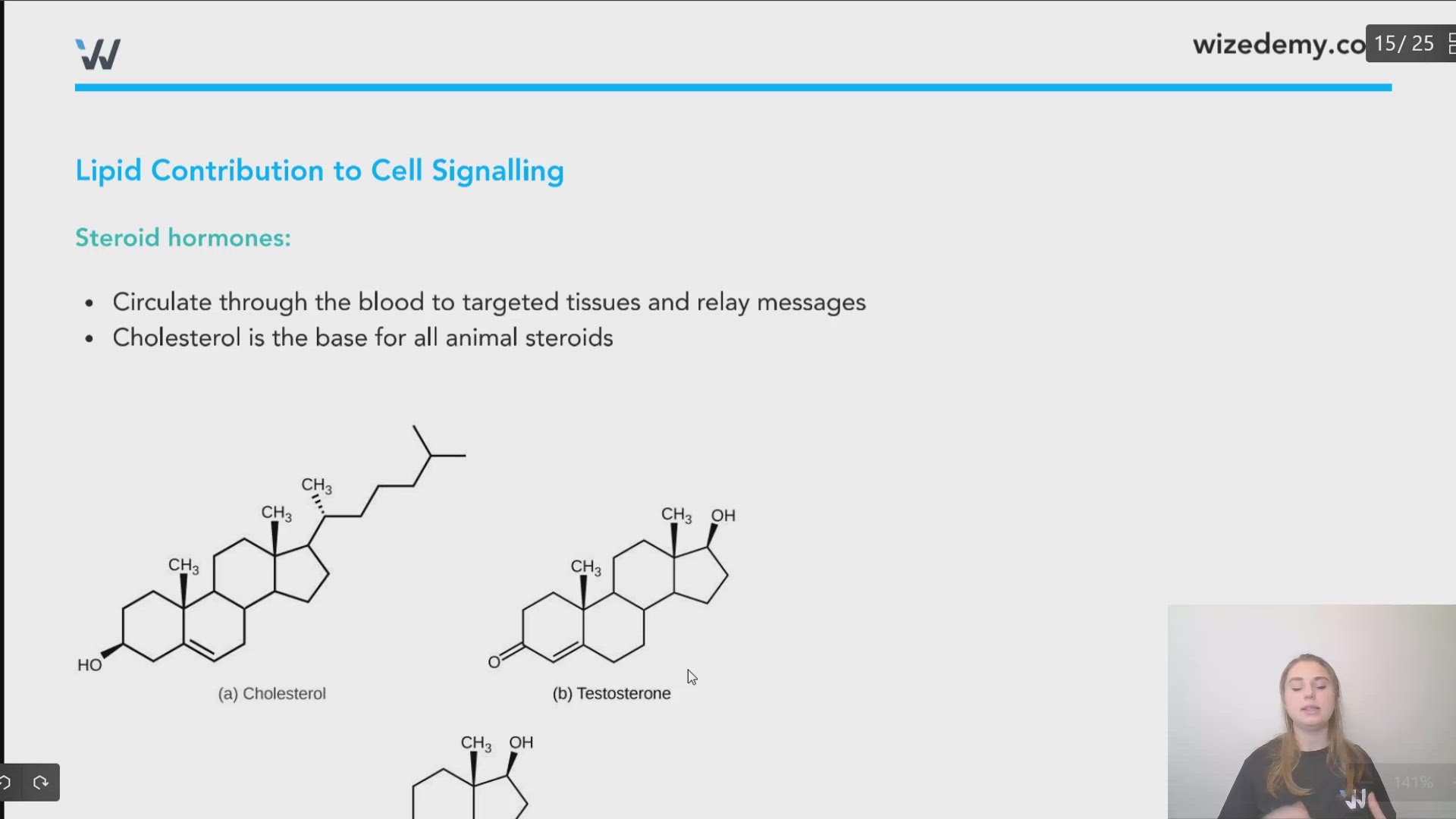
Steroid hormones:
- Circulate through the blood to targeted tissues and relay messages
- Cholesterol is the base for all animal steroids
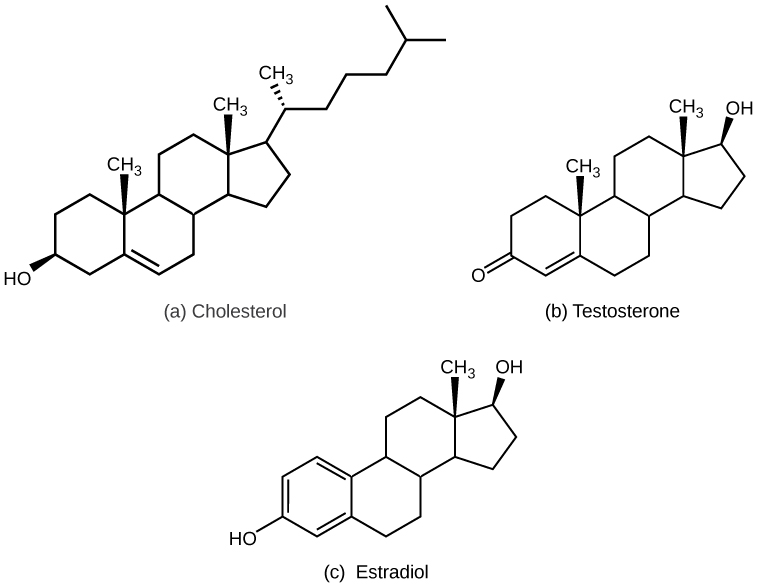
https://commons.wikimedia.org/wiki/File:Figure_37_01_01abc.jpg. CNX OpenStax. This file is licensed under the Creative Commons Attribution 4.0 International license.
Eicosanoid Signaling:
- Phospholipids contribute to signaling through local chemical signals
- phospholipases hydrolyze ester bonds in glycerophospholipids converting them to fatty acids
- Several different phospholipases are present and they each break different bonds along the glycerol/carbon chain
- These cleaved signaling molecules are precursors of eicosanoids
- Eicosanoid signaling pathways are involved in inflammation, heat, pain, smooth muscle contraction, pregnancy and so on

0:00 / 0:00
What is the name of this fatty acid:
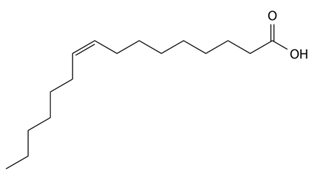
a) 16:2 ( ∆9)
b) n-hexadecenoic acid
c) cis-9-hexadecenoic acid
d) cis-7-hexadecenoic acid
Number the carbons starting from the carboxyl group. This means that the double bond (which is in cis conformation) is on carbon 9. Using standard naming procedure c) is the proper choice.
0:00 / 0:00
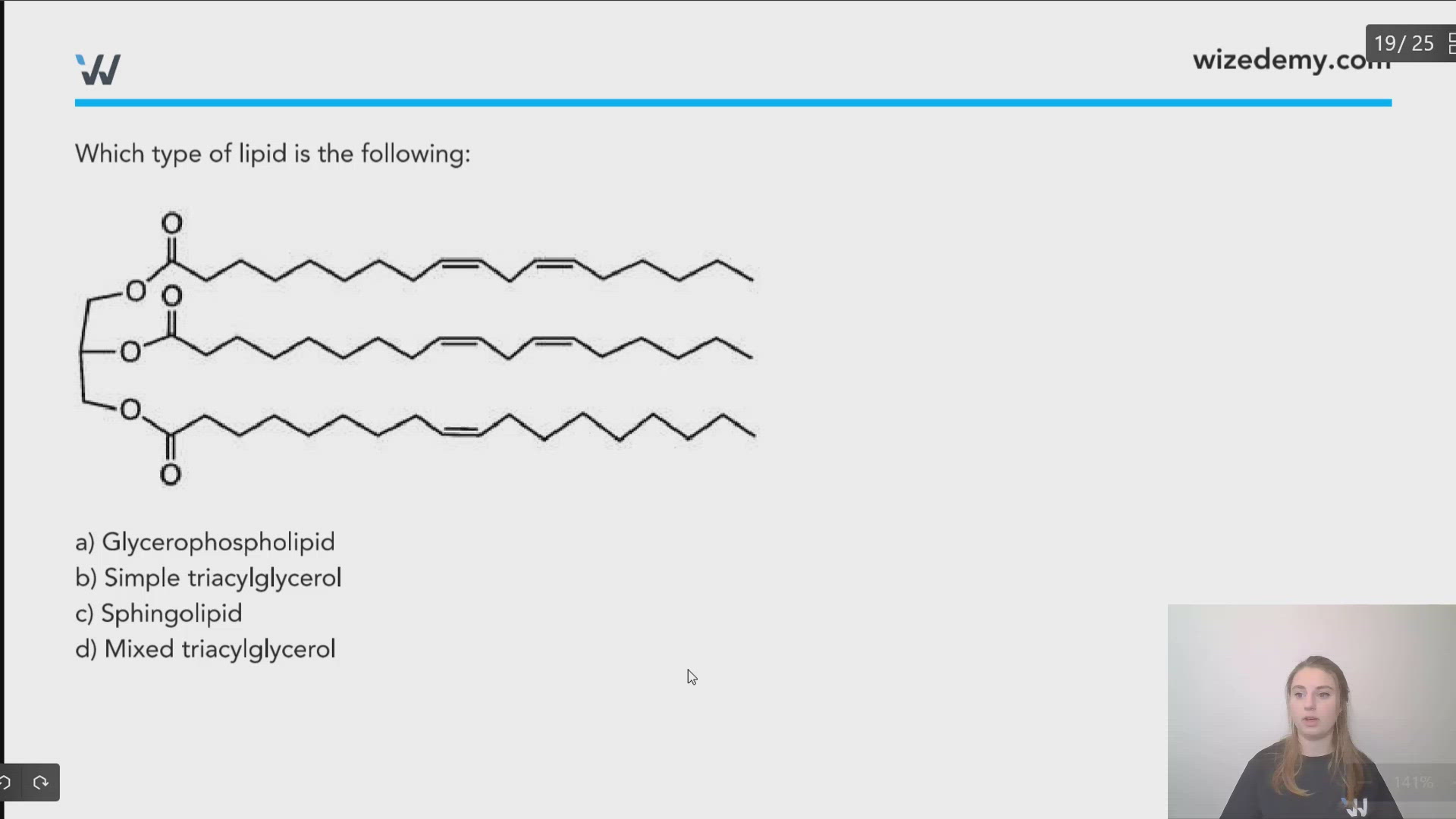
Which type of lipid is the following:
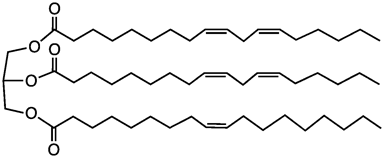
a) Glycerophospholipid
b) Simple triacylglycerol
c) Sphingolipid
d) Mixed triacylglycerol
d) This is a lipid consisting of three fatty acids joined to a glycerol molecule via ester bonds, making is a triacylglycerol. Since the three fatty acid chains are not identical it is mixed.
https://commons.wikimedia.org/wiki/File:TriglycerideSunflower.png. Smokefoot. This file is licensed under the Creative Commons Attribution-Share Alike 3.0 Unported license.
Which statement about fatty acids is false?