0:00 / 0:00
The Lipid Bilayer
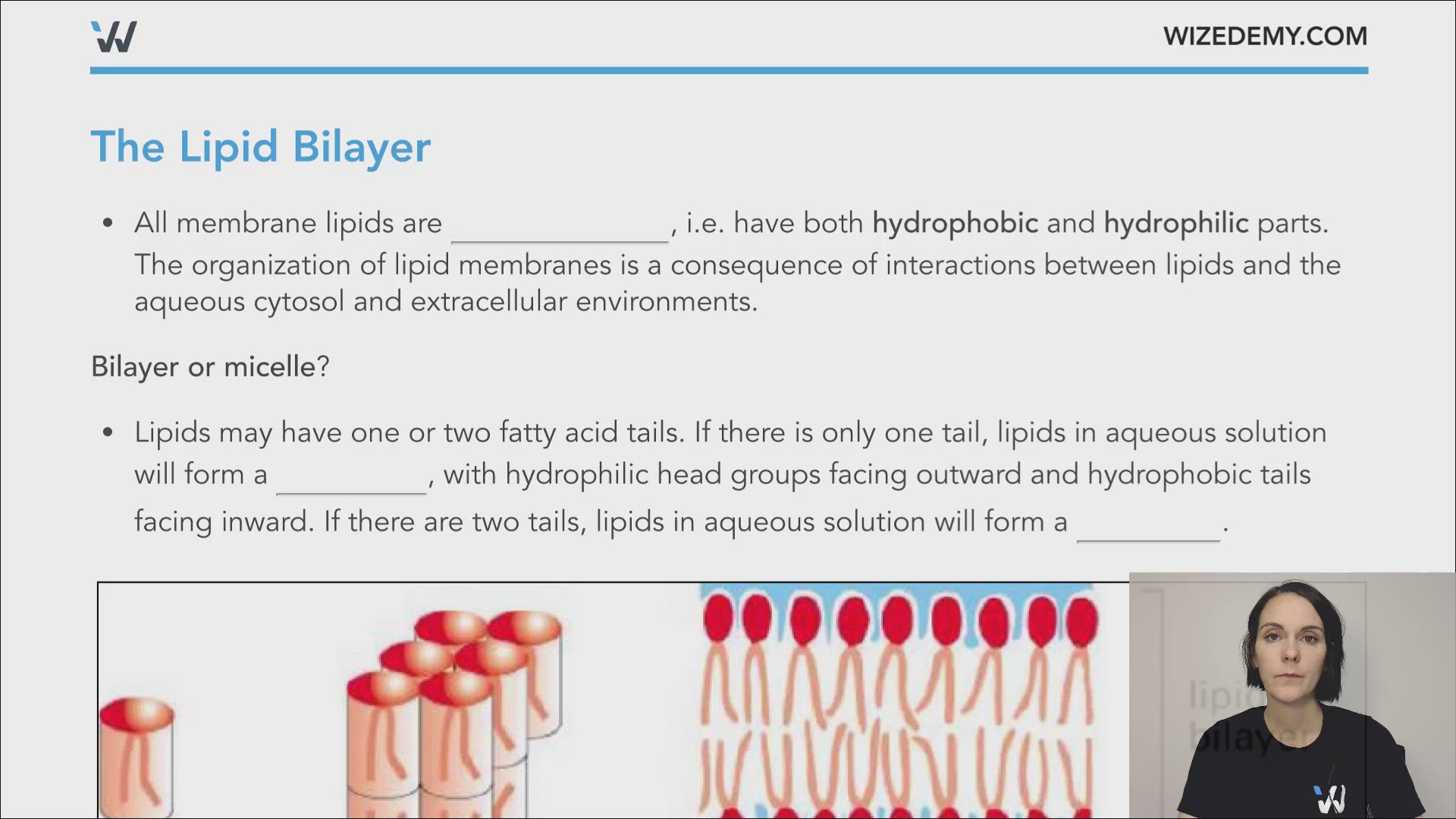
- All membrane lipids areamphipathic, i.e. have both hydrophobic and hydrophilic parts. The organization of lipid membranes is a consequence of interactions between lipids and the aqueous cytosol and extracellular environments.
Bilayer or micelle?
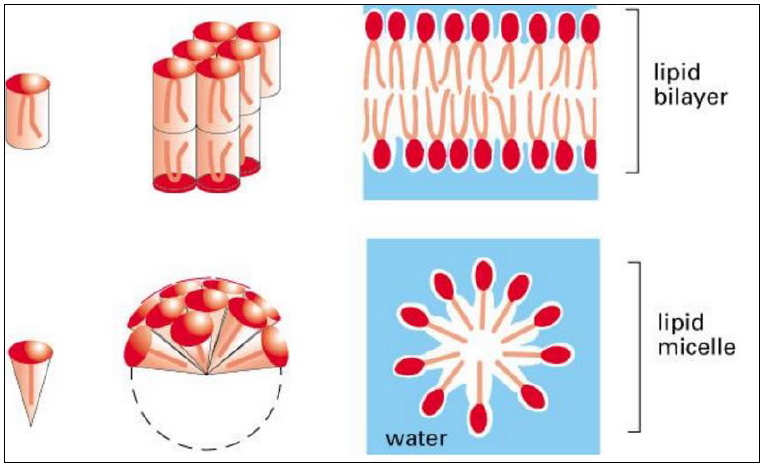
- Lipids may have one or two fatty acid tails. If there is only one tail, lipids in aqueous solution will form amicelle, with hydrophilic head groups facing outward and hydrophobic tails facing inward. If there are two tails, lipids in aqueous solution will form abilayer.
Membrane lipids
- Phospholipids: main component of biological membranes; consist of a glycerol (or sphingosine) backbone attached to twofatty acidsand a polarheadgroup
- fatty acid: carboxylic acid with a long hydrocarbon chain; ester bonds with glycerol
- forms a closed bilayer, with hydrophilic head groups facing outward and hydrophobic fatty acid tails facing inward.

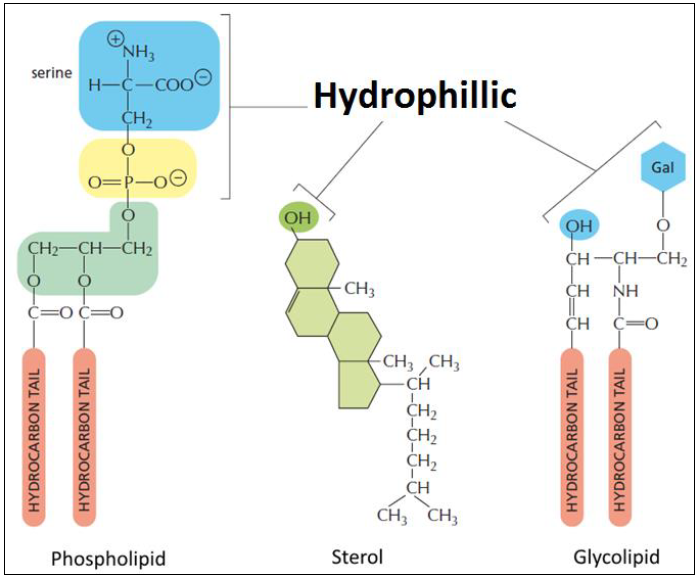
- Sterols: ring-based structure with a hydrocarbon tail on one end (hydrophobic) and an alcohol group on the other end (hydrophilic); e.g. cholesterol and phytosterols
- modulates membrane fluidity
- Glycolipids: like a phospholipid, but the polar region contains one or more sugar molecules, instead of a phosphate
- some glycolipids are involved in cell-cell interactions
0:00 / 0:00
Membrane Lipid Assembly
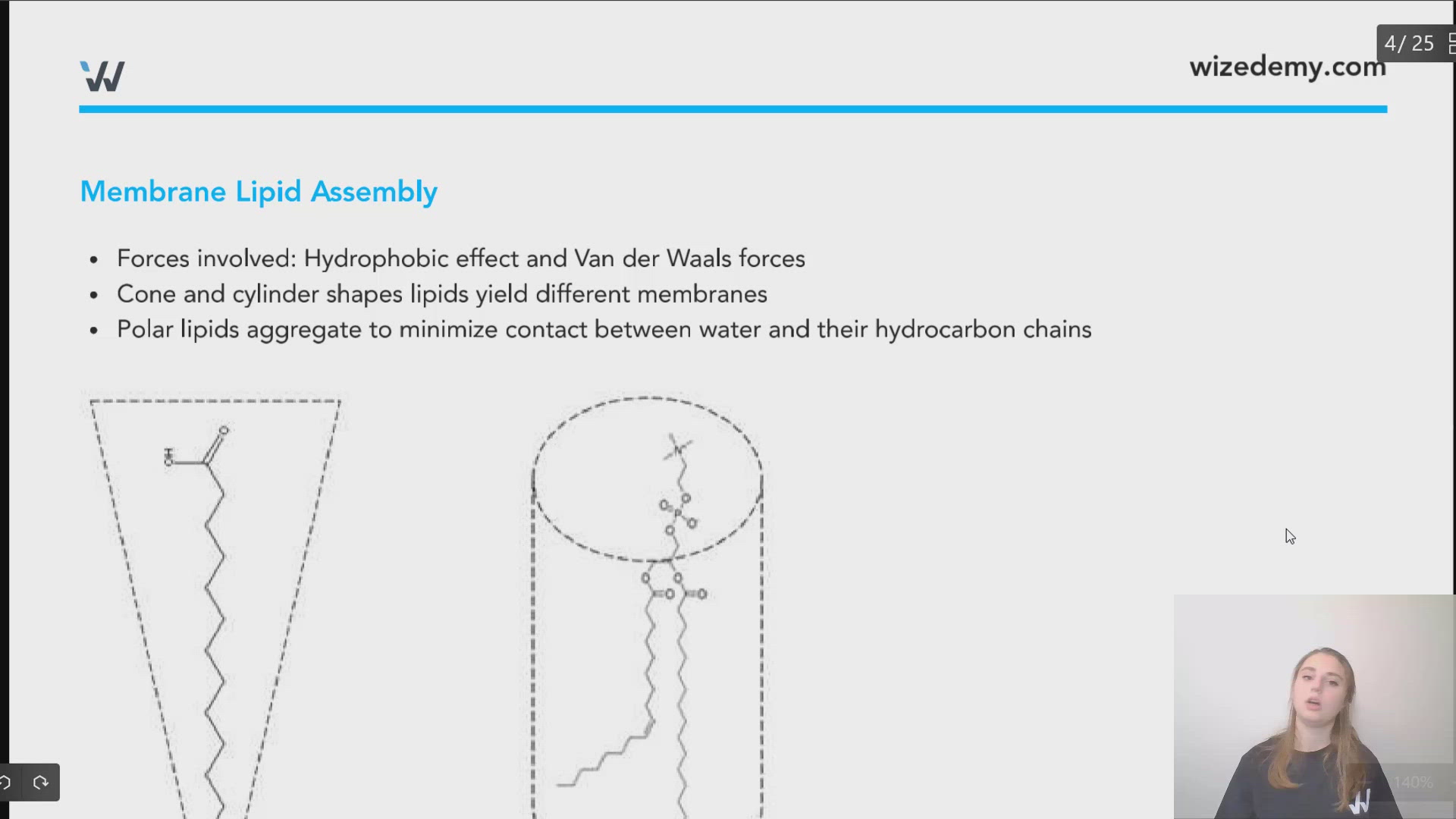
- Forces involved: Hydrophobic effect and Van der Waals forces
- Cone and cylinder shapes lipids yield different membranes
- Polar lipids aggregate to minimize contact between water and their hydrocarbon chains
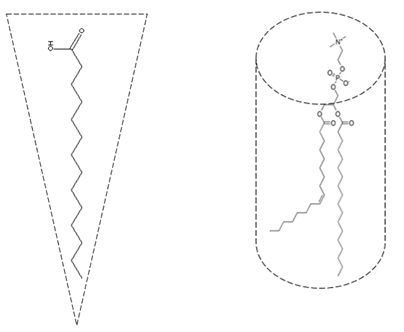
- Cone shaped lipids form Micelles while cylinder shaped lipids form bilayers
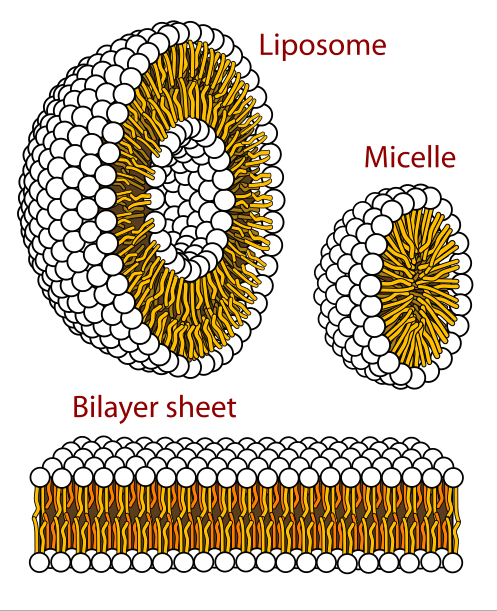
https://commons.wikimedia.org/wiki/File:Phospholipids_aqueous_solution_structures.svg. Mariana Ruiz Villarreal. This work has been released into the public domain.
0:00 / 0:00
Membrane Fluidity
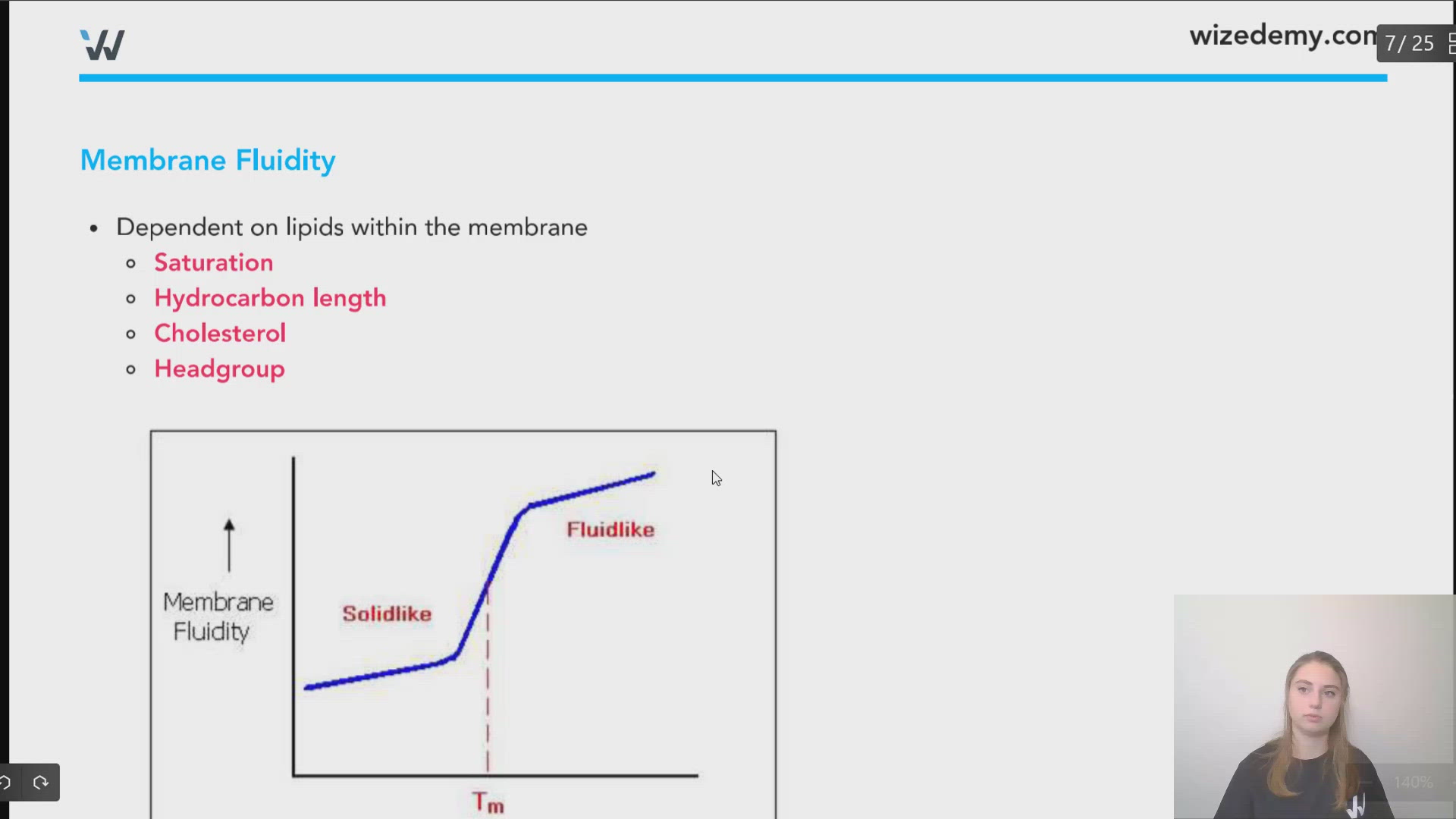
- Dependent on lipids within the membrane
- Saturation
- Hydrocarbon length
- Cholesterol
- Headgroup
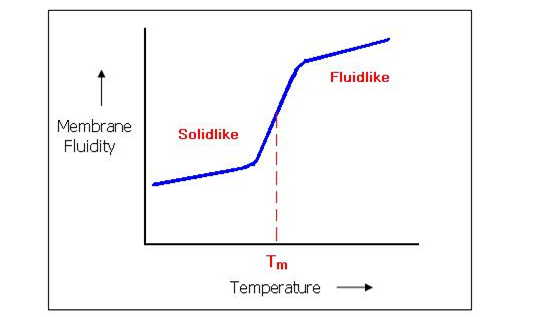
- Tm: Phase Transition Temperature (midway point between gel-like and fluid membranes)
- As the membrane moves form solid to fluid, the hydrocarbons change from anti-conformation to gauche conformation resulting in more "kinks"
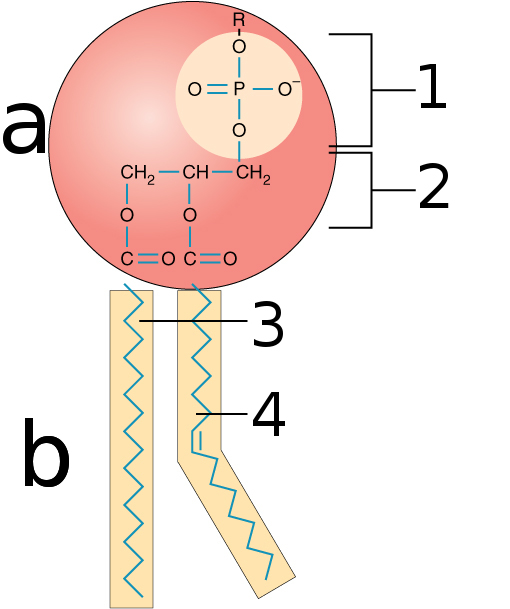
R Groups affect Tm:
- Choline
- Ethanolamine
- Glycerol
The longer the chain length, the higher the Tm
- The tighter the packing of the lipids, the more solid the membrane
- At lower temperatures, membranes have more unsaturated hydrocarbon chains
- At Higher temperatures, membranes have more saturated hydrocarbon chains
Cholesterol acts as a "buffer"
- It disrupts lipid packing as well as provides rigidity
https://commons.wikimedia.org/wiki/File:0301_Phospholipid_Structure_labeled.jpg. OpenStax. This file is licensed under the Creative Commons Attribution 3.0 Unported license.
High Temperature Adaptations
Hypothermophilic archaea have a lipid called caldarchaeol which stabilizes the membrane even more at high temperatures
- Hydrocarbon chains are linked with glycerol at both ends

0:00 / 0:00
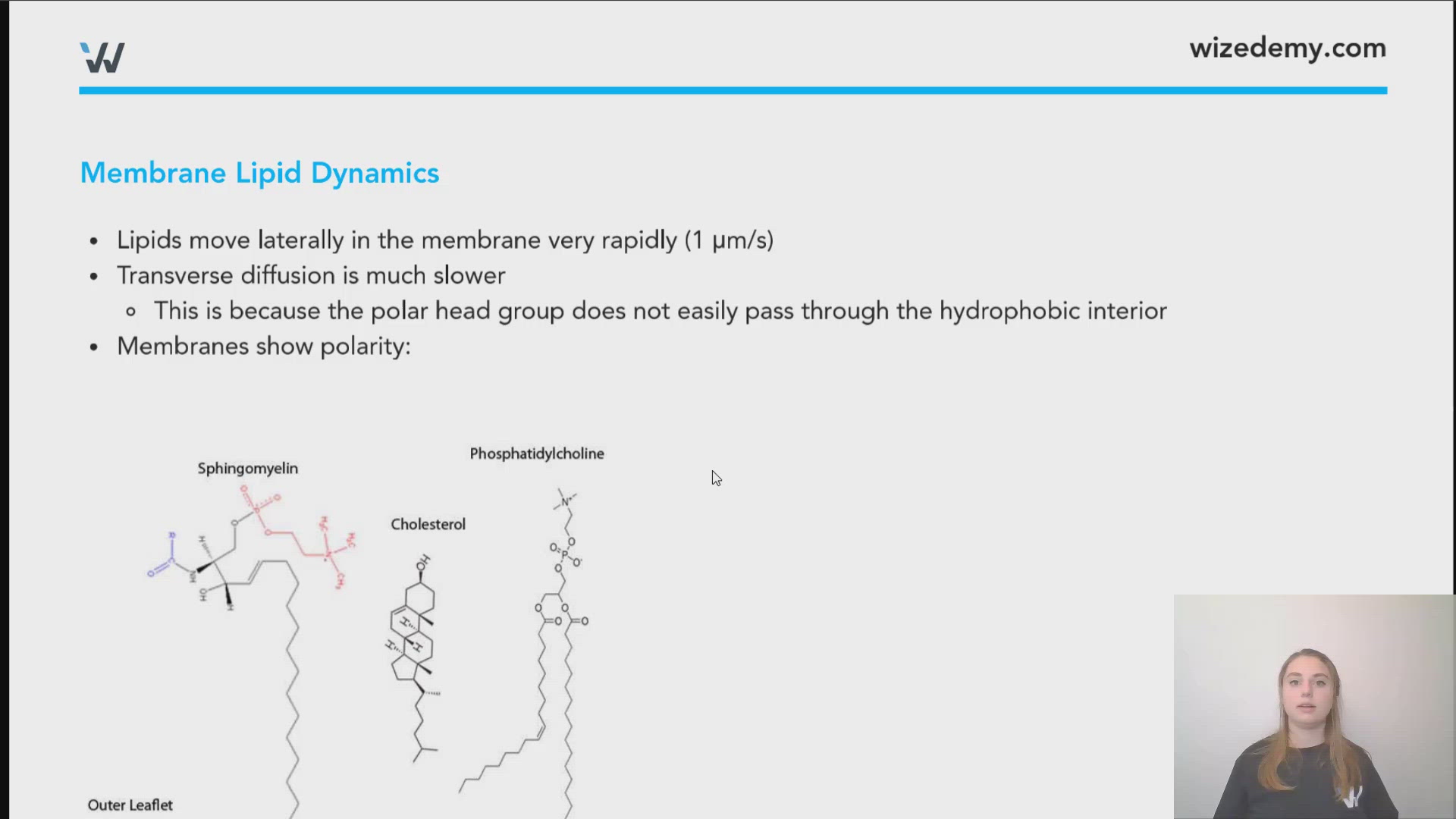
Membrane Lipid Dynamics
- Lipids move laterally in the membrane very rapidly (1 μm/s)
- Transverse diffusion is much slower
- This is because the polar head group does not easily pass through the hydrophobic interior
- Membranes show polarity:
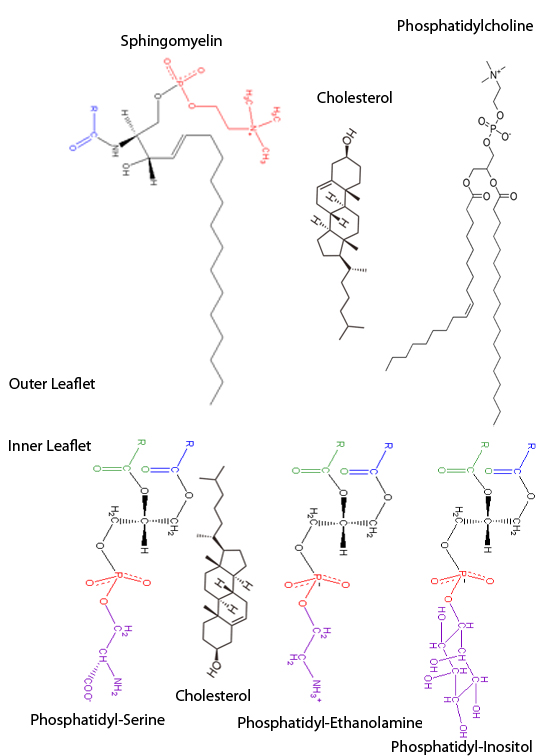
https://commons.wikimedia.org/wiki/File:Erythrocyte_Membrane_lipids.jpg. BorisTM. This file is licensed under the Creative Commons Attribution-Share Alike 3.0 Unported license.
Transverse Diffusion
- Flippases move lipids from the outer membrane to the inner membrane
- Floppases move lipids from the inner membrane to outer membrane
- Scramblases transport lipids from either side of the membrane to the other
0:00 / 0:00
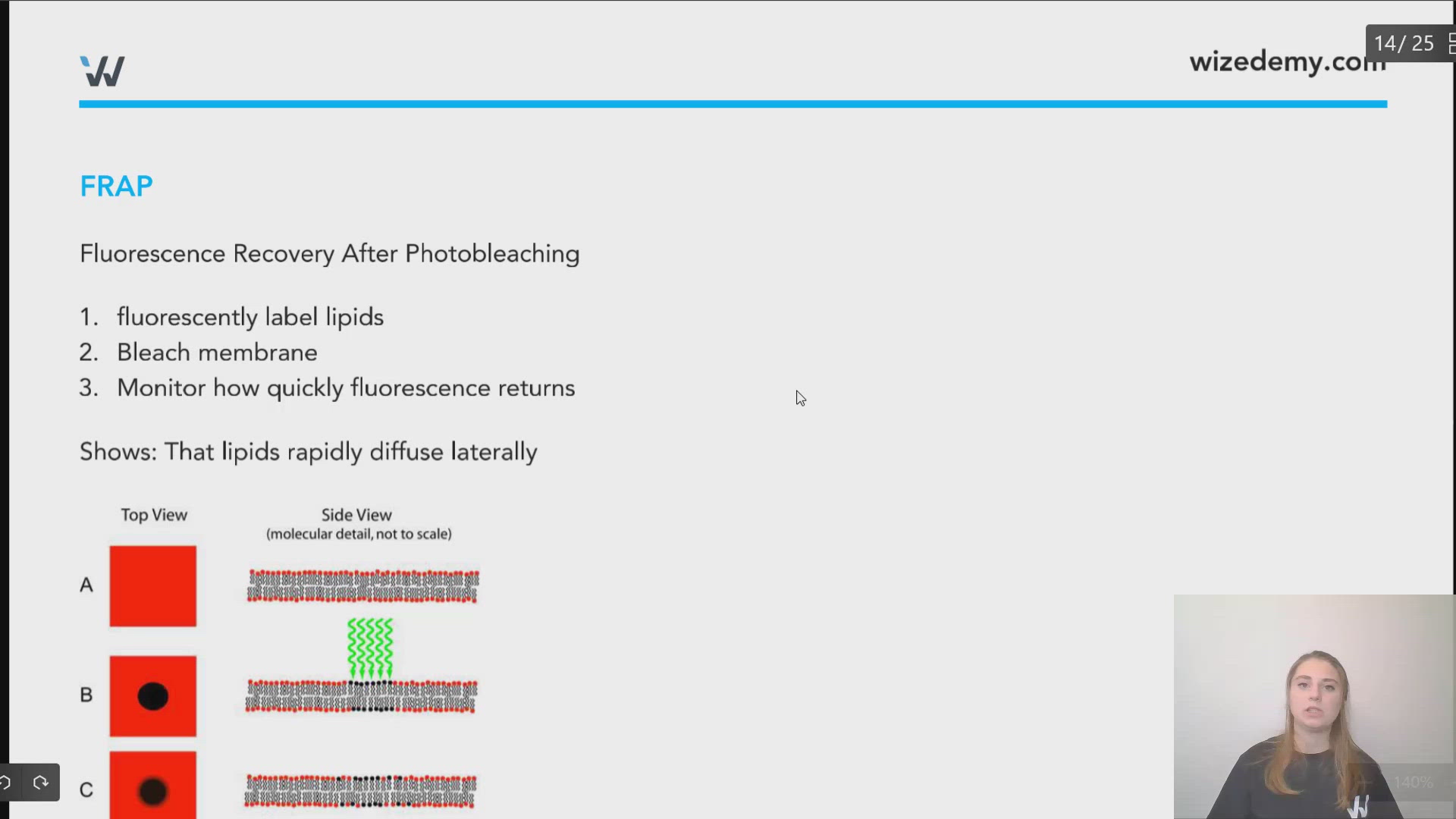
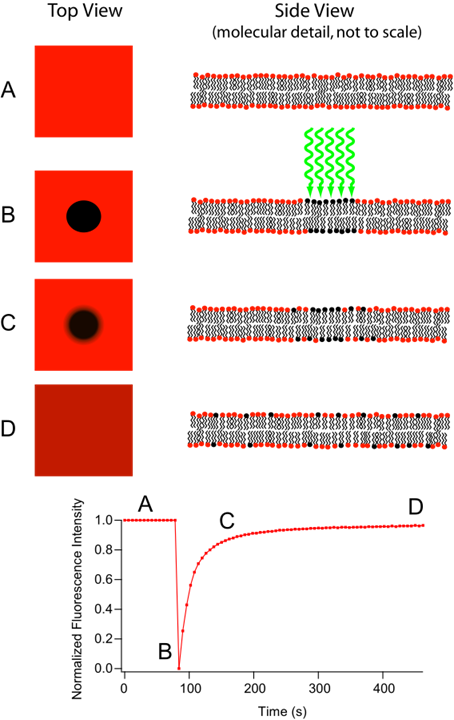
FRAP
Fluorescence Recovery After Photobleaching
- fluorescently label lipids
- Bleach membrane
- Monitor how quickly fluorescence returns
Shows: That lipids rapidly diffuse laterally
https://en.m.wikipedia.org/wiki/File:Frap_diagram.svg. MDougM. release this work into the public domain.
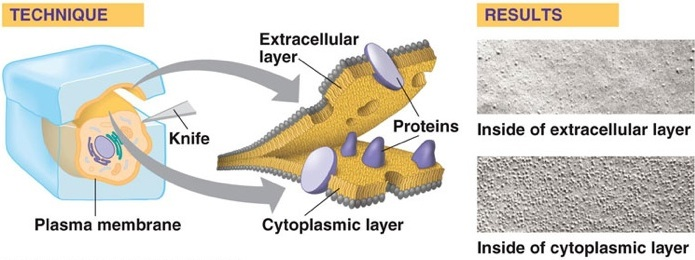
Freeze Fracture EM of the Membrane
- Freeze cells to -196oC in liquid nitrogen
- Fracture membrane (opens along interface of lipids)
- Separate the two halves
- Make a carbon-metal replica of each half
- Observe via electron microscopy (EM)
Shows: That membrane protein distribution is random
https://commons.wikimedia.org/wiki/File:FreezefractureMU.jpg. Dr. Charles H. Mallery. This work has been released into the public domain
Single Molecule tracking of Phospholipids/proteins
- Label phospholipid/protein
- Place in a live kidney (contains compartments)
- Track with microscope
Shows: That lipids diffuse quickly and freely between compartments, but protein remained contained within compartments longer
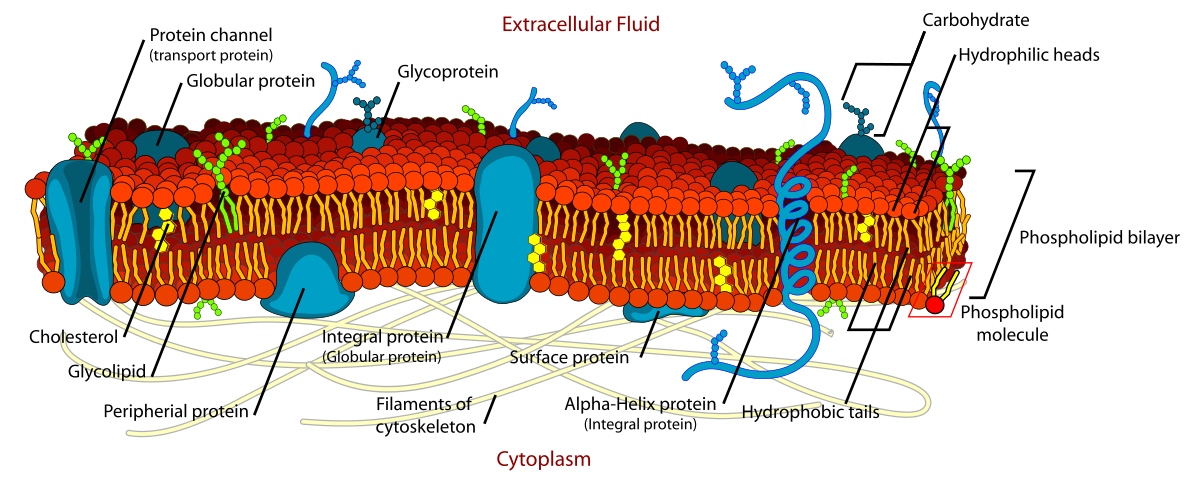
- Diffusion must be somewhat impeded
- Actin cytoskeleton barriers on the underside of membrane
- Organelle membranes contacting the plasma membrane
- Extracellular matrix linked to the membrane proteins
- Immobile membrane protein and lipid clusters
https://en.wikipedia.org/wiki/File:Cell_membrane_detailed_diagram_edit2.svg. Mariana Ruiz. This work is licensed under the Creative Commons Attribution-ShareAlike 3.0 License.
0:00 / 0:00
True or False:
Lipids diffuse through the membrane more freely than proteins.
True
Proteins are larger and can be more easily impeded in their movement. Also lipid and protein tracking experiments have shown that proteins are more limited in their movements than lipids are.
0:00 / 0:00
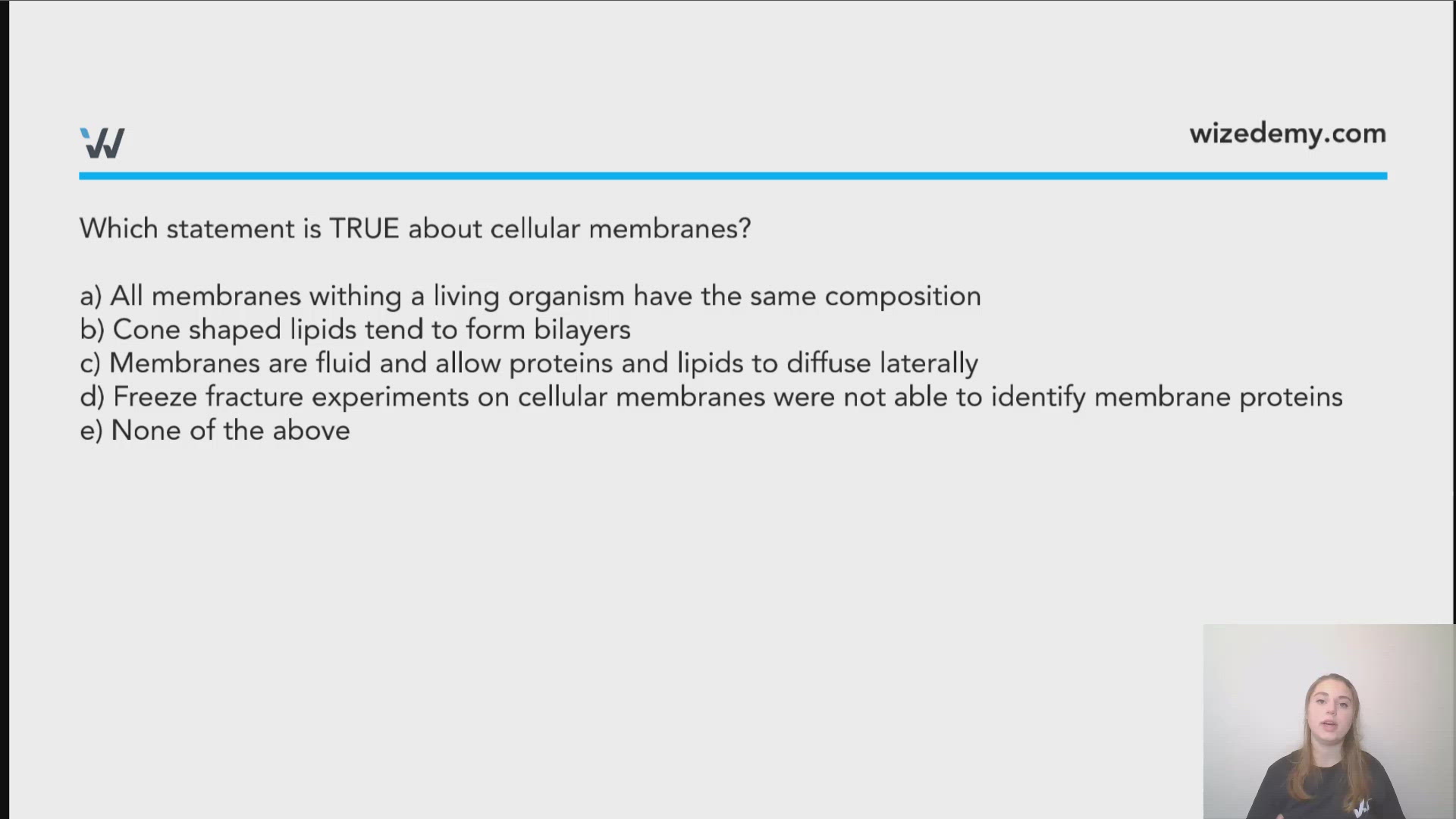
Which statement is TRUE about cellular membranes?
a) All membranes withing a living organism have the same composition
b) Cone shaped lipids tend to form bilayers
c) Membranes are fluid and allow proteins and lipids to diffuse laterally
d) Freeze fracture experiments on cellular membranes were not able to identify membrane proteins
e) None of the above
c) The fluid mosaic model of cellular membranes show that protein composition is random and both lipids and proteins can diffuse laterally across the membrane.
Match the transport protein to the function.
A.
Transport lipids from either side of the membrane to the other
B.
Transport lipids from the outer membrane to the inner membrane
C.
Transport lipids from the inner membrane to the outer membrane
Flippases
Floppases
Scramblases