Cell Signaling Overview
Types of ligands
Types of receptors
Secondary Messengers
GPCRs
Receptor Tyrosine Kinase
Signalling Lipids
Practice: Secondary messenger
Practice: G-Protein Coupled Receptors
Practice2: G-Protein Coupled Receptors
Practice3: G-Protein Coupled Receptors
Practice: Receptor tyrosine kinases
Practice2: Receptor tyrosine kinases
Practice3: Receptor tyrosine kinases
Popular Courses
Find My Course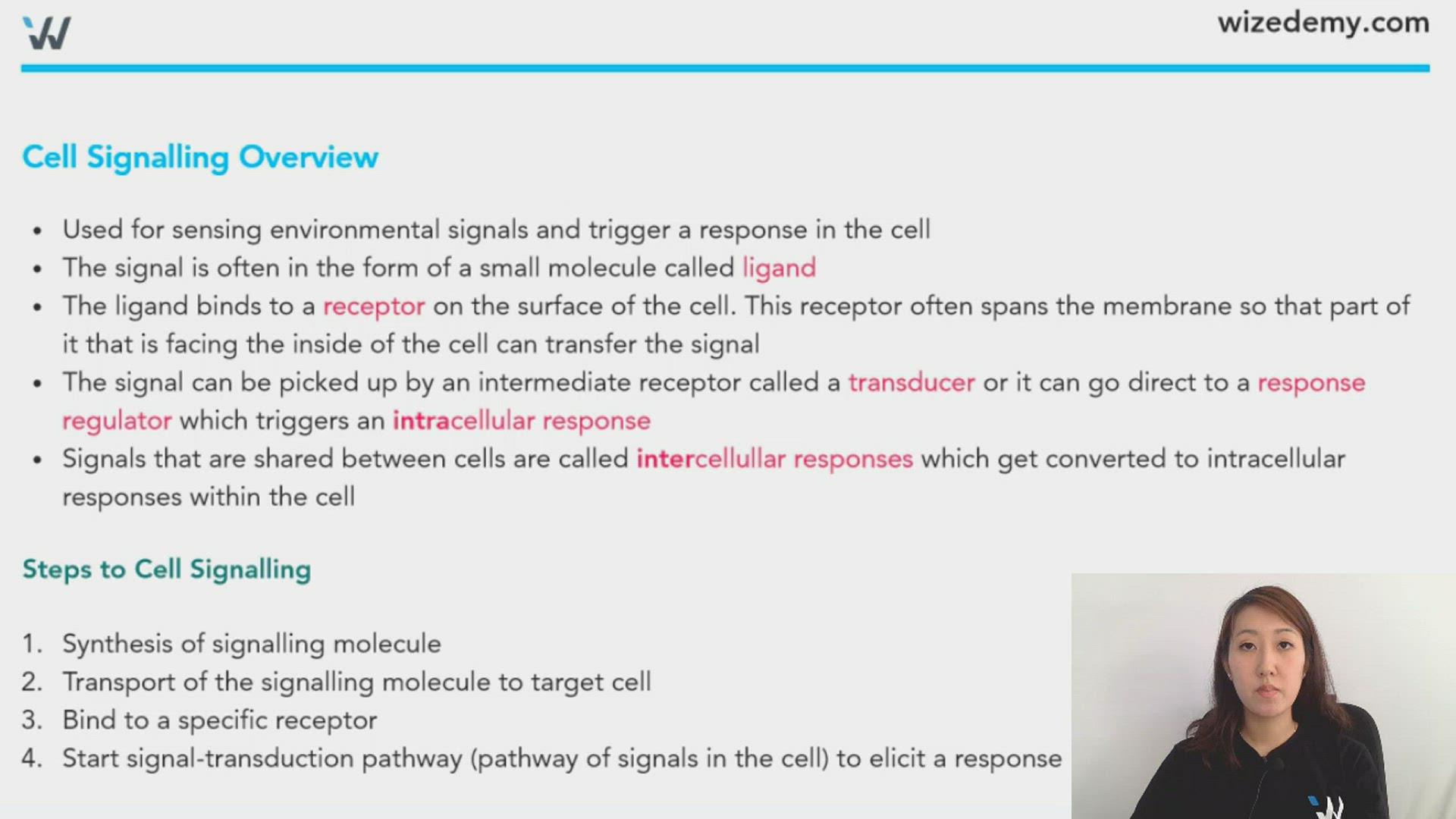
0:00 / 0:00
Cell Signalling Overview
- Used for sensing environmental signals and trigger a response in the cell
- The signal is often in the form of a small molecule called ligand
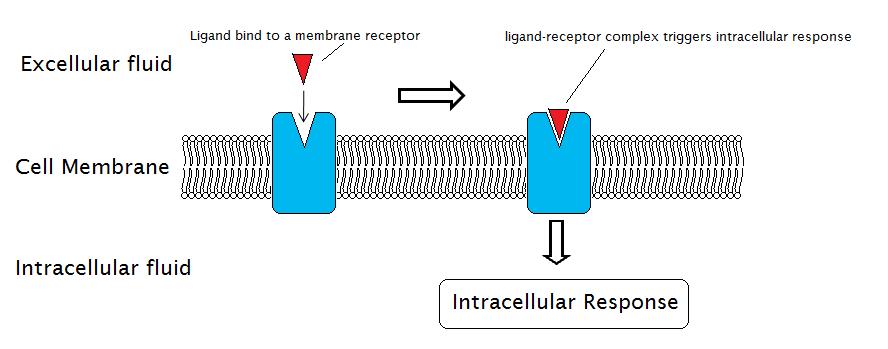
- The ligand binds to a receptor on the surface of the cell. This receptor often spans the membrane so that part of it that is facing the inside of the cell can transfer the signal
- The signal can be picked up by an intermediate receptor called a transducer or it can go direct to a response regulator which triggers an intracellular response
- Signals that are shared between cells are called intercellullar responses which get converted to intracellular responses within the cell
Steps to Cell Signalling
- Synthesis of signalling molecule
- Transport of the signalling molecule to target cell
- Bind to a specific receptor
- Start signal-transduction pathway (pathway of signals in the cell) to elicit a response
0:00 / 0:00
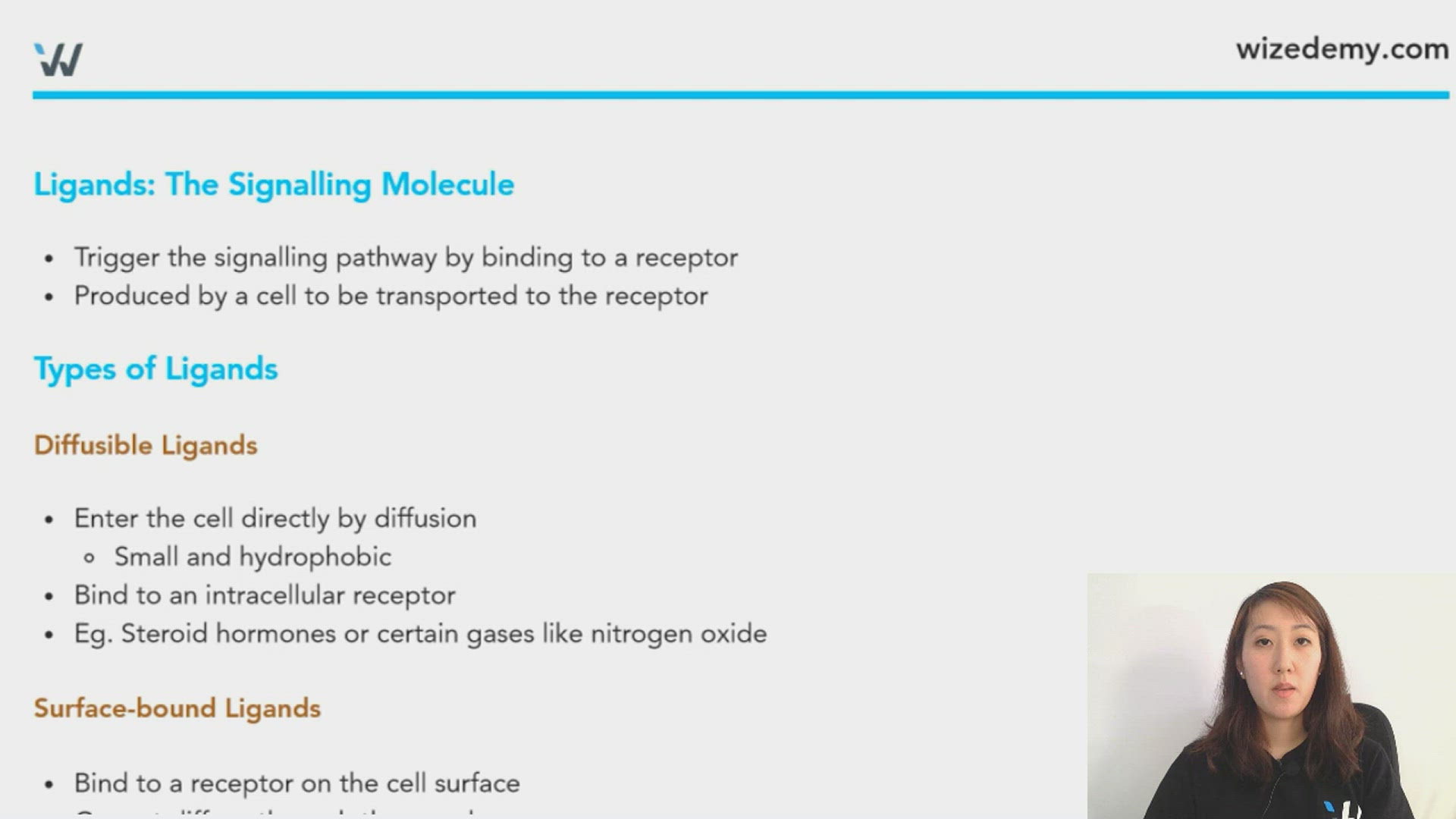
Ligands: The Signalling Molecule
- Trigger the signalling pathway by binding to a receptor
- Produced by a cell to be transported to the receptor
Types of Ligands
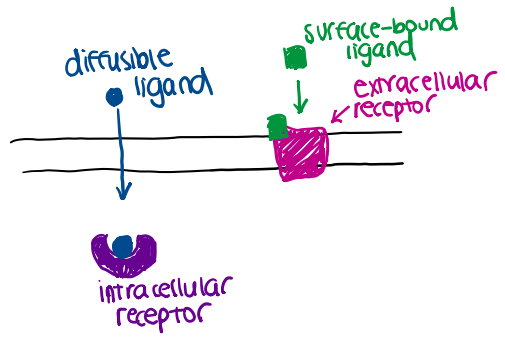
Diffusible Ligands
- Enter the cell directly by diffusion
- Small and hydrophobic
- Bind to an intracellular receptor
- Eg. Steroid hormones or certain gases like nitrogen oxide
Surface-bound Ligands
- Bind to a receptor on the cell surface
- Cannot diffuse through the membrane
- Eg. protein ligands
- Mostly small and hydrophilic
0:00 / 0:00
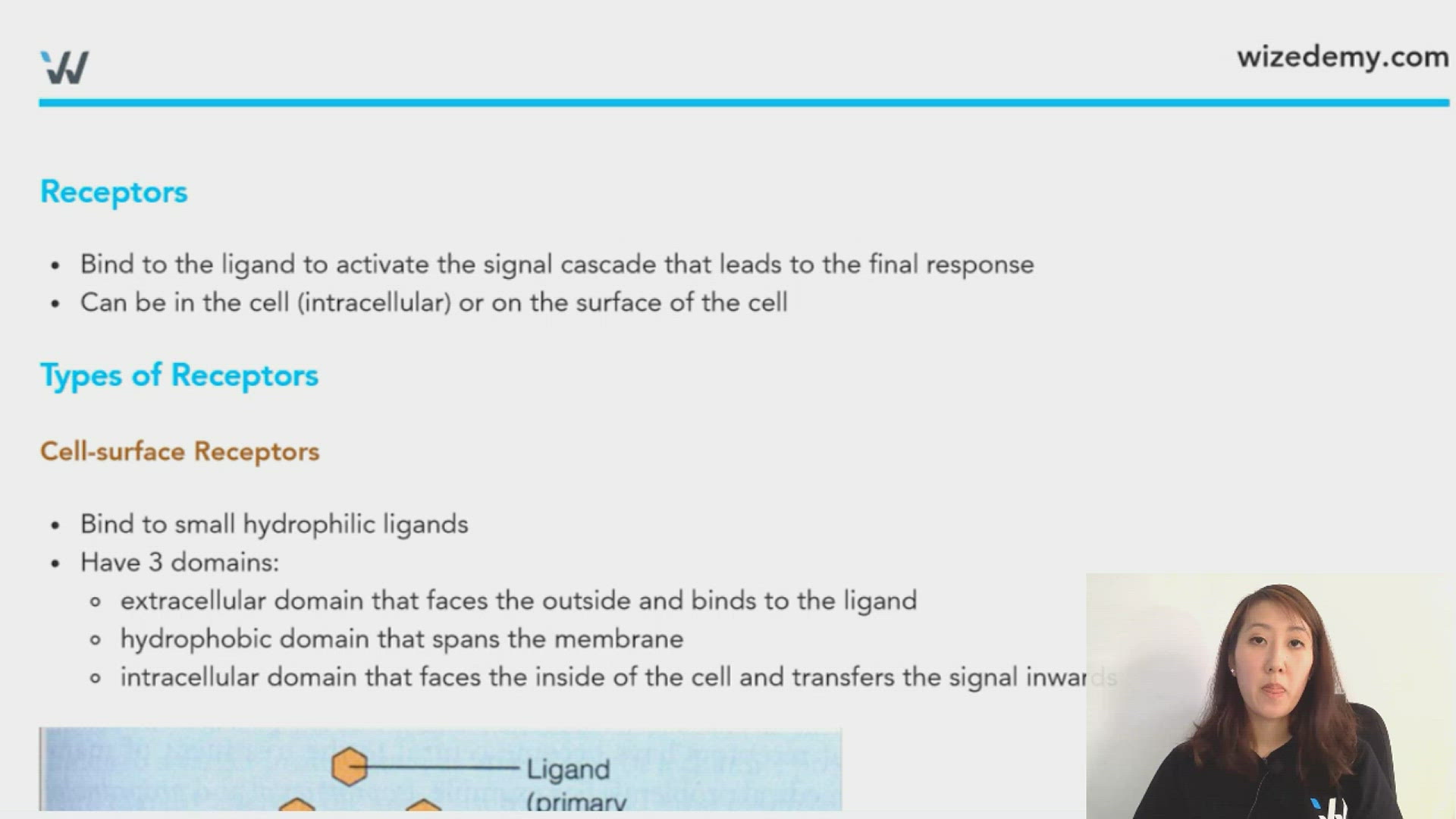
Receptors
- Bind to the ligand to activate the signal cascade that leads to the final response
- Can be in the cell (intracellular) or on the surface of the cell
Types of Receptors
Cell-surface Receptors
- Bind to small hydrophilic ligands
- Have 3 domains:
- extracellular domain that faces the outside and binds to the ligand
- hydrophobic domain that spans the membrane
- intracellular domain that faces the inside of the cell and transfers the signal inwards
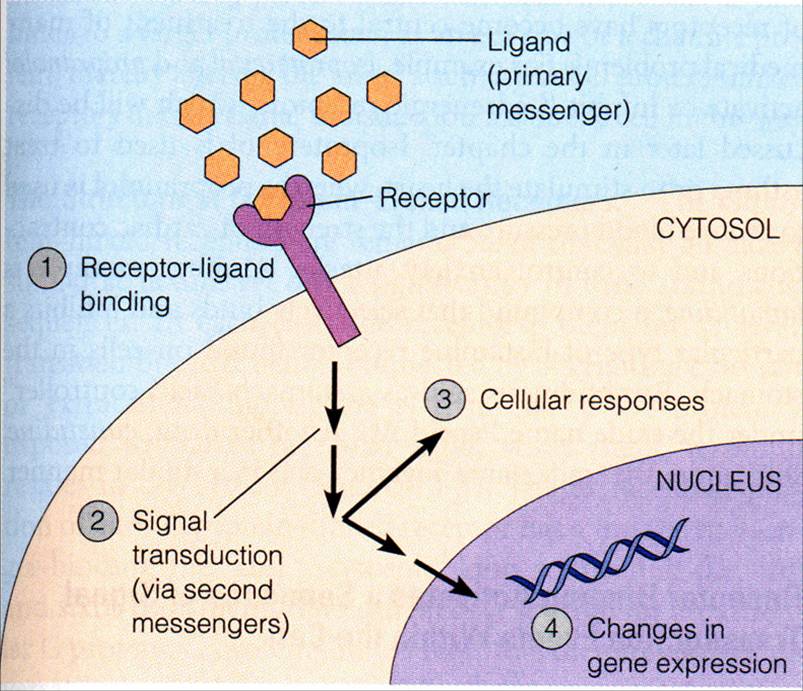
image source: cc.scu.edu.cn
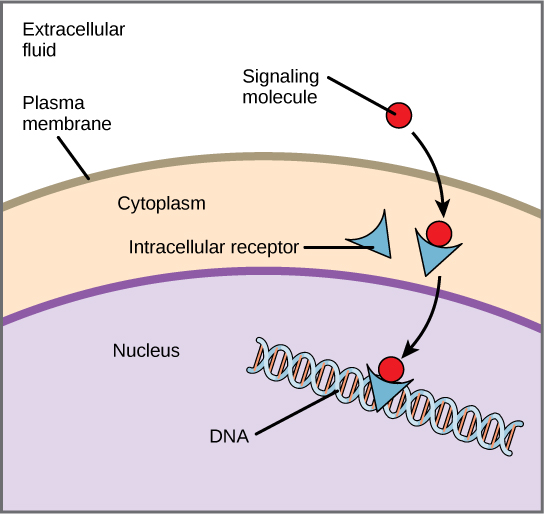
Intracellular Receptors
- Bind to diffusible ligands (small, hydrophobic) such as hormones
- Can often enter the nucleus to regulate gene expression
- Features include: DNA-binding domain, ligand binding domain
0:00 / 0:00
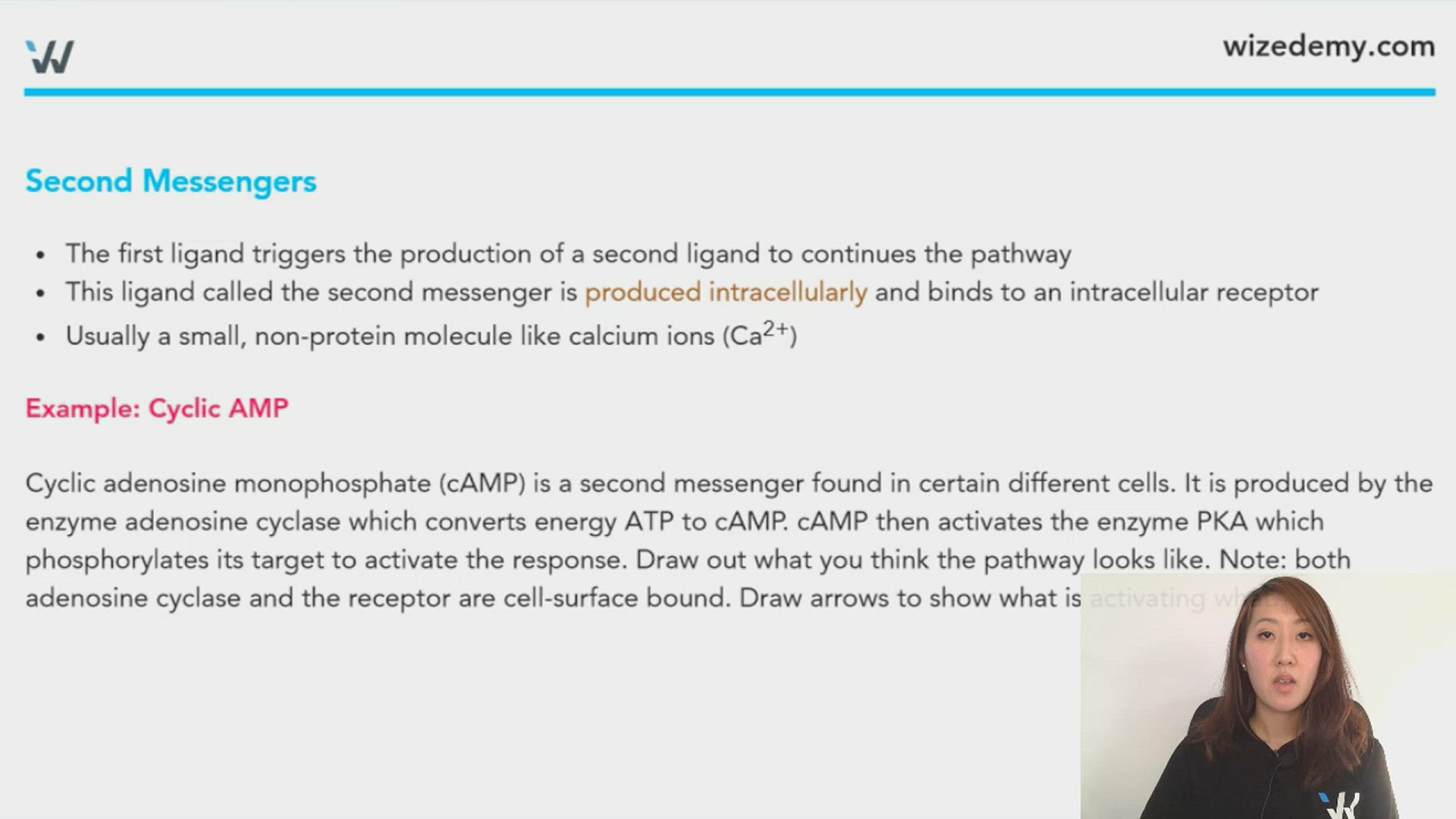
Second Messengers
- The first ligand triggers the production of a second ligand to continues the pathway
- This ligand called the second messenger is produced intracellularly and binds to an intracellular receptor
- Usually a small, non-protein molecule like calcium ions (Ca2+)
Example: Cyclic AMP
Cyclic adenosine monophosphate (cAMP) is a second messenger found in certain different cells. It is produced by the enzyme adenosine cyclase which converts energy ATP to cAMP. cAMP then activates the enzyme PKA which phosphorylates its target to activate the response. Draw out what you think the pathway looks like. Note: both adenosine cyclase and the receptor are cell-surface bound. Draw arrows to show what is activating what.

0:00 / 0:00
G-Protein Coupled Receptors (GPCRs)
The following are cell-surface receptors. Remember that these are integral (transmembrane) proteins anchored on the cell's lipid bilayer. They perform signal transduction, or the relaying of information from the cell's exterior to the interior.
GPCRs are a type of receptor which interacts with G proteins. Humans have over 1000 different types of GPCRs and they carry out a very wide array of functions in our cells.
- A G protein is attached to the intracellular side of the membrane.
- They have three subunits: the alpha, beta, and gamma subunits.
- G proteins have the ability to bind GTP and GDP.
- The variety of GPCRs comes from the variety of molecules they activate.
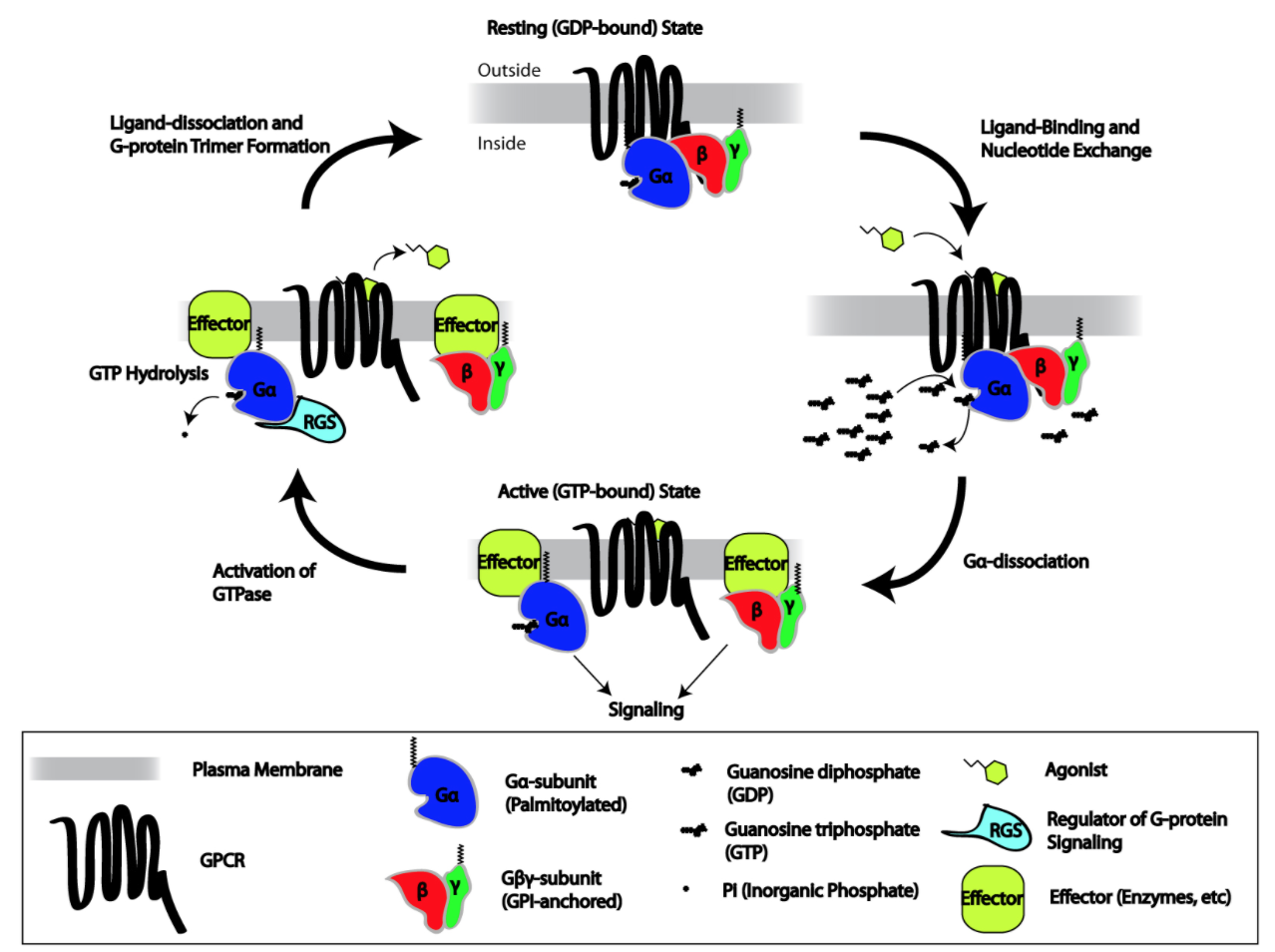
General GPCR pathway:
- Before the ligand binds, the G-protein is associated with its subunits, holding a GDP.
- The signal molecule binds to the cell surface receptor.
- Upon binding, the receptor undergoes a conformational change that activates the G-protein.
- The G protein's alpha subunit then lets go of GDP and picks up GTP and is now active.
- The G protein then dissociates from the GPCR and into alpha and beta-gamma subunits.
- These subunits can go activate other proteins as a result.
- Eventually the GTP is hydrolyzed to GDP.
- The subunits re-associate and the cycle starts again.
0:00 / 0:00
Receptor Tyrosine Kinases (RTKs)
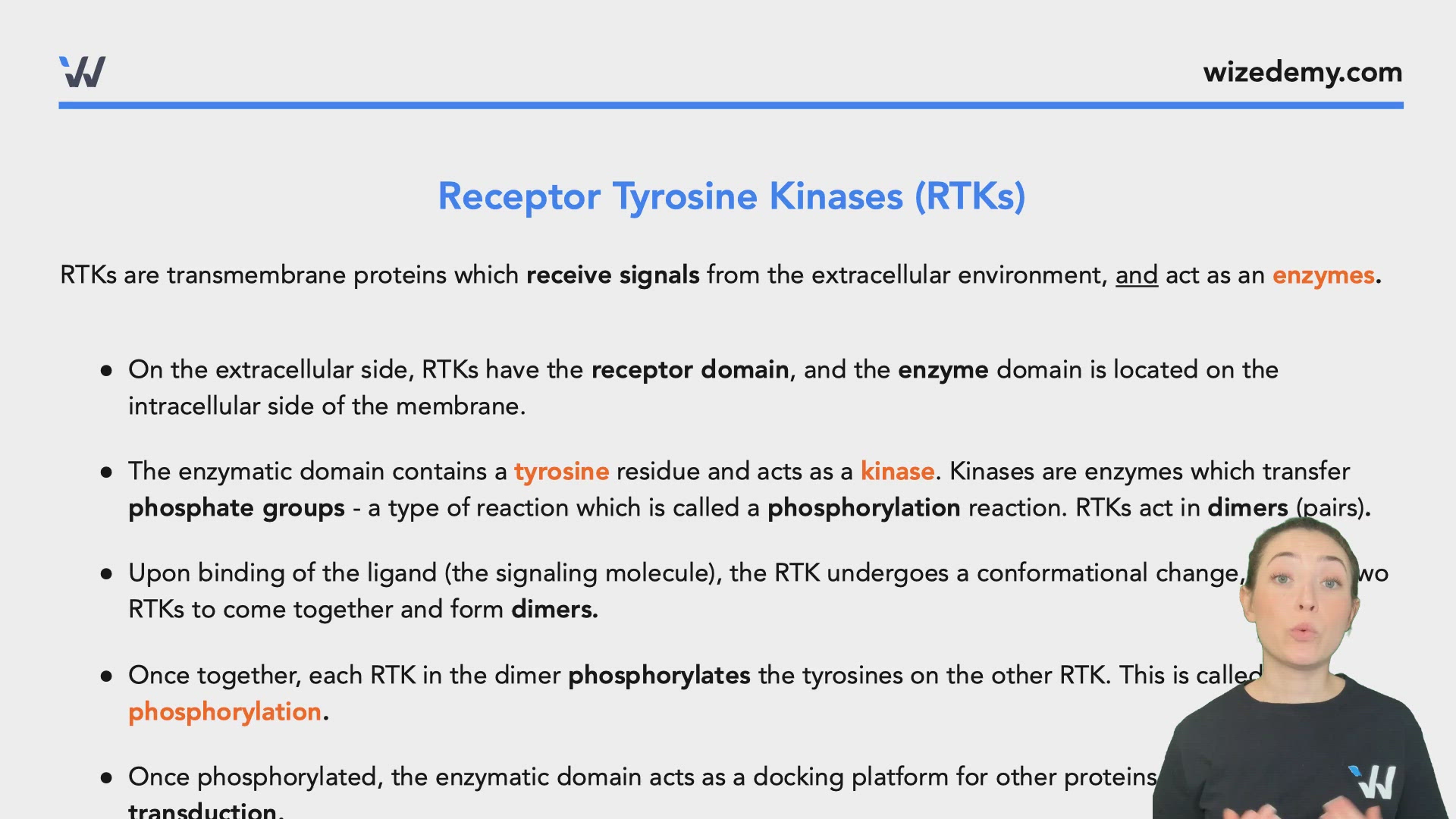
RTKs are transmembrane proteins which receive signals from the extracellular environment, and act as an enzymes.
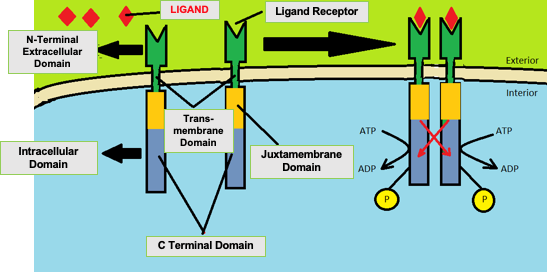
- On the extracellular side, RTKs have the receptor domain, and the enzyme domain is located on the intracellular side of the membrane.
- The enzymatic domain contains a tyrosine residue and acts as a kinase. Kinases are enzymes which transfer phosphate groups - a type of reaction which is called a phosphorylation reaction. RTKs act in dimers (pairs).
- Upon binding of the ligand (the signaling molecule), the RTK undergoes a conformational change, causing two RTKs to come together and form dimers.
- Once together, each RTK in the dimer phosphorylates the tyrosines on the other RTK. This is called cross phosphorylation.
- Once phosphorylated, the enzymatic domain acts as a docking platform for other proteins involved in signal transduction.
0:00 / 0:00
phospholipases hydrolyze ester bonds in glycerophospholipids converting them to fatty acids
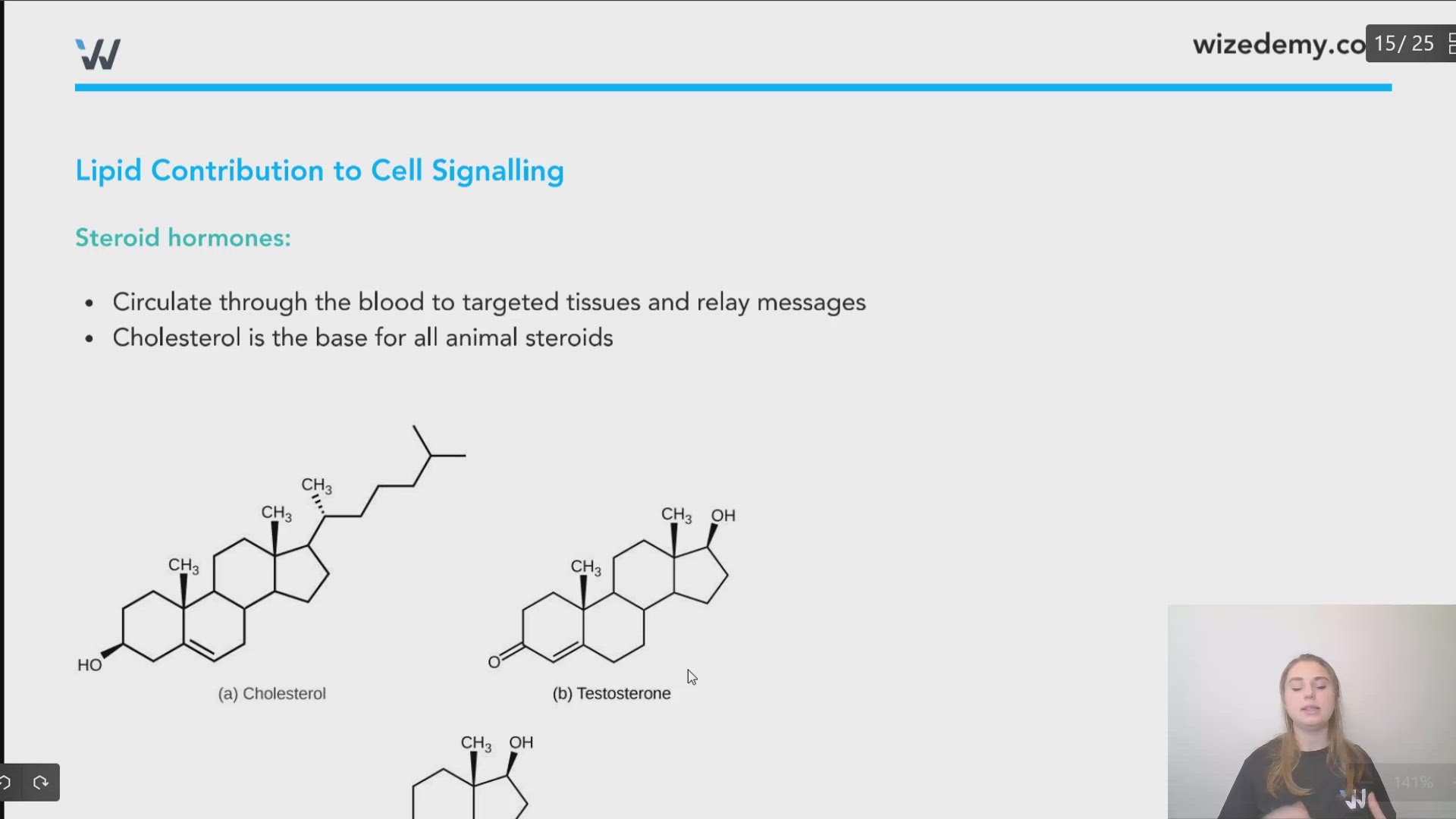
Steroid hormones:
- Circulate through the blood to targeted tissues and relay messages
- Cholesterol is the base for all animal steroids
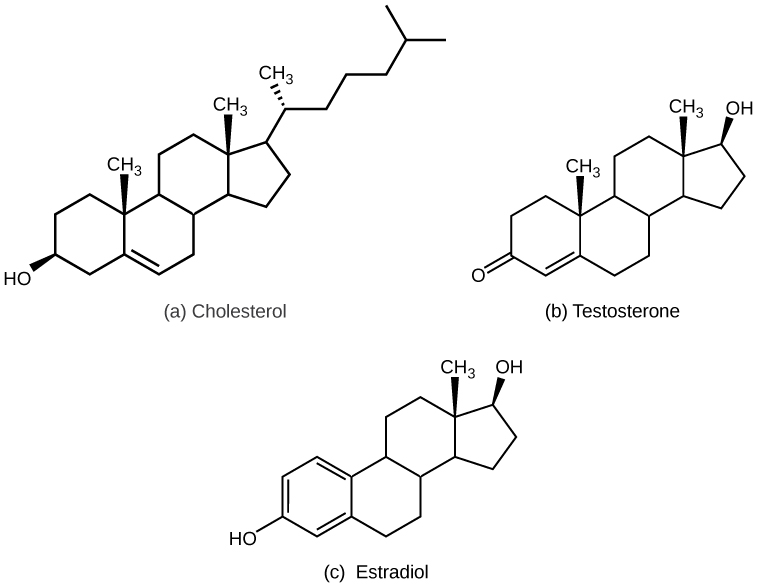
https://commons.wikimedia.org/wiki/File:Figure_37_01_01abc.jpg. CNX OpenStax. This file is licensed under the Creative Commons Attribution 4.0 International license.
Eicosanoid Signaling:
- Phospholipids contribute to signaling through local chemical signals
- phospholipases hydrolyze ester bonds in glycerophospholipids converting them to fatty acids
- Several different phospholipases are present and they each break different bonds along the glycerol/carbon chain
- These cleaved signaling molecules are precursors of eicosanoids
- Eicosanoid signaling pathways are involved in inflammation, heat, pain, smooth muscle contraction, pregnancy and so on
About second messengers:
Match the G-protein coupled receptor pathway component to the general signal transduction role.
A.
Transducer
B.
Effector enzyme
C.
Receptor
D.
Cell response
GPCR
G-protien alpha-subunit
Adenylyl cyclase (AC)
ATP --> cAMP
There are multiple different types of G-protein coupled receptors (GPCRs) in the human body. Which of the following statements are correct regarding these proteins?
- A high global alignment of amino acid sequences
- Binding of the same ligand
- They fold into a similar, but not identical, confirmation to rhodopsin
- The differences in sequence would only be synonymous
Think about the GPCR pathway that was discussed in class. It went Signal molecule -> GPCR -> G protein -> adneylyl cyclase -> cAMP -> downstream effects. Which of the following was the secondary messenger?
Receptor tyrosine kinases (RTKs) are abundant class of protein receptors in human cells. Which of the following would be true when comparing different RTKs from a single human sample?
- They would contain only synonymous mutations
- They would have the same amino acid sequence
- They bind the same ligand
- They have a similar tertiary structure
Practice: Receptor Tyrosine Kinases (RTKs)
Which is true about receptor tyrosine kinases (RTKs)?
if a ligand binds to a tyrosine kinase receptor, which of the following will happen?