Wize University Biochemistry Textbook > Prokaryotic Transcription
Prokaryotic (Bacterial) Transcription

0:00 / 0:00
Transcription in Bacteria (Prokaryotes)
Transcription can be broken down into three steps: initiation, elongation, and termination. The enzyme that synthesizes the complementary RNA strand is RNA Polymerase.
- The site at which transcription should start is designated "+1."
- RNA Polymerase has a subunit called Sigma factor that can bind to specific DNA sequences within the promoter region of a gene.
Initiation
- The sigma subunit binds to the -35 box (~35 bases upstream from the +1 site, where transcription begins) and the -10 box (~10 bases upstream from the +1 site) in the promoter region.
- The remaining subunits of RNA polymerase can then bind to the promoter. The RNA polymerase complex is referred to as a holoenzyme.
- The RNA polymerase is able to orient itself near the +1 site and to move in the direction of transcription.
- Binds to template strand.
- It reads DNA 3' to 5'.
- It synthesizes RNA in 5' to 3'.

Consensus sequence:
- The promoter sequence, including the -35 box and -10 box, can vary between genes and bacteria, but are still recognized by Sigma because they are relatively similar.
- Comparing the sequences for the -35 box and -10 box of different genes can yield a consensus sequence, or the most common nucleotide at a particular position.
- The -35 region has the consensus sequence TTGACG and the -10 region has the sequence TATAAT.
- The closer to consensus a sequence is, the higher the affinity the Sigma has for the promoter.
0:00 / 0:00
Elongation
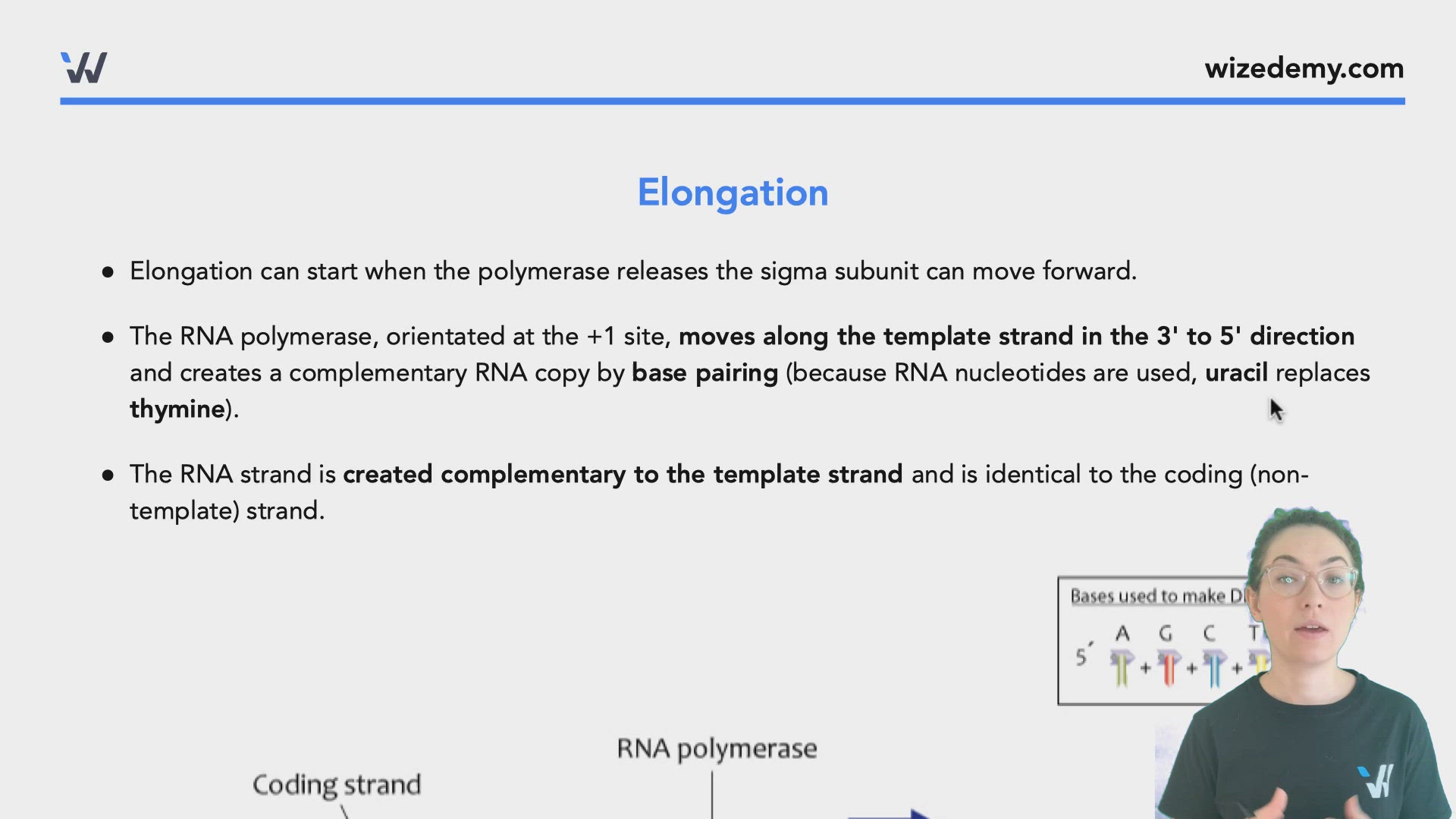
- Elongation can start when the polymerase releases the sigma subunit can move forward.
- The RNA polymerase, orientated at the +1 site, moves along the template strand in the 3' to 5' direction and creates a complementary RNA copy by base pairing (because RNA nucleotides are used, uracil replaces thymine).
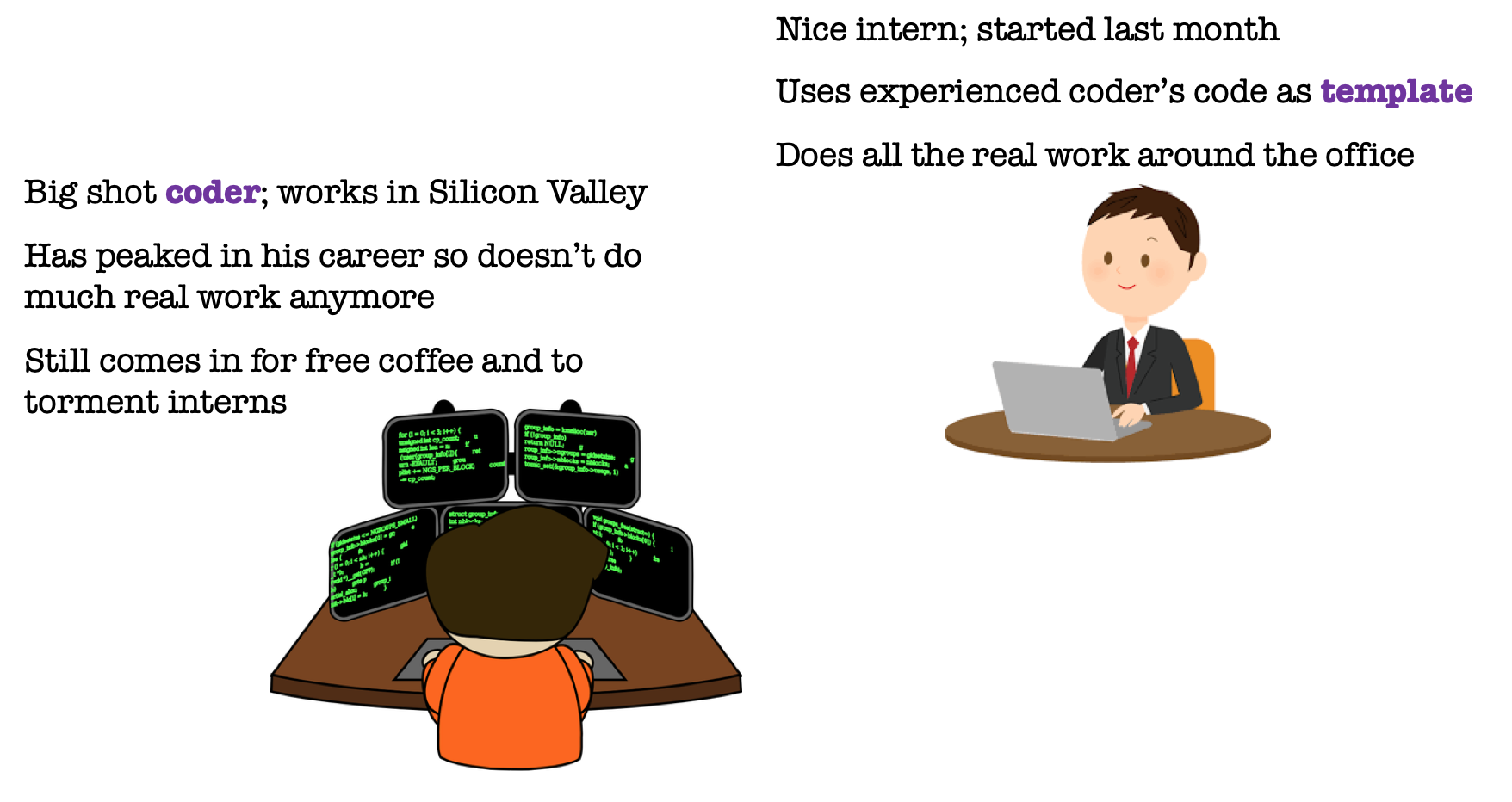
- The RNA strand is created complementary to the template strand and is identical to the coding (non- template) strand.

If the idea of template versus coding strand seems confusing...
0:00 / 0:00
Termination
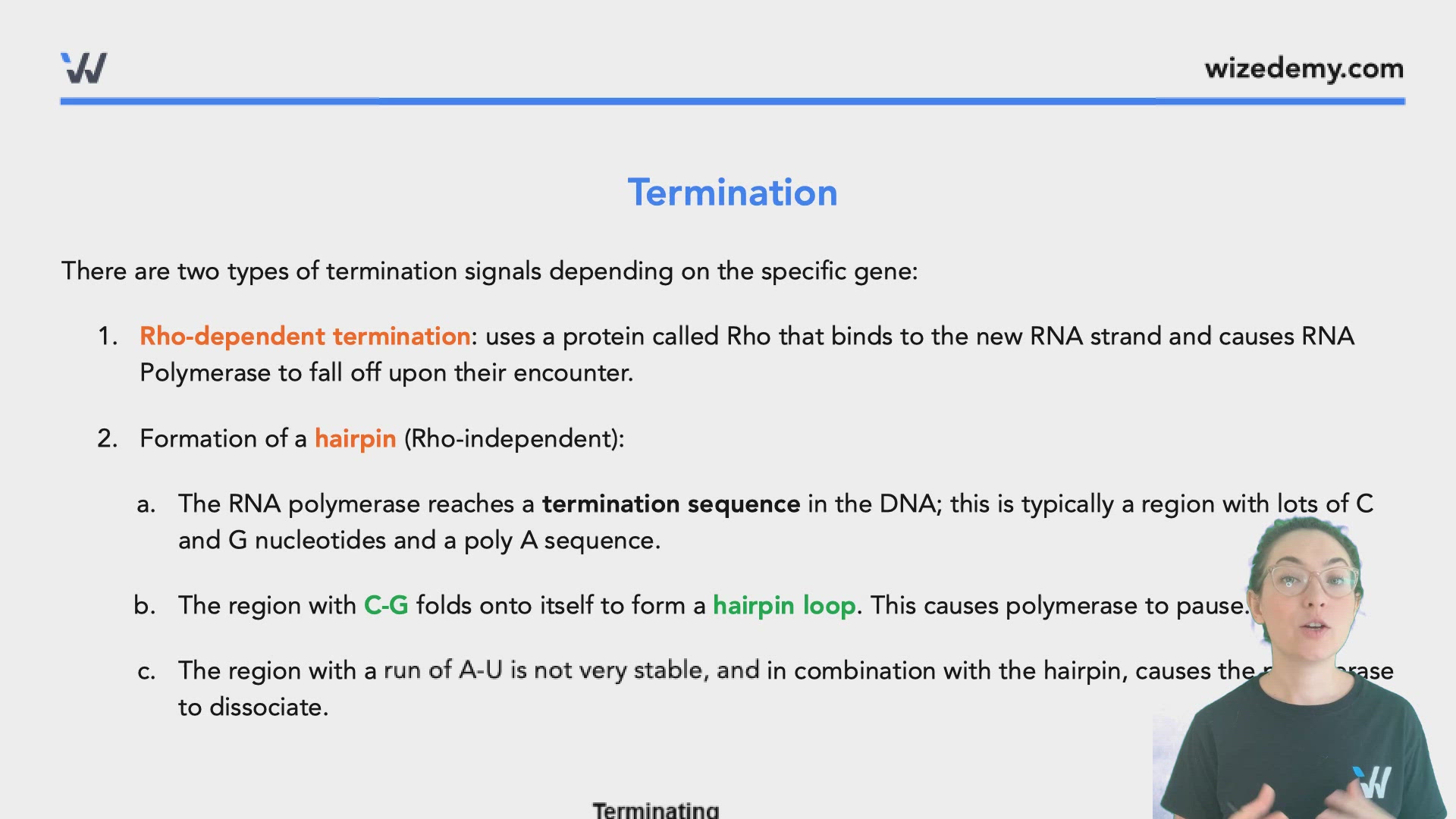
There are two types of termination signals depending on the specific gene:
- Rho-dependent termination: uses a protein called Rho that binds to the new RNA strand and causes RNA Polymerase to fall off upon their encounter.
- Formation of a hairpin (Rho-independent):
- The RNA polymerase reaches a termination sequence in the DNA; this is typically a region with lots of C and G nucleotides and a poly A sequence.
- The region with C-G folds onto itself to form a hairpin loop. This causes polymerase to pause.
- The region with a run of A-U is not very stable, and in combination with the hairpin, causes the polymerase to dissociate.

Wize Concept
Remember that prokaryotes do not have a separate compartment for their nucleus. That means that RNA transcription and translation can occur simultaneously! That is, as the RNA is being transcribed, the ribosome can already bind to it and start making the protein.
0:00 / 0:00
Prokaryotic Regulatory Proteins
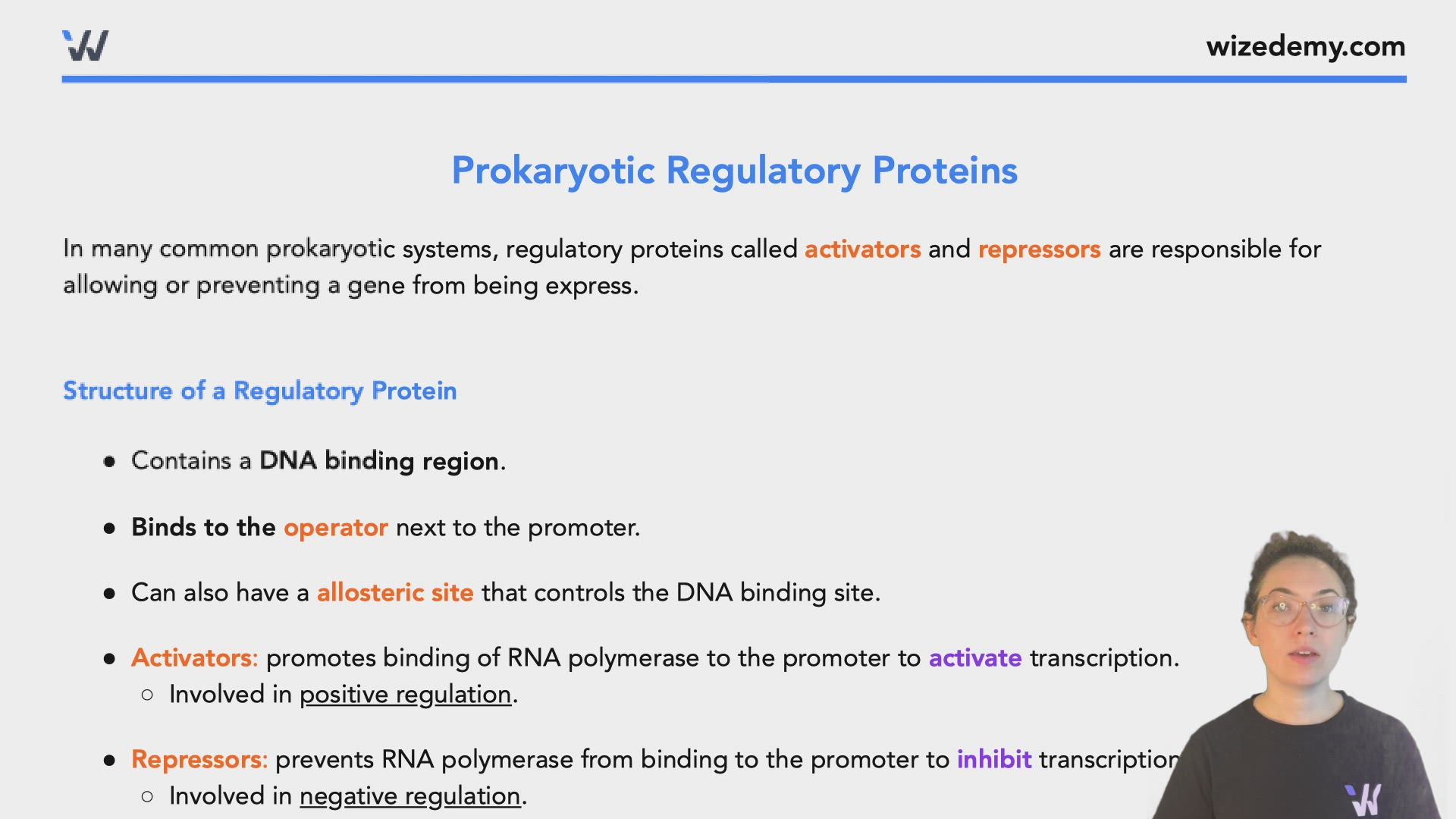
In many common prokaryotic systems, regulatory proteins called activators and repressors are responsible for allowing or preventing a gene from being expressed.
Structure of a Regulatory Protein
- Contains a DNA binding region.
- Binds to the operator next to the promoter.
- Can also have a allosteric site that controls the DNA binding site.
- Activators: promotes binding of RNA polymerase to the promoter to activate transcription.
- Involved in positive regulation.
- Repressors: prevents RNA polymerase from binding to the promoter to inhibit transcription.
- Involved in negative regulation.
- Activators and repressors can be influenced by small molecules.
- Inducers promote gene expression by inactivating repressors or activating activators.
- Inhibitors prevent gene expression by inhibiting activators.
- Co-repressors prevent gene expression by activating repressors.

0:00 / 0:00
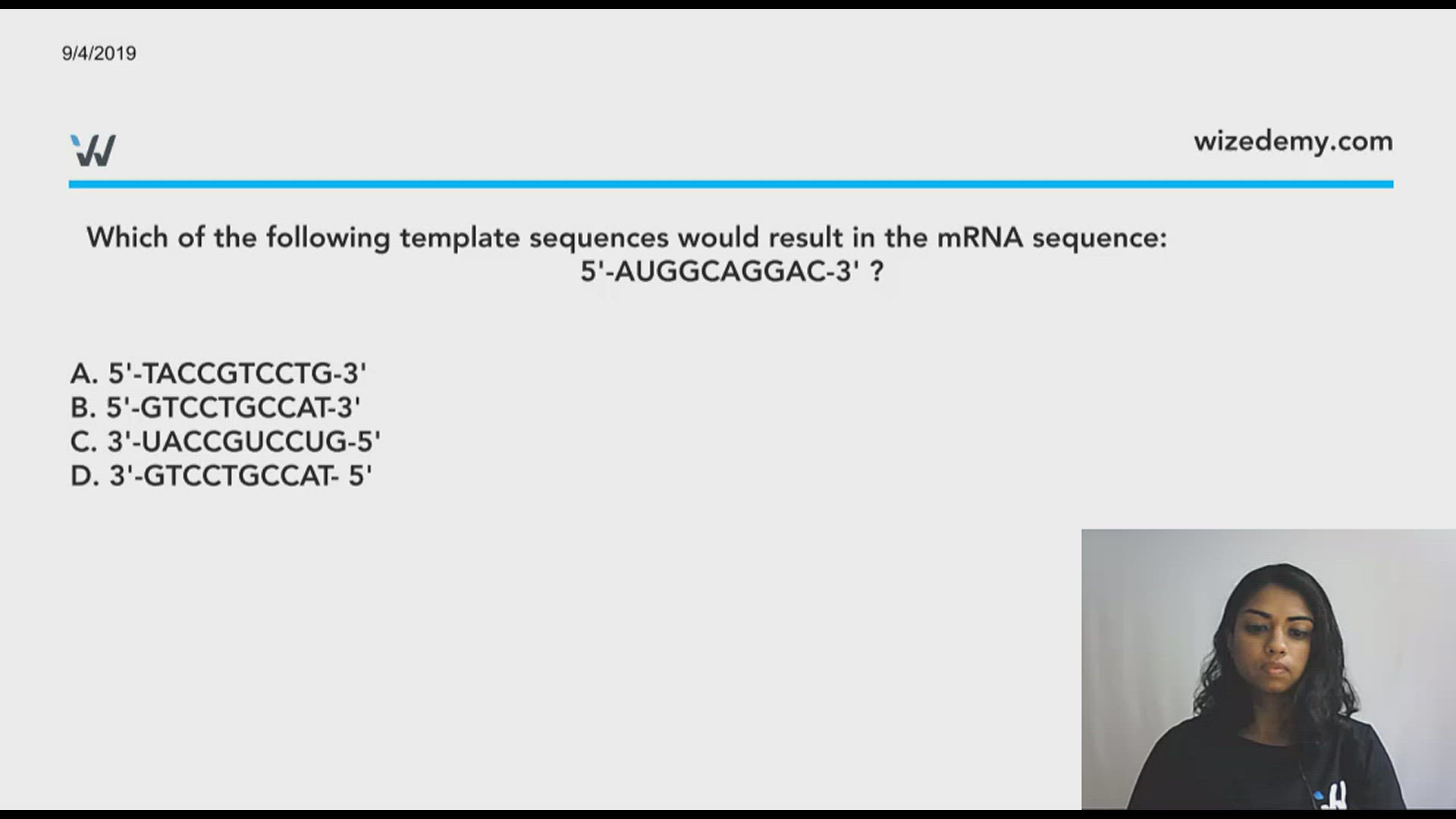
Which of the following template sequences would result in the mRNA sequence:
5'-AUGGCAGGAC-3' ?
A. 5'-TACCGTCCTG-3'
B. 5'-GTCCTGCCAT-3'
C. 3'-UACCGUCCUG-5'
D. 3'-GTCCTGCCAT- 5'
The correct answer is B.
The mRNA sequence is the reverse complement of the template strand. Therefore, if you were to simply reverse transcribe the sequence, you would get:
mRNA 5'-AUGGCAGGAC-3'
Template 3'-TACCGTCCTG- 5'
Note: once you reverse transcribe the sequence, you MUST pay attention to where the 5' end and the 3' ends are. B is the correct answer, it is just written in the 5'-> 3' direction. A is incorrect because the 5' and 3' ends are incorrect.
C is incorrect because the template strand is made of DNA and therefore has no uracil (U), only thymine (T). D is incorrect because it is exactly the same sequence as A, just written in the 3'-> 5' direction instead of the 5' -> 3' direction.
0:00 / 0:00
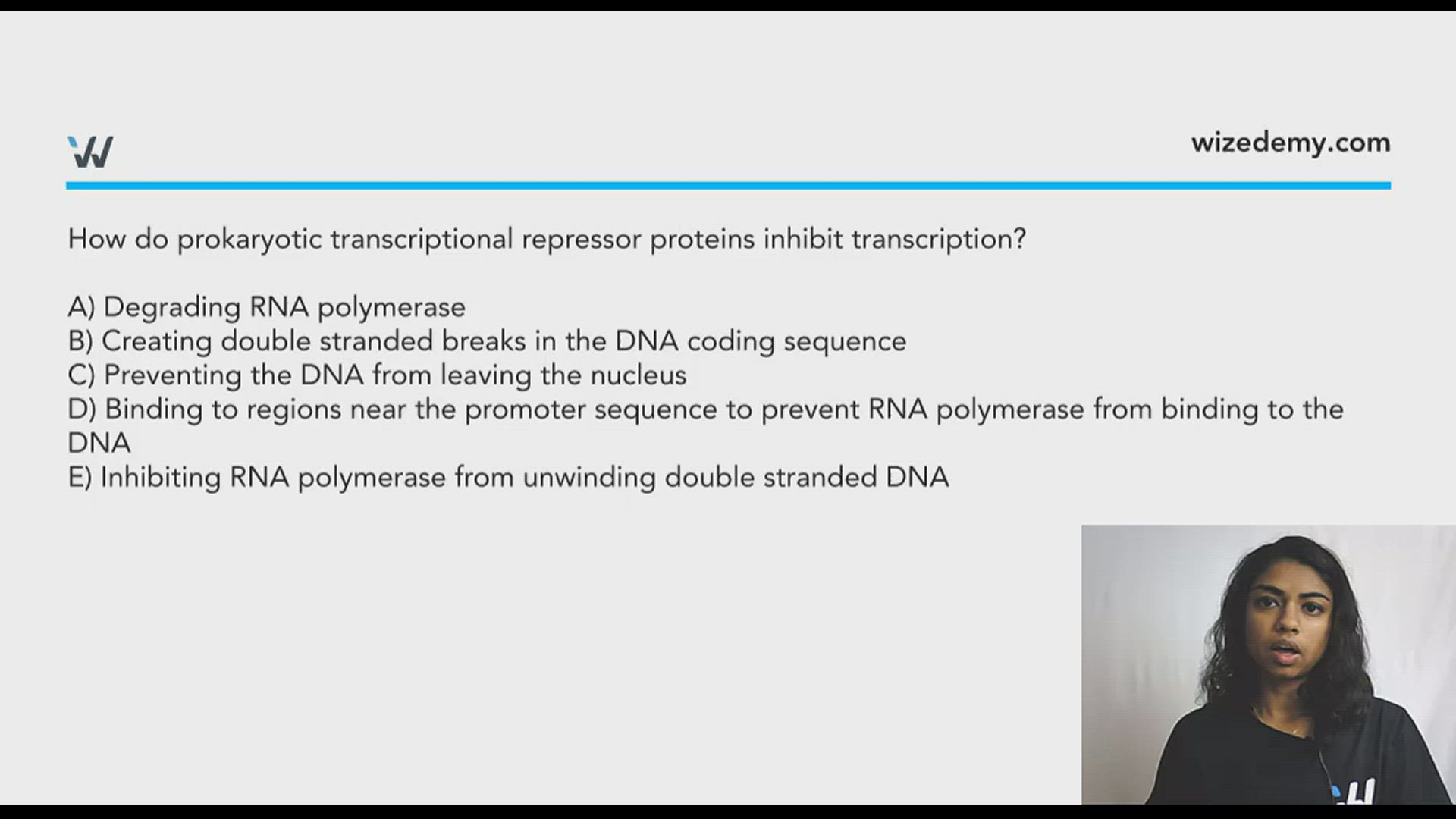
How do prokaryotic transcriptional repressor proteins inhibit transcription?
A) Degrading RNA polymerase
B) Creating double-stranded breaks in the DNA coding sequence
C) Preventing the DNA from leaving the nucleus
D) Binding to regions near the promoter sequence to prevent RNA polymerase from binding to the DNA
E) Inhibiting RNA polymerase from unwinding double-stranded DNA
The correct answer is D. Repressor proteins bind to regions near the promoter sequence which sterically prevents RNA polymerase from accessing the promoter.
If the promoter sequence is blocked by a repressor, the sigma subunit cannot identify the transcription start site. Therefore, as long as a repressor protein is bound to the DNA, transcription can't take place.