Wize University Biochemistry Textbook > Recombinant DNA and Sequencing
Recombinant DNA technology
0:00 / 0:00
(Agarose) Gel Electrophoresis
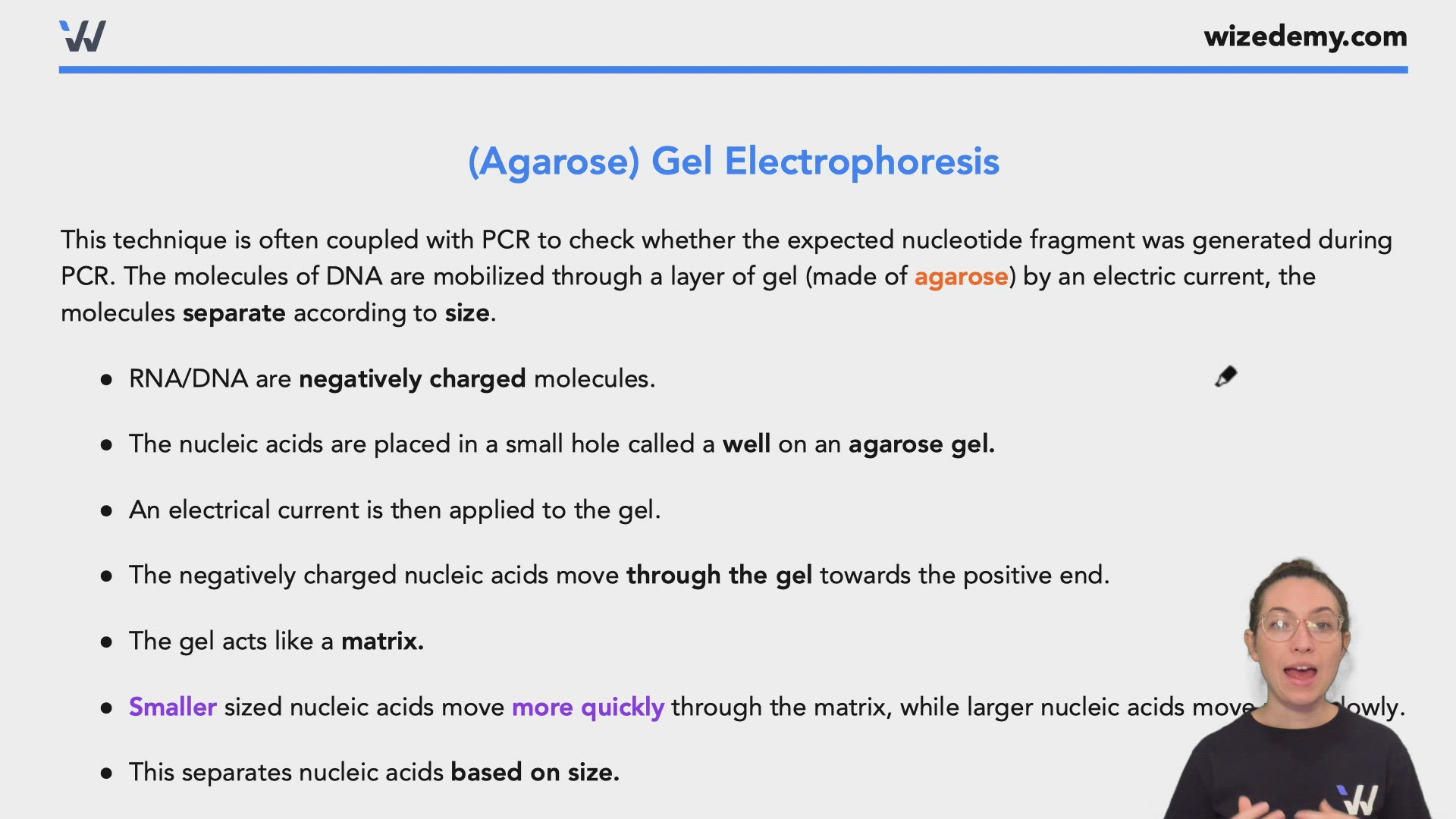
This technique is often coupled with PCR to check whether the expected nucleotide fragment was generated during PCR. The molecules of DNA are mobilized through a layer of gel (made of agarose) by an electric current, the molecules separate according to size.
- RNA/DNA are negatively charged molecules.
- The nucleic acids are placed in a small hole called a well on an agarose gel.
- An electrical current is then applied to the gel.
- The negatively charged nucleic acids move through the gel towards the positive end.
- The gel acts like a matrix.
- Smaller sized nucleic acids move more quickly through the matrix, while larger nucleic acids move more slowly.
- This separates nucleic acids based on size.
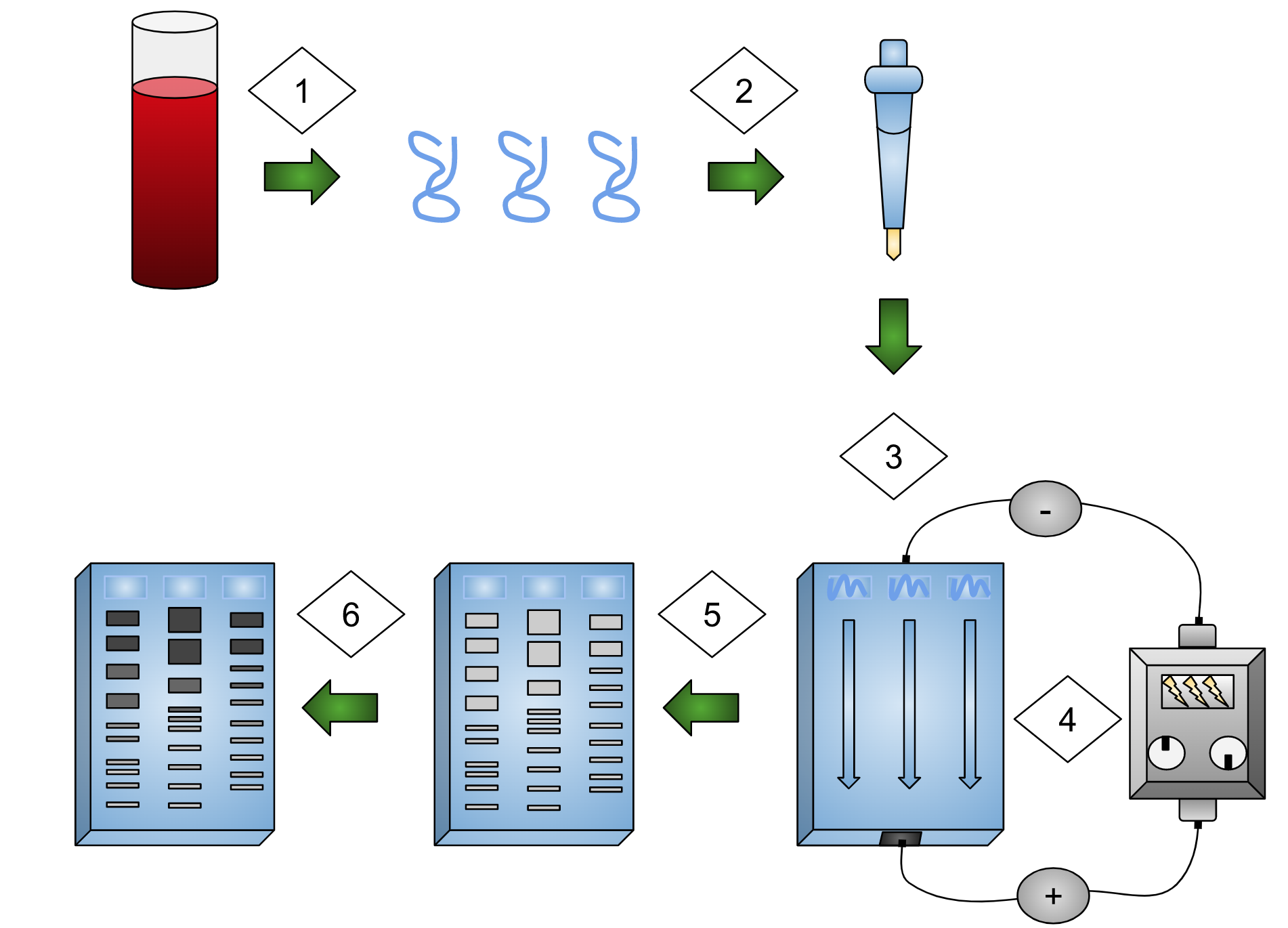
- A DNA ladder (standard sample) is usually used so that the size of the DNA molecules produced by the PCR can be measured/compared.
- Below is how a 600 base pair (bp) fragment produced by PCR would look like on gel electrophoresis.

0:00 / 0:00
Northern Blot
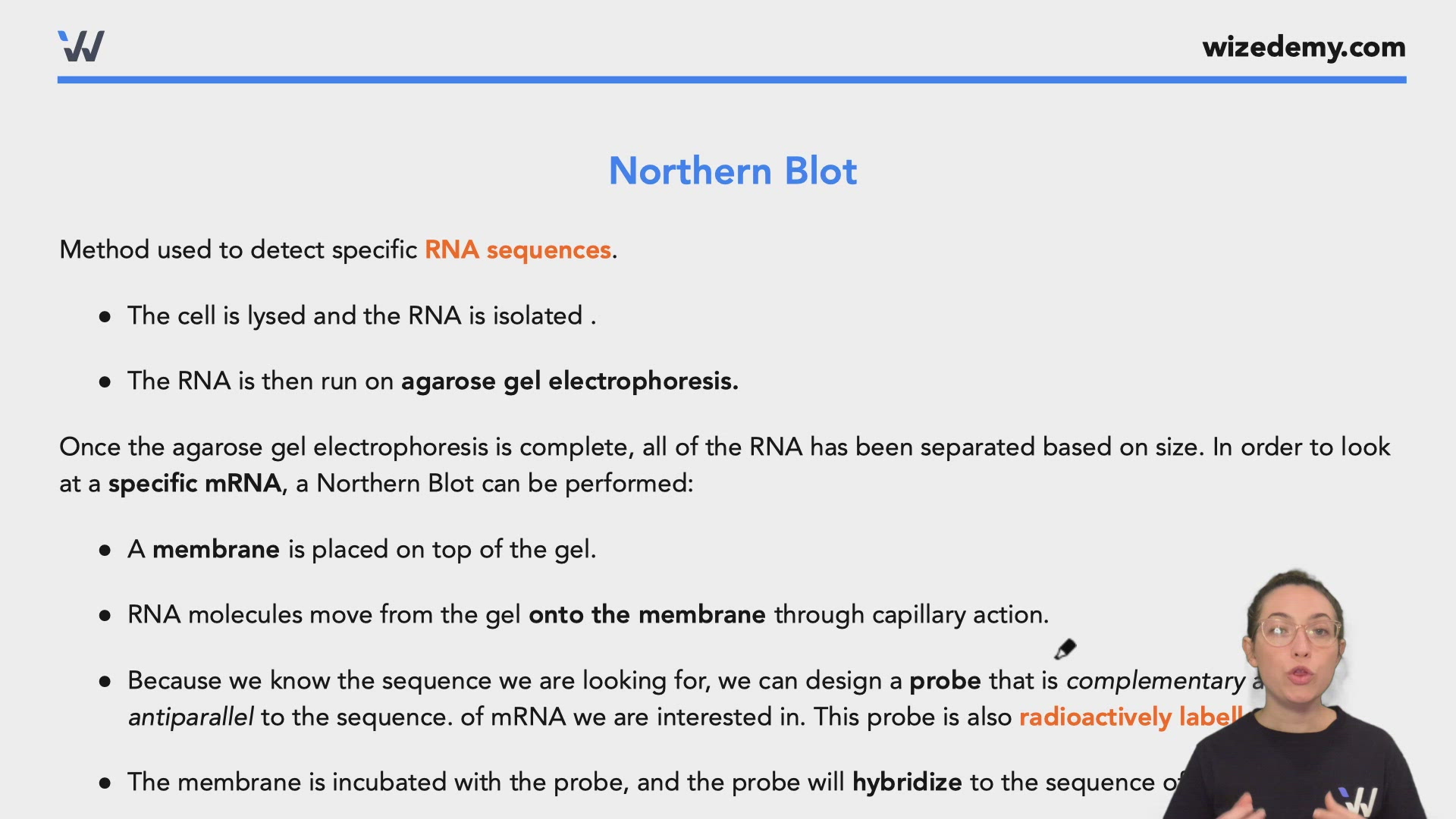
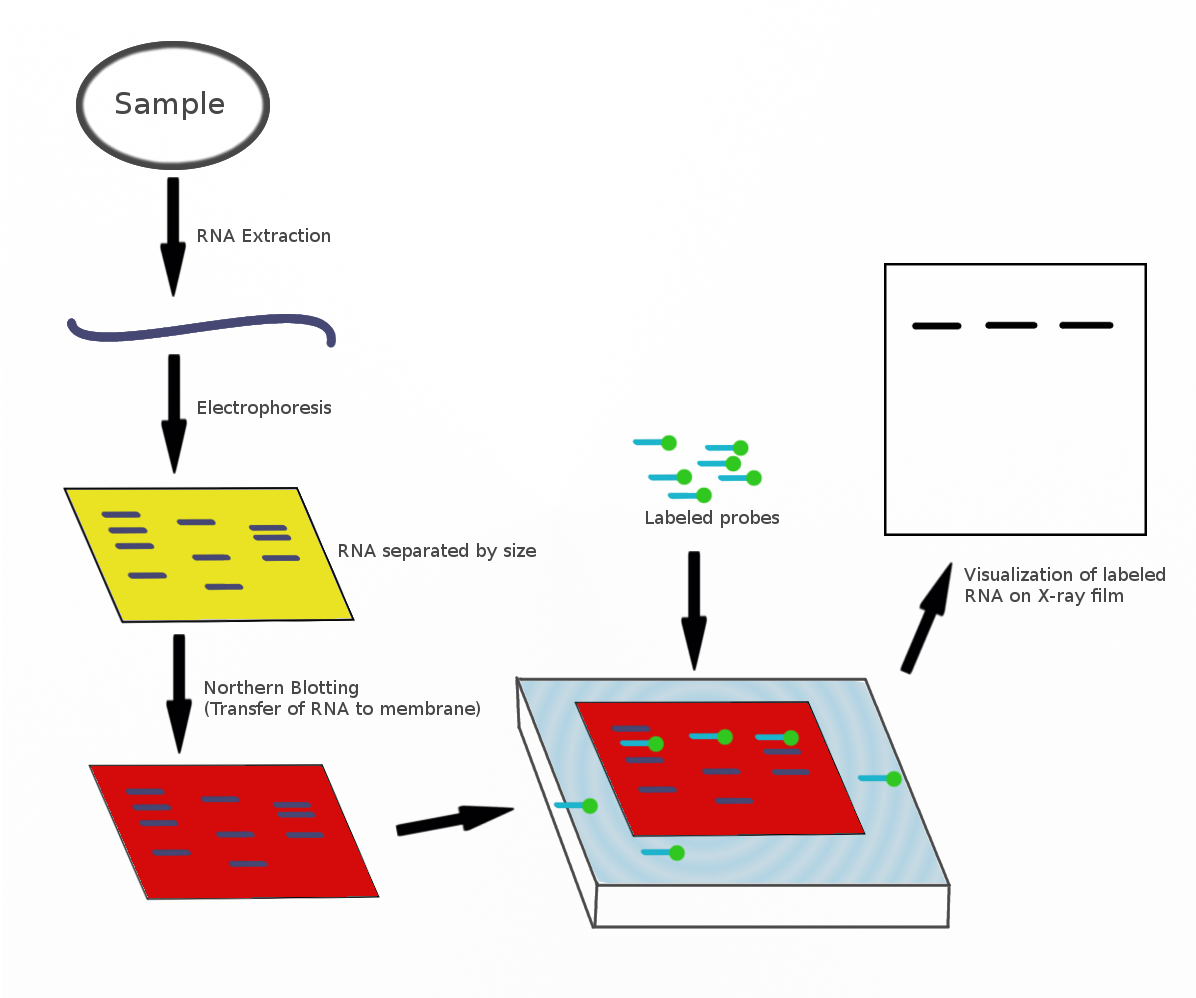
Method used to detect specific RNA sequences.
- The cell is lysed and the RNA is isolated .
- The RNA is then run on agarose gel electrophoresis.
Once the agarose gel electrophoresis is complete, all of the RNA has been separated based on size. In order to look at a specific mRNA, a Northern Blot can be performed:
- A membrane is placed on top of the gel.
- RNA molecules move from the gel onto the membrane through capillary action.
- Because we know the sequence we are looking for, we can design a probe that is complementary and antiparallel to the sequence. of mRNA we are interested in. This probe is also radioactively labelled.
- The membrane is incubated with the probe, and the probe will hybridize to the sequence of interest.
- The membrane is washed and then radioactivity is measured.
0:00 / 0:00
Southern Blot
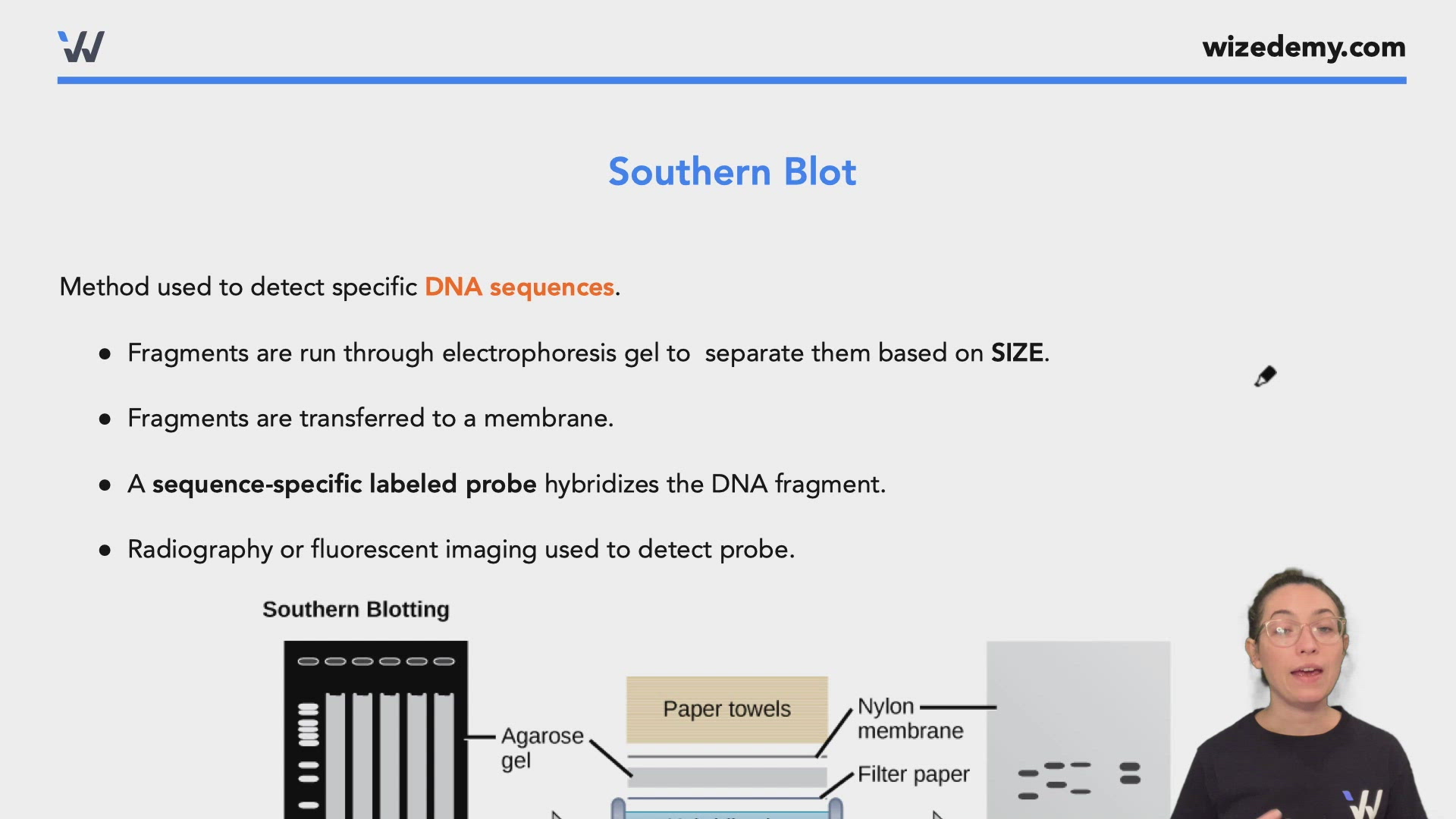
Method used to detect specific DNA sequences.
- Fragments are run through electrophoresis gel to separate them based on SIZE.
- Fragments are transferred to a membrane.
- A sequence-specific labeled probe hybridizes the DNA fragment.
- Radiography or fluorescent imaging used to detect probe.

0:00 / 0:00
Polymerase Chain Reaction (PCR)
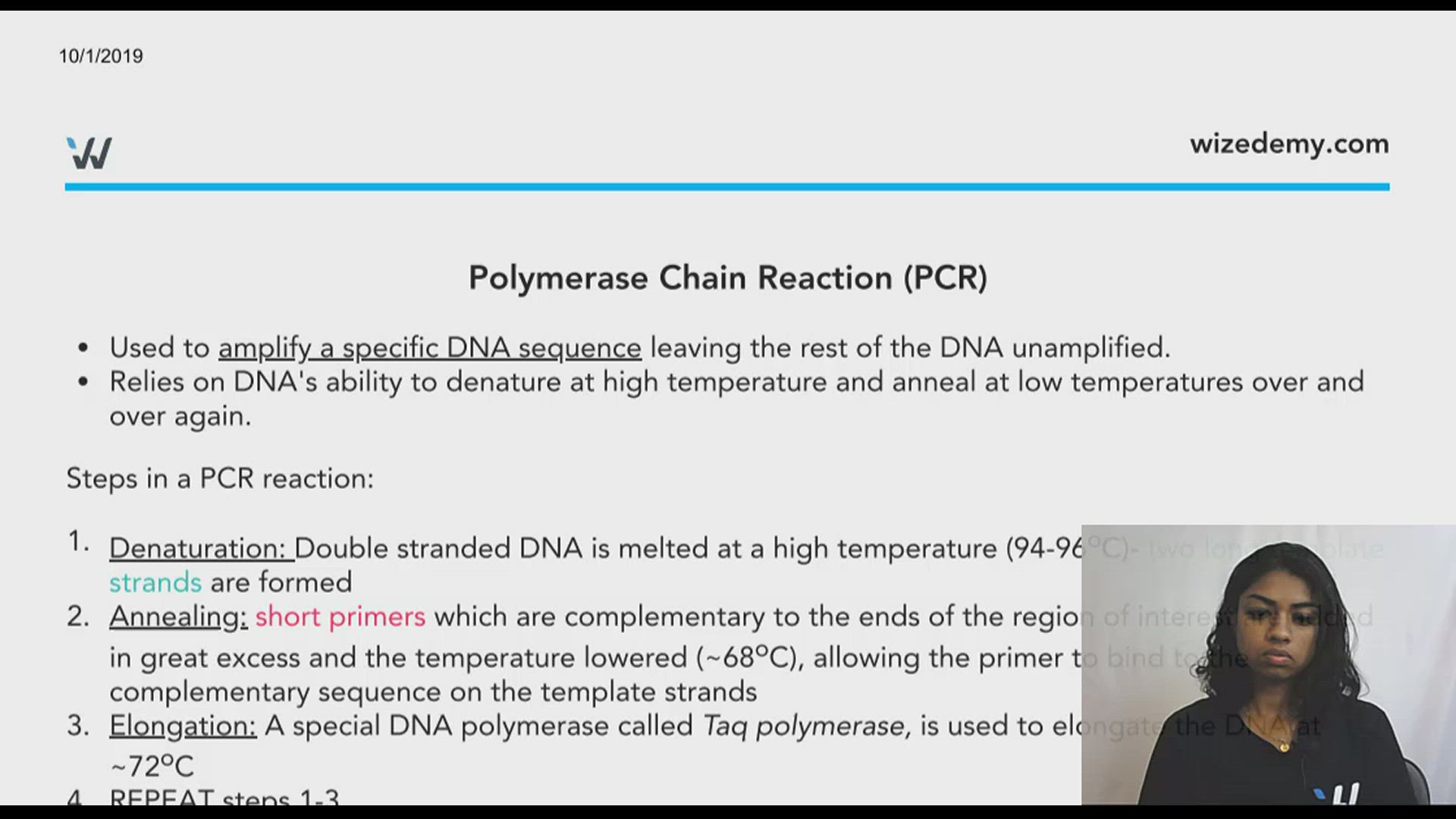
- Used to amplify a specific DNA sequence leaving the rest of the DNA unamplified.
- Relies on DNA's ability to denature at high temperature and anneal at low temperatures over and over again.
Steps in a PCR reaction:
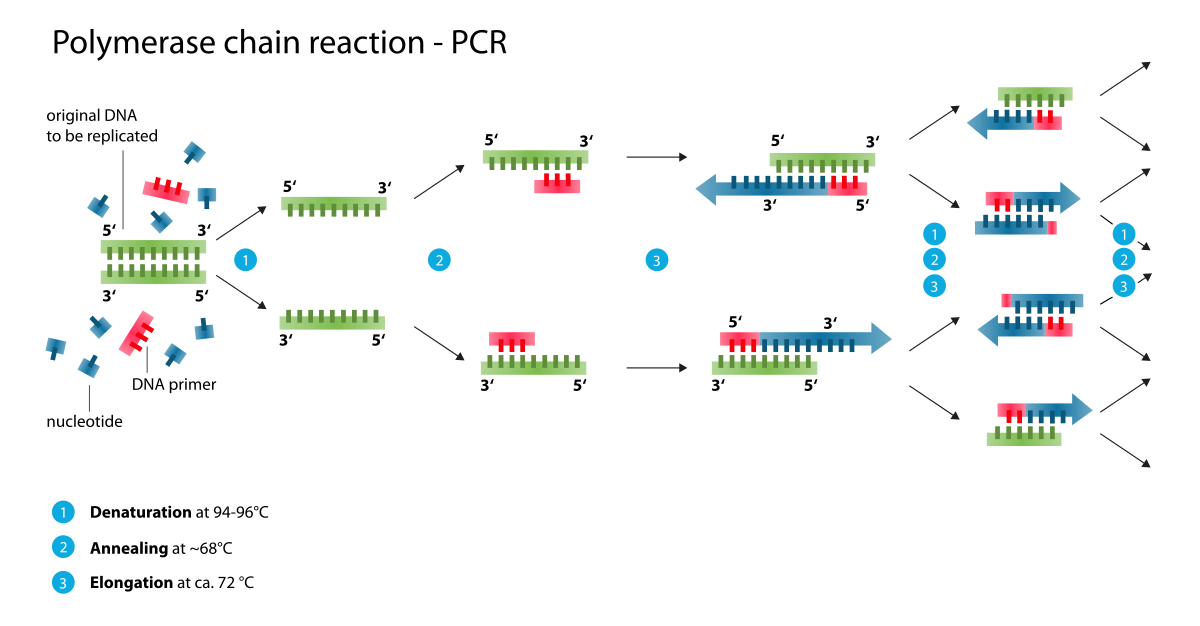
- Denaturation: Double stranded DNA is melted at a high temperature (94-96oC)- two long template strands are formed
- Annealing: short primers which are complementary to the ends of the region of interest are added in great excess and the temperature lowered (~68oC), allowing the primer to bind to the complementary sequence on the template strands
- Elongation: A special DNA polymerase called Taq polymerase, is used to elongate the DNA at ~72oC
- REPEAT steps 1-3
Wize Tip
PCR is useful to isolate and amplify one particular gene from an organism's entire genome.
It can also be used to create a gene with "sticky ends" for cloning purposes.
Reverse Transcriptase PCR (RT-PCR) is a variation used to amplify a particular sequence of cDNA from a collection of cellular mRNA.
- A primer which hybridizes to the poly-A tail of mRNA is used to create a mixture of cDNAs using a reverse transcription enzyme.
- PCR is then used to amplify a specific cDNA.
- RT-PCR can be quantified so reasearches can figure out how much of a particular mRNA was in a cell, tissue, or organism.
Analyzing unknown DNA sequences
Transposons are DNA elements that can move around (transpose) the genome. (e.g. P-element in Drosophila)
For example: Researchers observed that the insertion of the P-element into a specific spot on the genome leads to an interesting phenotype. They want to know more about the DNA sequence the P-element has inserted itself into.
PCR can be used to amplify the unknown DNA surrounding the P-element by making primers specific to the known P-element DNA sequence.
This method helps researchers avoid doing large screens of hundreds-thousands of DNA fragments to find the one they are interested in.
0:00 / 0:00
DNA Cloning
Cloning requires TWO types of enzymes:
- Restriction enzymes: cut DNA at specific sequences or "sites" (commonly palindromic sequences)
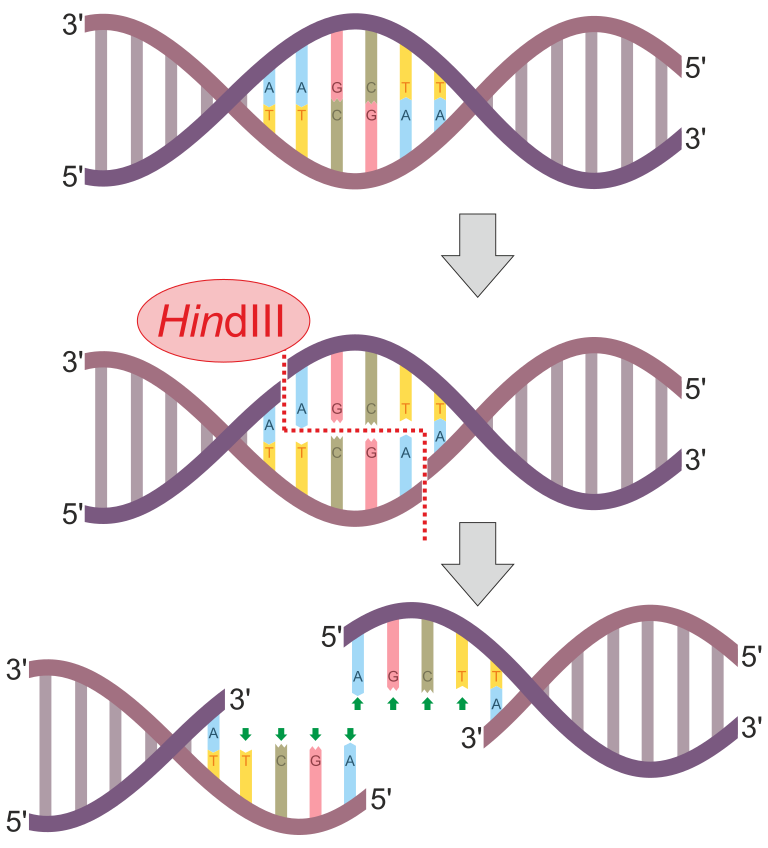
Sticky ends- restriction enzyme produces a staggered cut resulting in overhanging DNA fragments on the cut strands (e.g. HindIII, BamHI, EcoRI)
Blunt ends- restriction enzyme cuts in a straight line between two base pairs (e.g. SmaI, AluI)
Restriction enzyme sites appear in a genetic sequence by CHANCE in random locations. Researchers must be careful not to accidentally choose an enzyme that will cut where they don't want it to.
2. DNA Ligases: used to insert a DNA fragment into the vector by covalently joining complementary ends of the vector to the insert
Transformation
Wize Concept
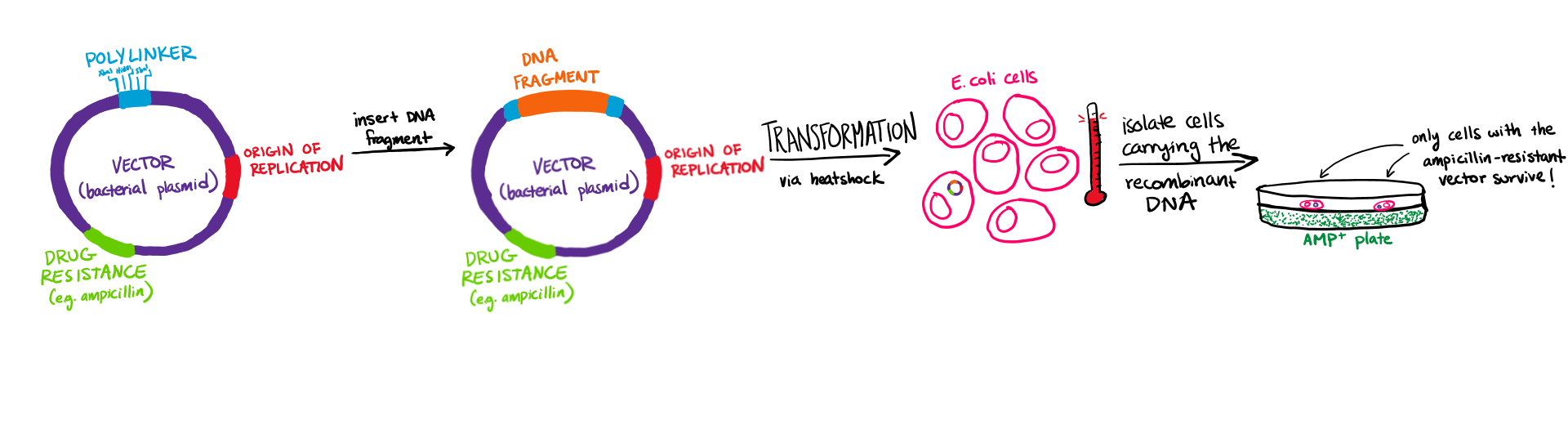
Bacteria, like E.coli, naturally have extrachromosomal plasmids which are replicated in every cell division. Similarly, the plasmid containing the DNA fragment will also be replicated.
This can have therapeutic value: E. coli can be used to mass produce genes that code for proteins that are important for human health, like hormones, insulin, etc.
Typically, E. coli vectors can carry DNA fragments up to 20kb (useful for many single genes!)
Larger inserts require researchers to use a specialized vector called a Bacterial Artificial Chromosome (BAC vector)
GFP-fusion molecules can also be inserted into vectors and then expressed in animals, tissues, or cells to determine the location of a particular protein.
DNA library
A collection of DNA fragments that have been inserted into cloning vectors
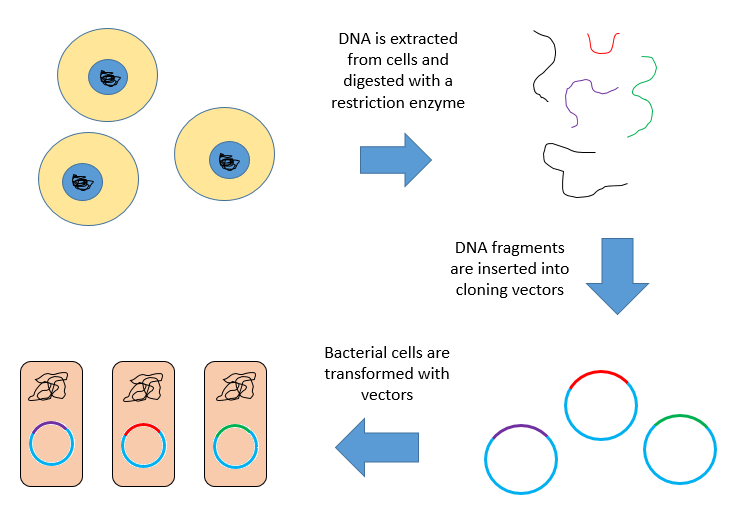
DNA libraries are useful in functional complementation studies: a screening strategy in which researchers look for a gene that rescues a certain recessive phenotype in an organism.
Exam Tip
Genomic libraries are useful for organisms with simple genomes (e.g. bacteria and yeast).
Complementary DNA (cDNA) libraries are better for higher organisms/ eukaryotes that have more complex genomes because these libraries only contain protein-coding genes (no intronic regions)
0:00 / 0:00
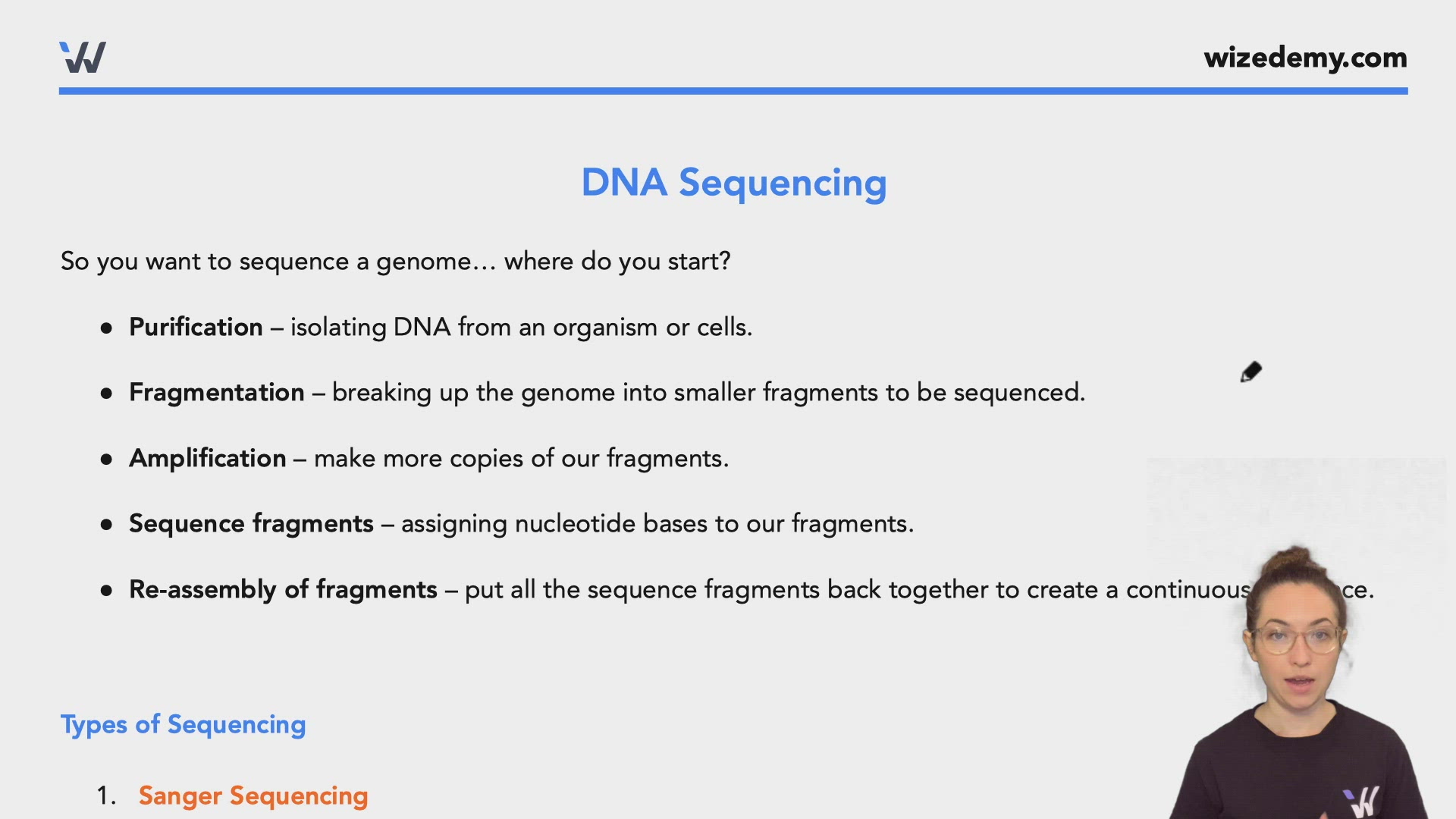
DNA Sequencing
So you want to sequence a genome… where do you start?
- Purification – isolating DNA from an organism or cells.
- Fragmentation – breaking up the genome into smaller fragments to be sequenced.
- Amplification – make more copies of our fragments.
- Sequence fragments – assigning nucleotide bases to our fragments.
- Re-assembly of fragments – put all the sequence fragments back together to create a continuous sequence.
Types of Sequencing
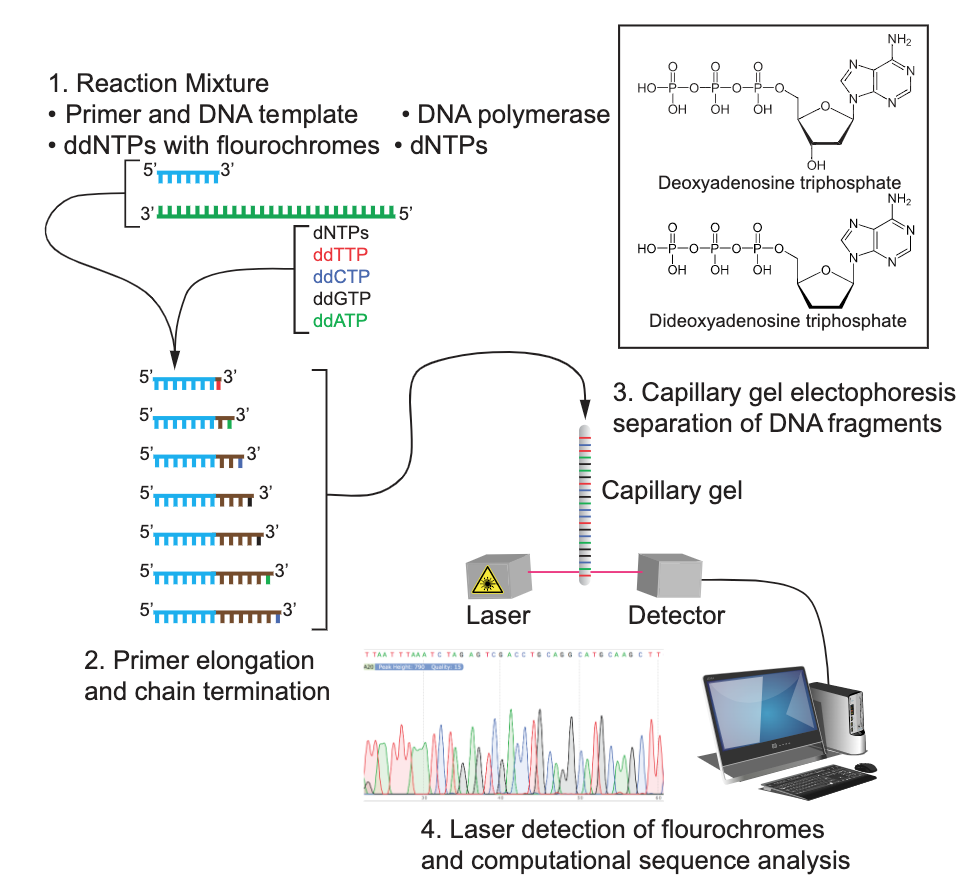
- Sanger Sequencing
- Also known as the dideoxy method = dideoxynucleotides have an H on the 3’ carbon of the sugar-phosphate backbone instead of OH attached to a fluorescent tag.
- How it works:
- Amplified fragments are replicated again in the presence of the ddNTPs.
- Replication enzyme uses normal nucleotide bases and then randomly inserts a ddNTP that stops replication.
- Fluorescently labeled sequencing fragments are run through electrophoresis to separate them by size.
- The fluorescent tags are all different colors for their respective nucleotide base, need to subject gel to fluorescent filter.
- Order of sequence = shortest to longest (fragment that travelled most to fragment that travelled least).
- Most useful in sequencing single genes.
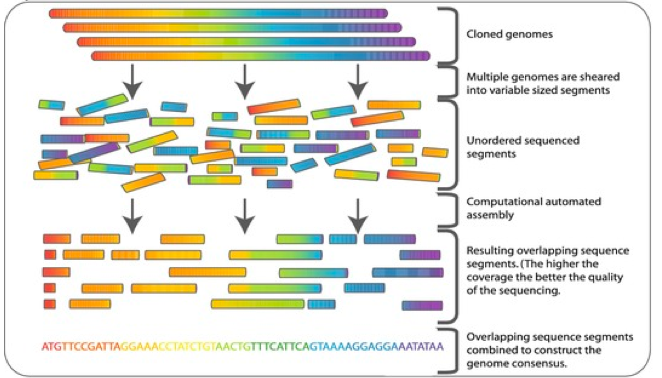
- Whole Genome Shotgun Sequencing
- Useful in sequencing the entire genome.
- How it works:
- Isolate genome DNA and break up into overlapping fragments.
- Do this by using 2 DNA samples that have been digested by 2 different restriction enzymes.
- Clone each fragment into a plasmid vector.
- Sequence the genomic DNA fragment in each clone.
- Use computer programs to re-align sequences based on areas of overlapping.
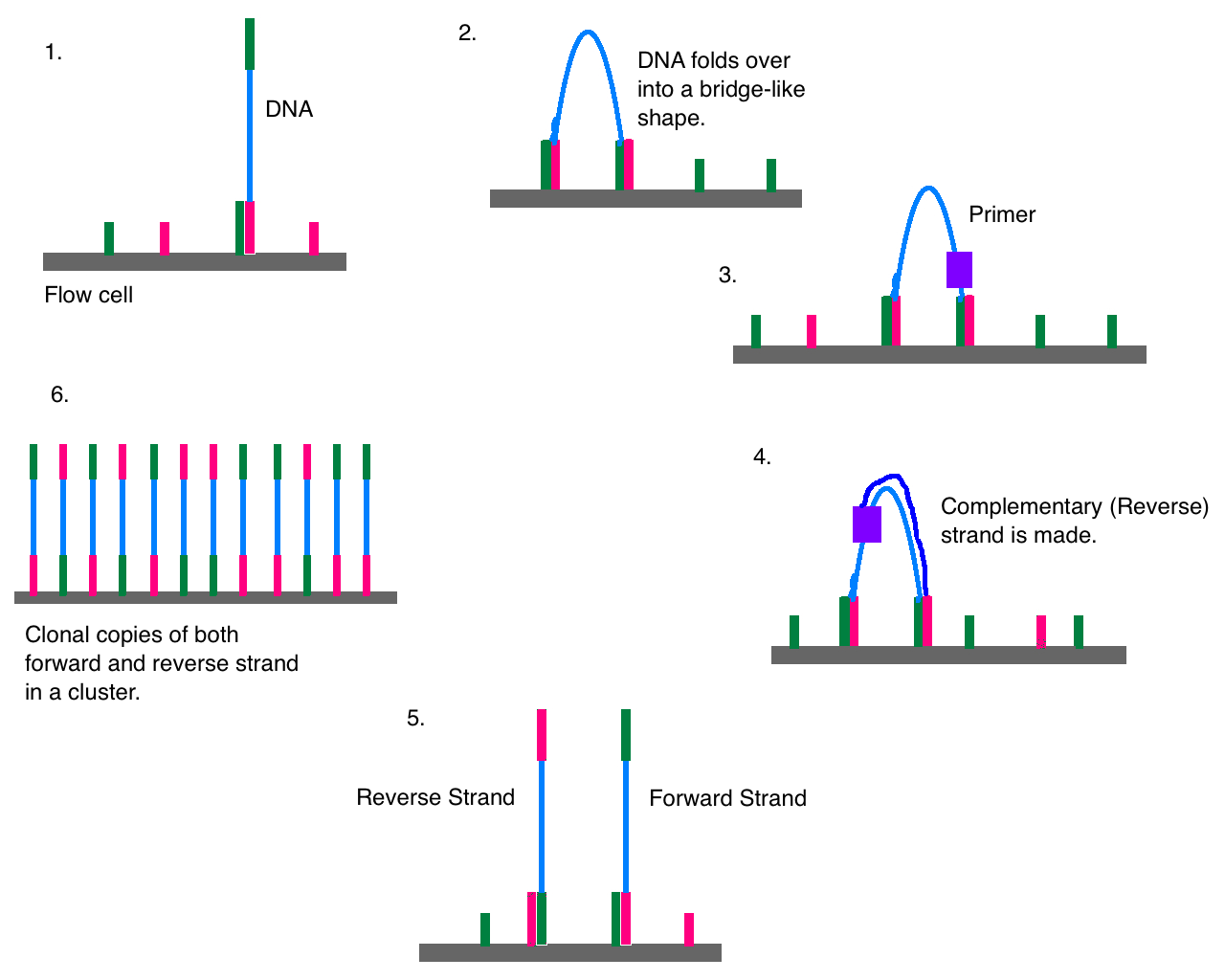
- Next Generation Sequencing
Allows one sequencing instrument to carry out billions of sequencing reactions at the same time.
- Useful for multiple gene sequencing of whole genome sequencing.
- How it works:
- DNA fragments prepared by adding double stranded linkers to both ends of the fragment.
- Fragments are amplified using PCR primers that are complementary to linkers.
- Primers are then used to covalently bond the DNA fragments to a solid surface in a tight cluster.
- The fragments are analyzed using a special microscope that detects which fluorescent labeled base is added to the DNA template by polymerase.
0:00 / 0:00
Microarrays
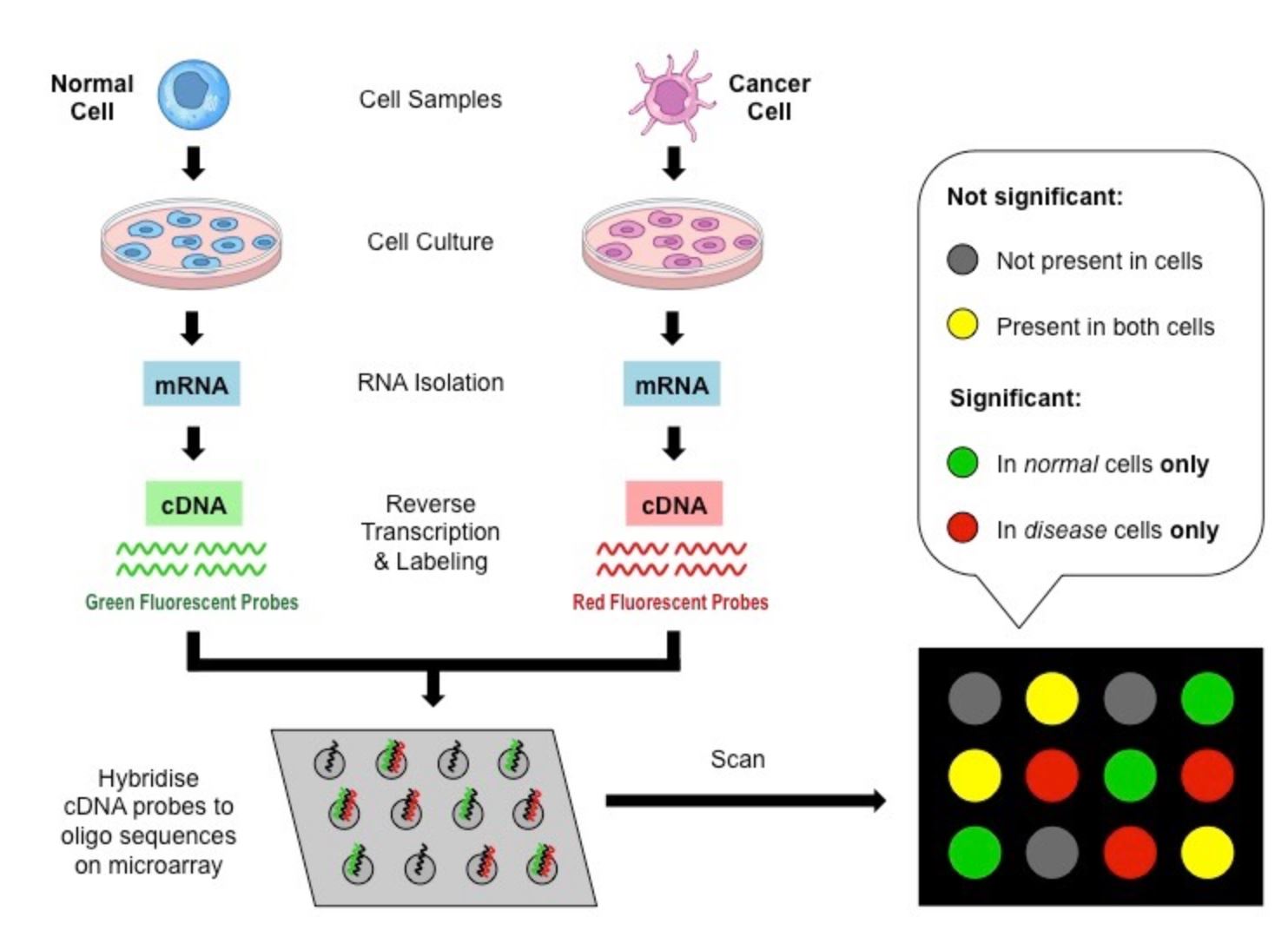
- A chip is designed to contain DNA probes which are complementary to all of the mRNAs in the cell. Each spot on the chip has a different probe
- Cells are lysed and RNA is isolated
- RNA is converted to the complementary DNA sequences (cDNA) through the activity or reverse transcriptase
- The cDNA is then fluorescently labeled
- The cDNA is hybridized to the microarray chip
- The chip is washed to remove unbound cDNA
- Fluorescence is then measured
- Each spot that is fluorescent indicates genes that were being expressed in the cells of interest
0:00 / 0:00
DNA Fingerprinting
Ever watched a crime drama on TV and wondered how a suspect was caught using DNA left at a crime scene? Well, that is done through DNA fingerprinting!
DNA fingerprinting/DNA profiling?
- Uses the amplification of variable regions in the human genome known as short tandem repeat sites to identify a person using polymerase chain reaction
- OR uses the digestion of DNA at specific restriction enzyme sites
- Often used in paternity testing and criminal investigations
Short Tandem Repeats
- The variable regions of the DNA used for DNA profiling
- 2-7 base pair repeat unit with variable repeat length in different individuals
- 13 STR locations are used in the CODIS database
- Using all 13 loci make the probability of misidentification 1 in 100’s of trillions (impossible!)
The steps to DNA fingerprinting?
- Identify samples
- Incubate samples with STR loci primers or incubate DNA with restriction enzymes
- Run DNA fragments through gel electrophoresis
- Identify length of STR (the number of repeats) based on the movement of DNA through the gel
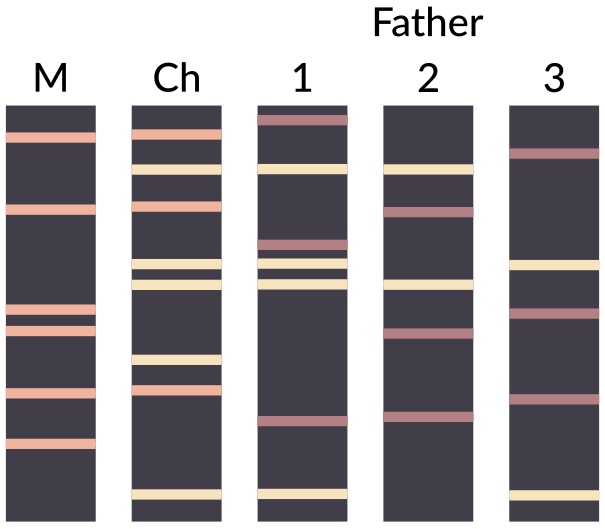
Example: Paternity Testing (CC BY-SA 3.0)
0:00 / 0:00
CRISPR
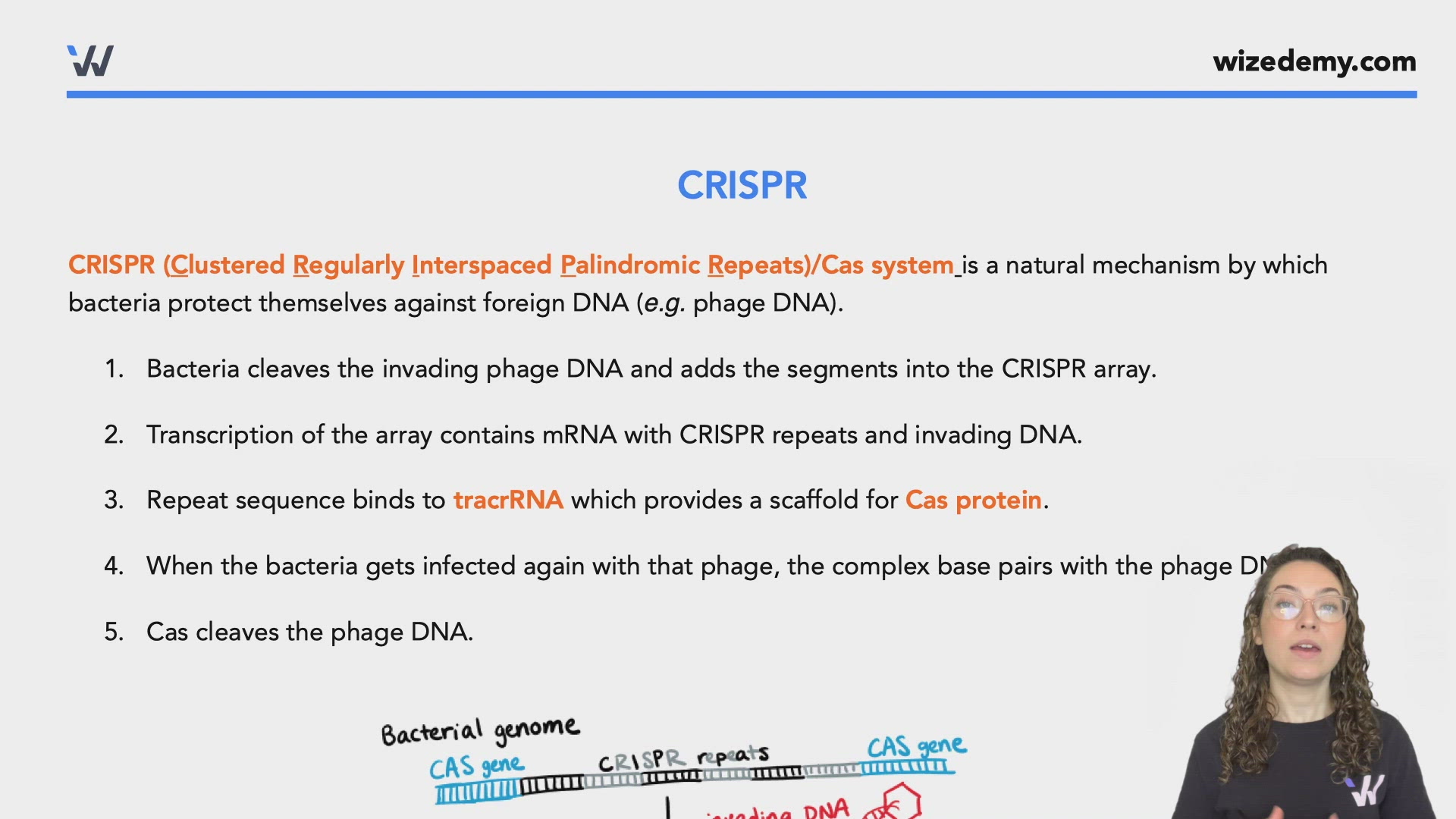
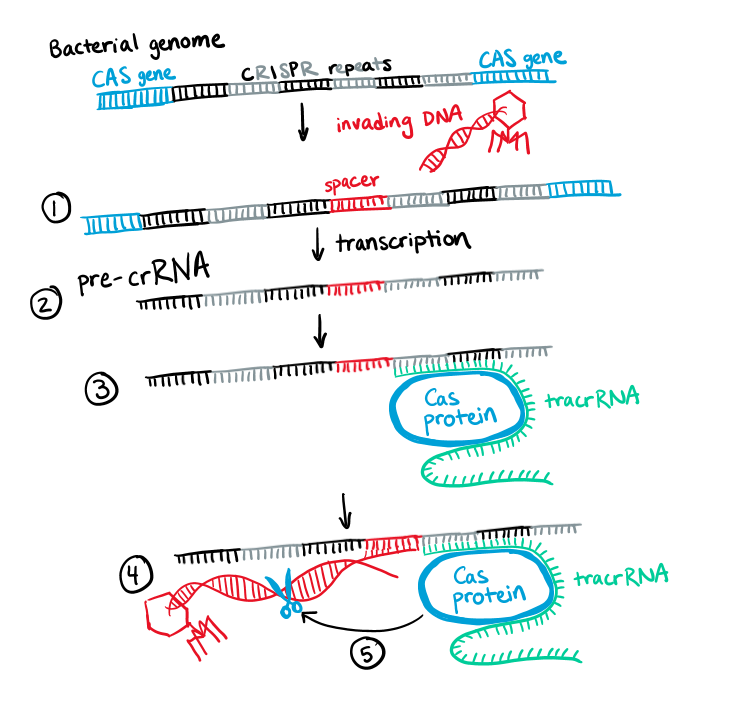
CRISPR (Clustered Regularly Interspaced Palindromic Repeats)/Cas system is a natural mechanism by which bacteria protect themselves against foreign DNA (e.g. phage DNA).
- Bacteria cleaves the invading phage DNA and adds the segments into the CRISPR array.
- Transcription of the array contains mRNA with CRISPR repeats and invading DNA.
- Repeat sequence binds to tracrRNA which provides a scaffold for Cas protein.
- When the bacteria gets infected again with that phage, the complex base pairs with the phage DNA.
- Cas cleaves the phage DNA.
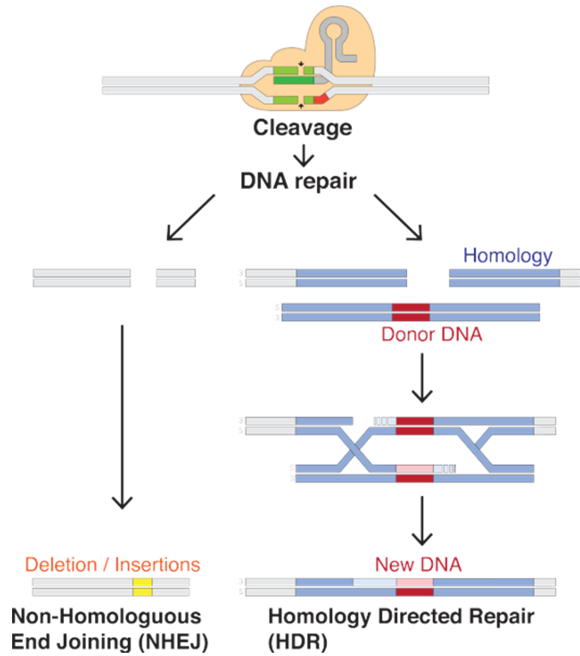
Researchers have adapted the system to be able to work in eukaryotic systems to cleave the genome at specific sites.
- Cas9 - engineered version of the Cas endonuclease.
- Guide RNA - engineered to bind to Cas9 and to a specific site on genomic DNA (site of choice).
- This site can be any gene the researcher chooses to inactivate or replace!
- When Cas9 and the guide RNA are both expressed in cells, Cas9 will cleave the DNA at the targeted site.
- The DNA will often repair itself through Non-Homologous End Joining, resulting in the loss of a few base pairs.
- Can cause a deletion or frameshift which inactivates the gene.
- Genes can also be introduced if the cell repairs itself through Homology Directed Repair (HDR) mechanism.
- Add segments that match the sequences flanking the cleavage site.
- When the DNA is cleaved, homologous recombination will insert the donor DNA sequence into the cleavage site during DNA repair.
0:00 / 0:00
The ability of nucleic acids to hybridize to each other is important for which of the following methods? (Select all the apply)
A) Northern Blot
B) Southern Blot
C) Western Blot
D) PCR
E) Gel electrophoresis
The correct answer is A, B and D.
Hybridization is important in Northern blots because you need to use labeled probes that detect your RNA fragments by hybridizing to them. Similarly, hybridization is also important in southern blot to detect DNA fragments.
Hybridization is also important in PCR because your primers need to be able to hybridize to complementary regions of the DNA in order to amplify the DNA fragment.
0:00 / 0:00
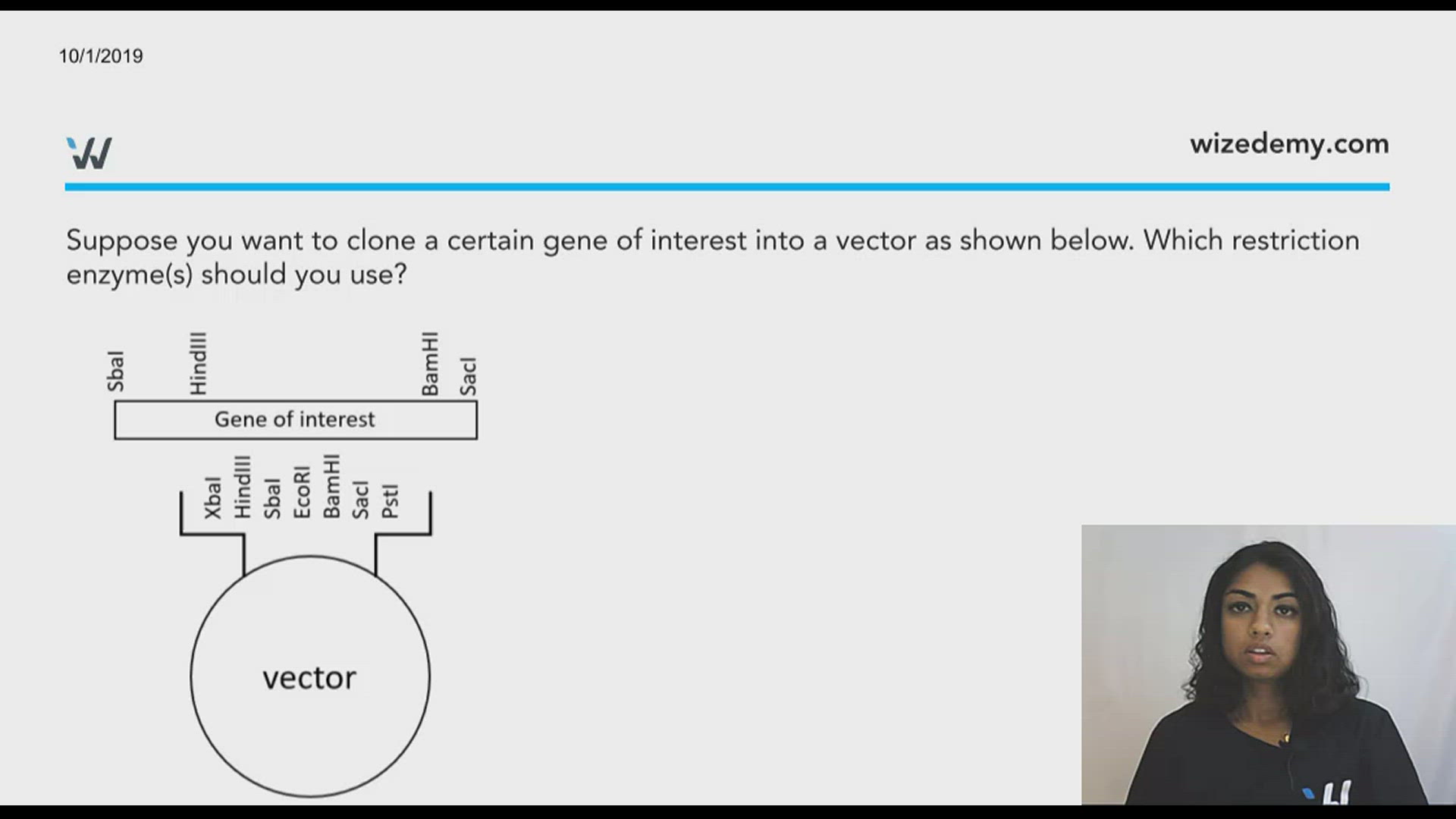
Suppose you want to clone a certain gene of interest into a vector as shown below. Which restriction enzyme(s) should you use?
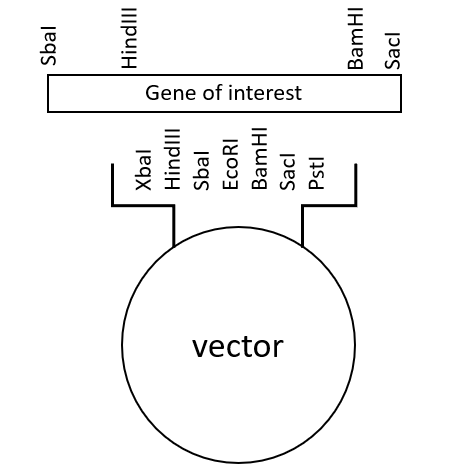
You should use SbaI and SacI.
SbaI is at the N-terminus of the gene of interest and SacI is at the C-terminus. Therefore, using these two restriction enzymes will ensure that the entire gene of interest will be inserted in the proper direction into the vector. Since XbaI, EcoRI, and PstI are not present on the gene of interest, they cannot be used for cloning this particular gene into this vector. HindIII and BamHI are present on the gene of interest but digesting the gene of interest with either of these two restriction enzymes would cleave the gene, so an incomplete gene fragment would be inserted into the vector.
0:00 / 0:00
Which of the following is not a step in bacterial transformation?
A) Drug selective isolation of bacterial cells containing the vector
B) Sequencing the bacterial vector
C) Restriction enzyme digest of the DNA fragment insert
D) Restriction enzyme digest of the bacterial vector
E) Exposing the bacterial cells to heat shock
B) is the correct answer. Sequencing the bacterial vector is not a necessary step in bacterial transformation.
Bacterial transformation requires the researcher to
1. Digest the DNA fragment insert and the bacterial vector with the same set of restriction enzymes (C and D)
2. Insert the DNA fragment into the bacterial vector using DNA ligase to form a recombinant DNA plasmid
3. Mix the recombinant plasmid with the bacterial cells and heat shock the cells so that they take up the plasmid (E)
4. Isolate the bacterial cells that took up the plasmid using drug selection (A)
5. Allow the bacterial cells to replicate, thereby replicating the recombinant DNA plasmid
0:00 / 0:00
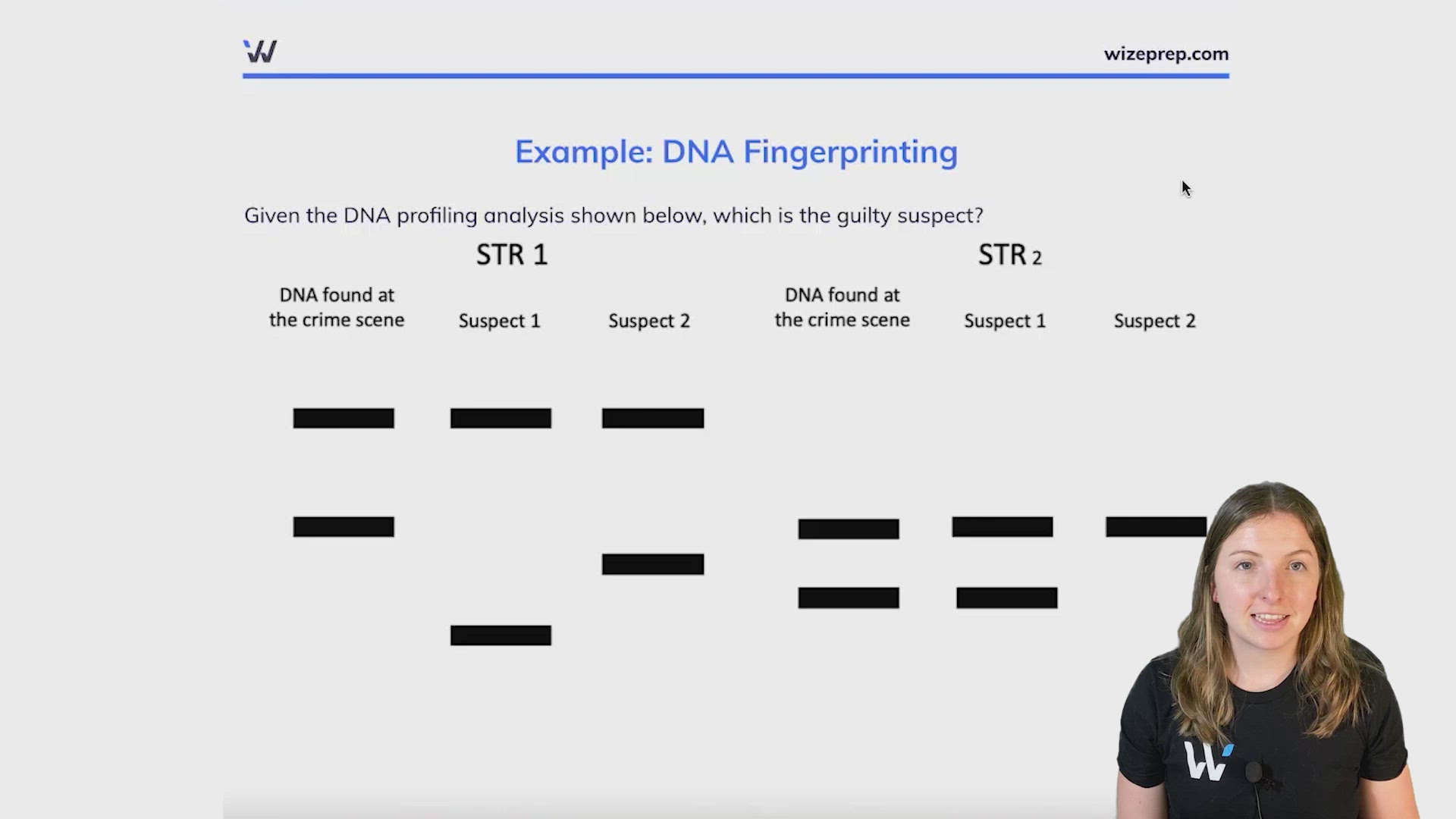
Example: DNA Fingerprinting
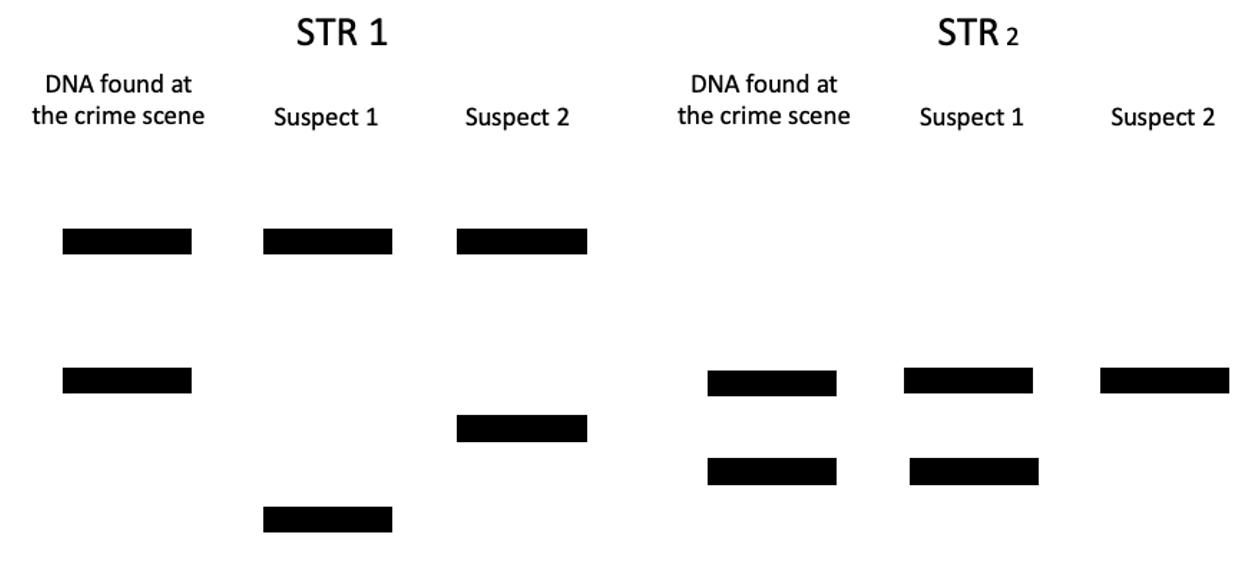
Given the DNA profiling analysis shown below, which is the guilty suspect?