0:00 / 0:00
Enzymes
- Drastically increase rates of reactions, allowing cellular function (and more specifically metabolism) to occur
- Are highly specific in their substrates (even showing stereo-specificity)
- Increase reaction rate through stabilization of the transition state (lowering the energy)
- Each enzyme has a specific substrate and active site
- There are six classes of enzymes:
1) Oxidoreductases:
- Catalyze oxidation-reduction reactions
- Named: oxidases, dehydrogenases, reductases
- One substrate is oxidized (loses electrons)
- The other is reduced (gains electrons)
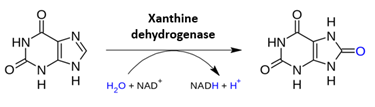
https://es.m.wikipedia.org/wiki/Archivo:Xanthine_dehydrogenase.svg. J3D3. Creative Commons Atribución-CompartirIgual 4.0 Internacional.
Wize Tip
To track where the electrons are going, follow the hydrogen atoms. Typically oxidized molecules lose hydrogen atoms and reduced molecules gain hydrogen atoms.
2) Transferases:
- Group transfer reactions
- Kinases transfer phosphate groups (phosphorylation)
- Transketolase reaction:
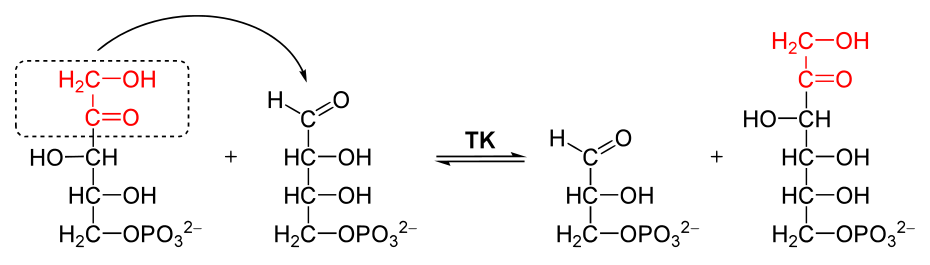
https://de.wikipedia.org/wiki/Datei:Transketolase_reaction.svg. Yikrazuul. Creative-Commons-Lizenz „Namensnennung – Weitergabe unter gleichen Bedingungen 3.0 nicht portiert
3) Hydrolases:
- Catalyzes hydrolysis reactions (breaking apart molecules with water)
- Largest group of enzymes
- Group transfers to water
- Proteases, lipases, nucleases, esterases
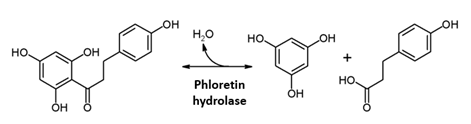
https://commons.wikimedia.org/wiki/File:Phloretin_hydrolase_reaction.PNG. akane700. This file is licensed under the Creative Commons Attribution-Share Alike 3.0 Unported license.
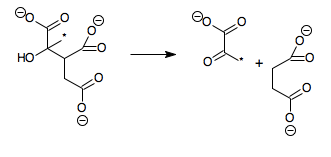
4) Lyases
- Addition of groups to double bonds or removal of groups to form double bonds
- Also referred to as synthases (perform addition reactions)
- Methylisocitrate lyase:
https://commons.wikimedia.org/wiki/File:MICLreac.png. Mah159. This work has been released into the public domain.
5) Isomerases:
- Transfer groups within molecules (create isomers)
- Mutases
- Isopentenyl pyrophosphate isomerase:

https://commons.wikimedia.org/wiki/File:IPP_isomerase_reaction.svg. Vaccinationist. This file is licensed under the Creative Commons Attribution-Share Alike 3.0 Unported license.
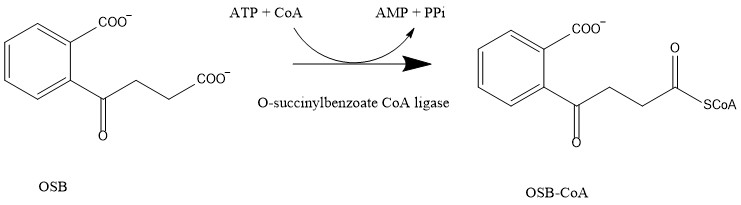
6) Ligases:
- Joins to molecules through the use of ATP (energy source)
- Synthetase
https://en.wikipedia.org/wiki/File:O-succinylbenzoate-CoA_ligase_illustration.jpg. Clairegabrielle.14. This file is licensed under the Creative Commons Attribution-Share Alike 4.0 International license.
0:00 / 0:00
Enzyme Active Site
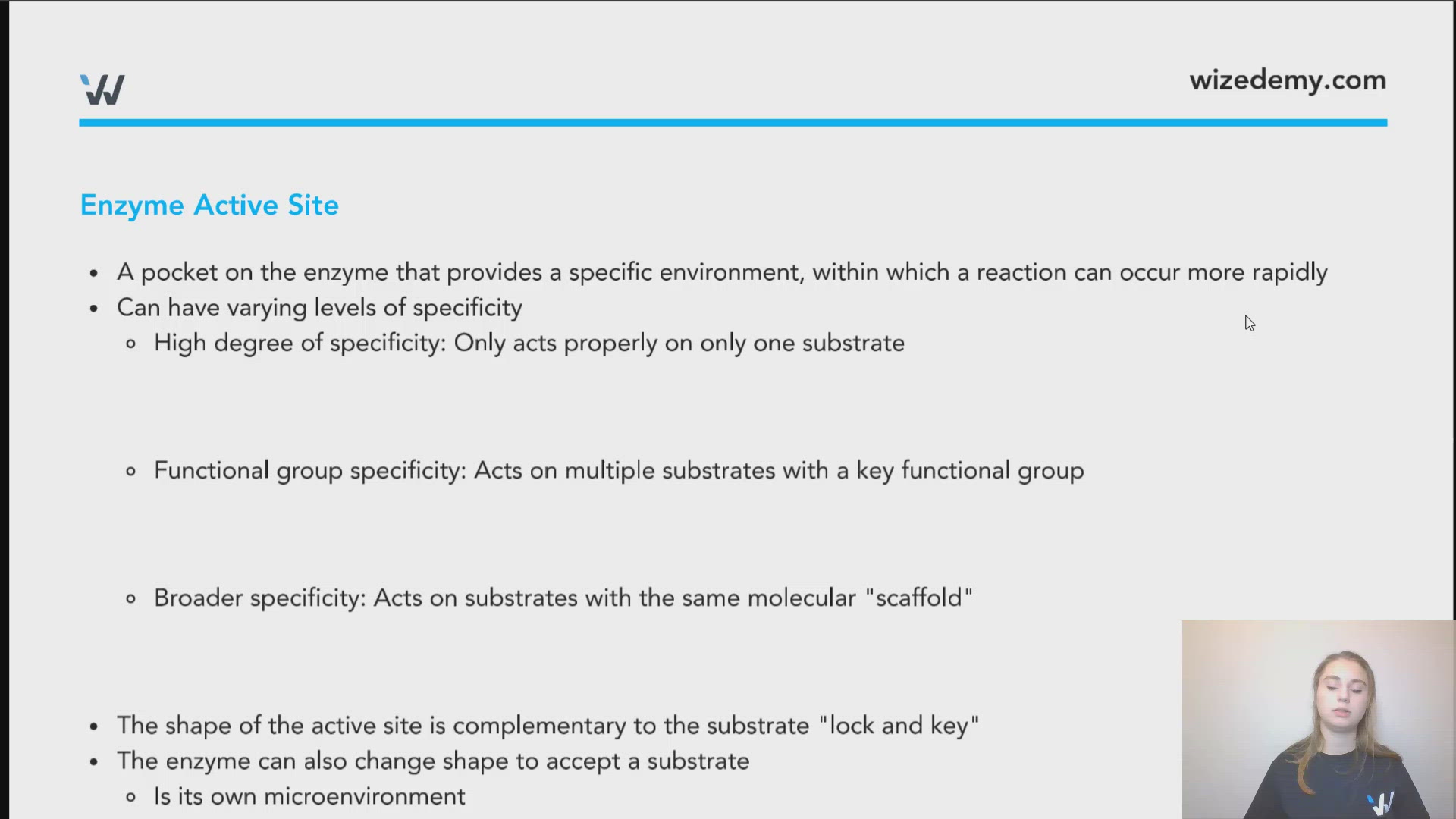
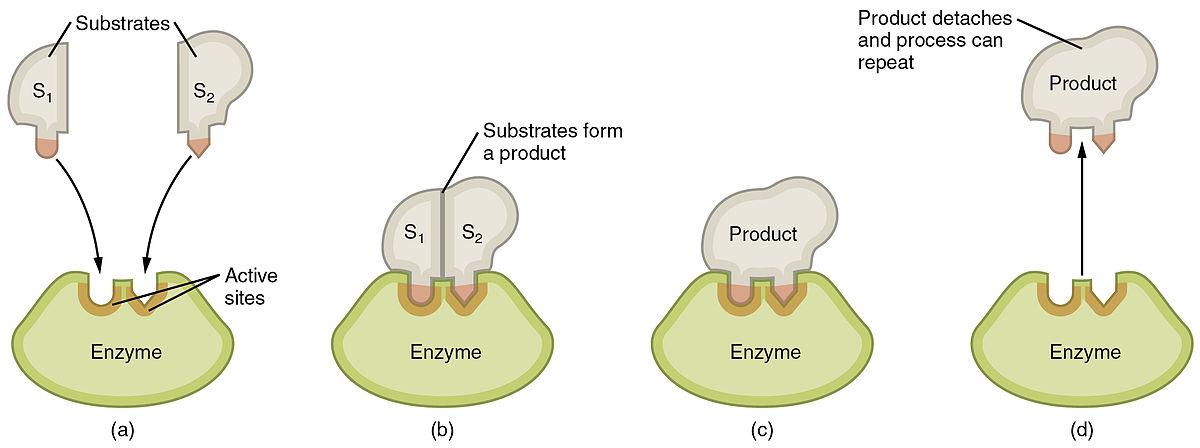
- A pocket on the enzyme that provides a specific environment, within which a reaction can occur more rapidly
- Can have varying levels of specificity
- High degree of specificity: Only acts properly on only one substrate
- Functional group specificity: Acts on multiple substrates with a key functional group
- Broader specificity: Acts on substrates with the same molecular "scaffold"
- The shape of the active site is complementary to the substrate "lock and key"
- The enzyme can also change shape to accept a substrate
- Is its own microenvironment
https://commons.wikimedia.org/wiki/File:227_Steps_in_an_Enzymatic_Reaction-01.jpg. OpenStax College. This file is licensed under the Creative Commons Attribution 3.0 Unported license.
0:00 / 0:00
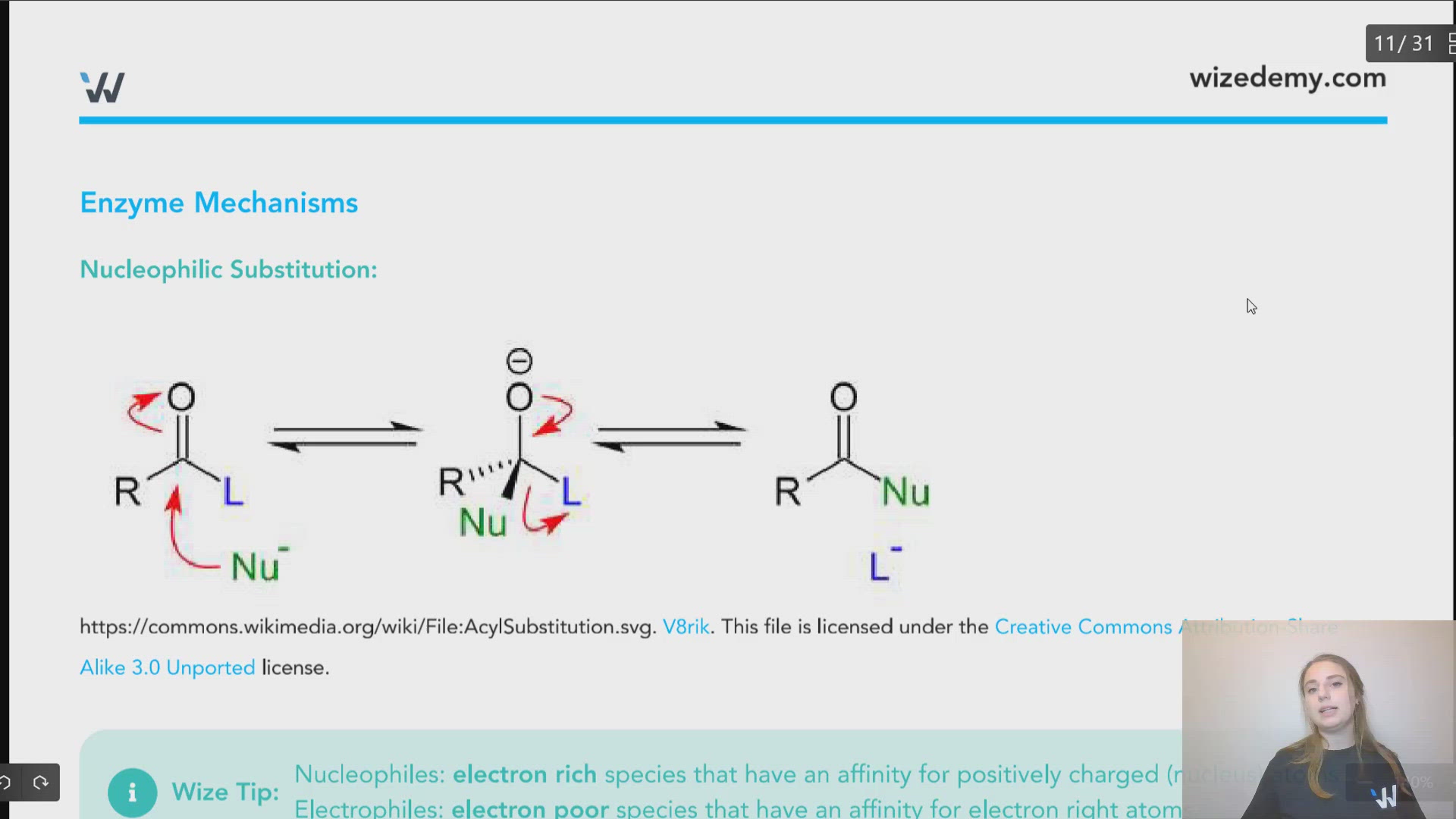
Enzyme Mechanisms
Nucleophilic Substitution:
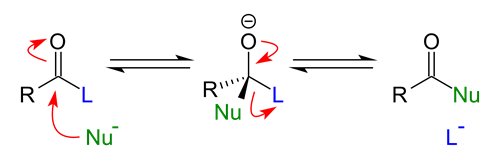
https://commons.wikimedia.org/wiki/File:AcylSubstitution.svg. V8rik. This file is licensed under the Creative Commons Attribution-Share Alike 3.0 Unported license.
Wize Tip
Nucleophiles: electron rich species that have an affinity for positively charged (nucleus) atoms
Electrophiles: electron poor species that have an affinity for electron rich atoms
Proximity Effect:
- Brings components close together, increasing the chance of completing the reaction
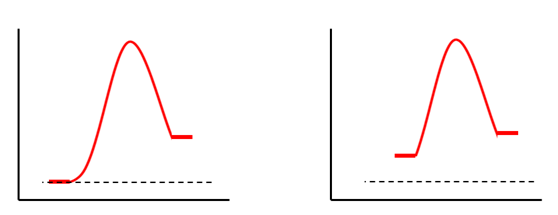
Stabilization of Transition State:
- Transition states are fleeting and unstable
- The enzyme binds to the transition state and stabilizes it
Acid-Base Catalysis:
- Electrons are either transferred from an acid catalyst to the substrate or from the substrate to a base catalyst
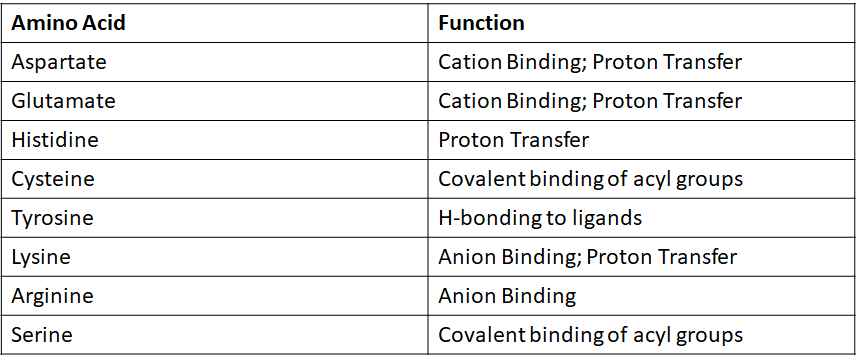
Roles of Amino Acid Functional Groups:
0:00 / 0:00
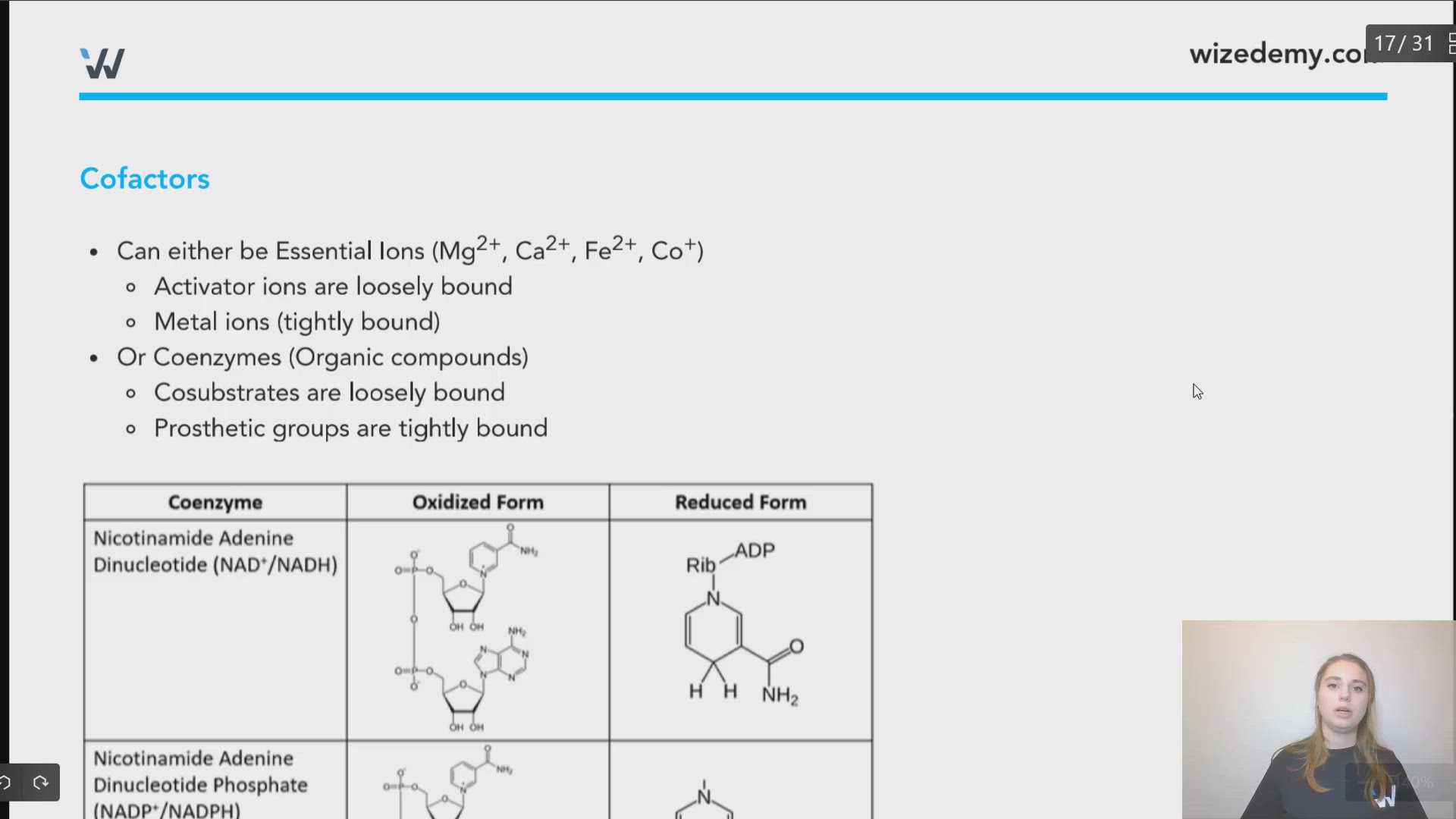
Cofactors
- Can either be Essential Ions (Mg2+, Ca2+, Fe2+, Co+)
- Activator ions are loosely bound
- Metal ions (tightly bound)
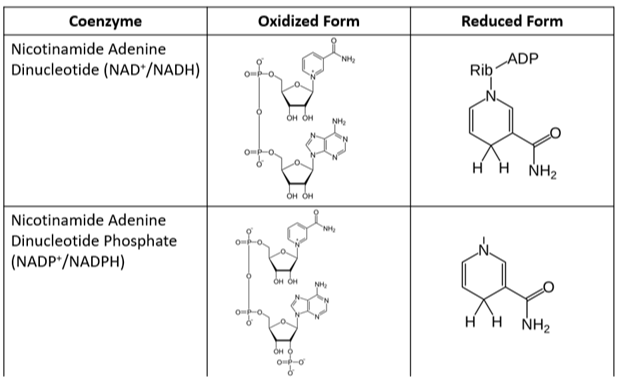
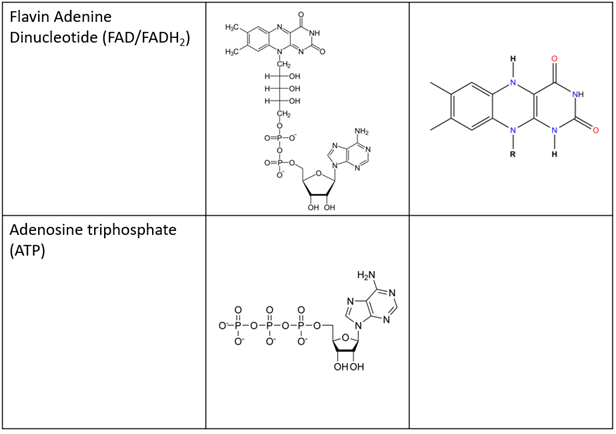
- Or Coenzymes (Organic compounds)
- Cosubstrates are loosely bound
- Prosthetic groups are tightly bound
https://commons.wikimedia.org/wiki/File:FAD_FADH2_equlibrium.png
https://commons.wikimedia.org/wiki/File:ATP_chemical_structure.png
0:00 / 0:00
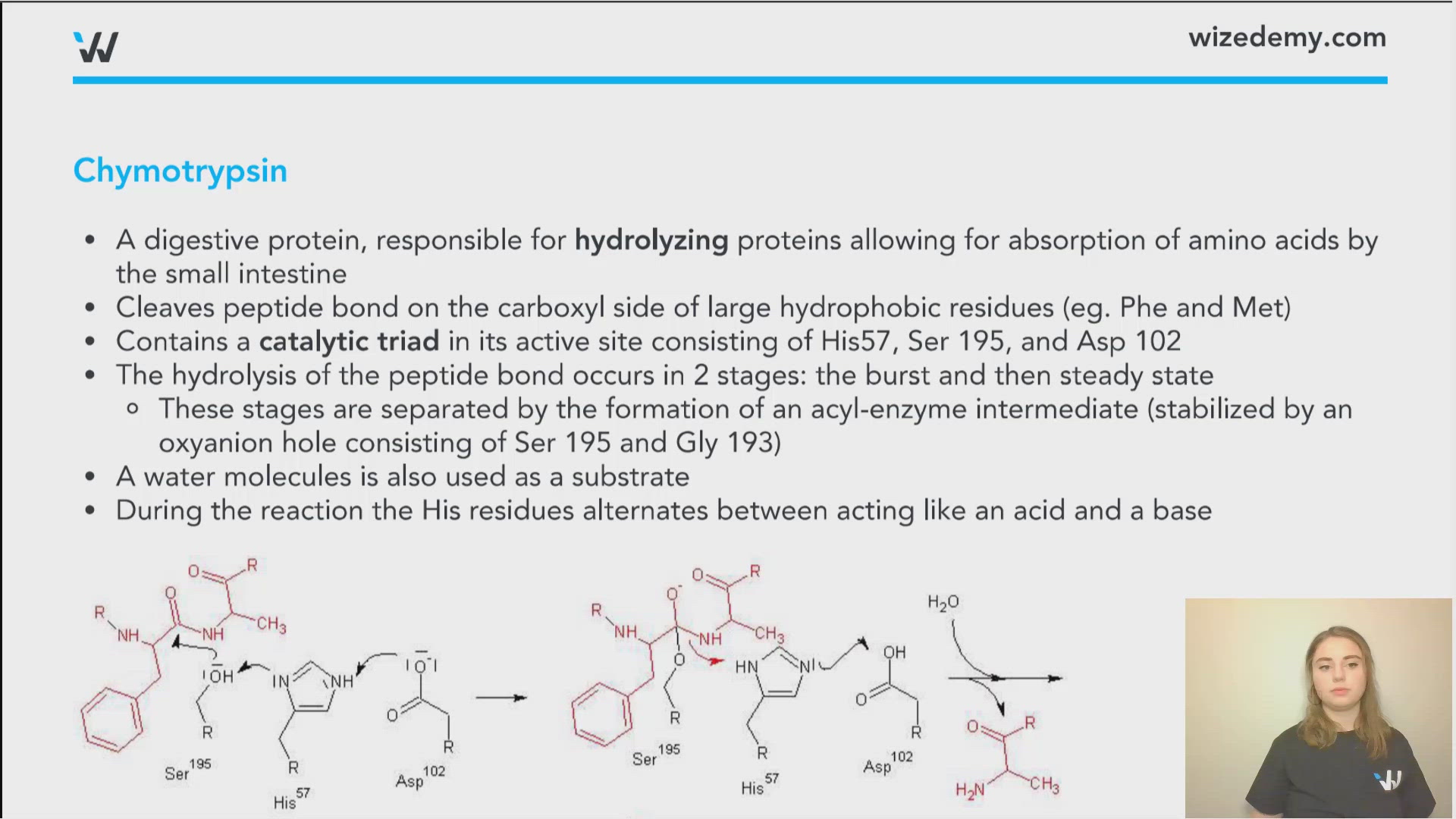
Chymotrypsin
- A digestive protein, responsible for hydrolyzing proteins allowing for absorption of amino acids by the small intestine
- Cleaves peptide bond on the carboxyl side of large hydrophobic residues (eg. Phe and Met)
- Contains a catalytic triad in its active site consisting of His57, Ser 195, and Asp 102
- The hydrolysis of the peptide bond occurs in 2 stages: the burst and then steady state
- These stages are separated by the formation of an acyl-enzyme intermediate (stabilized by an oxyanion hole consisting of Ser 195 and Gly 193)
- A water molecules is also used as a substrate
- During the reaction the His residues alternates between acting like an acid and a base
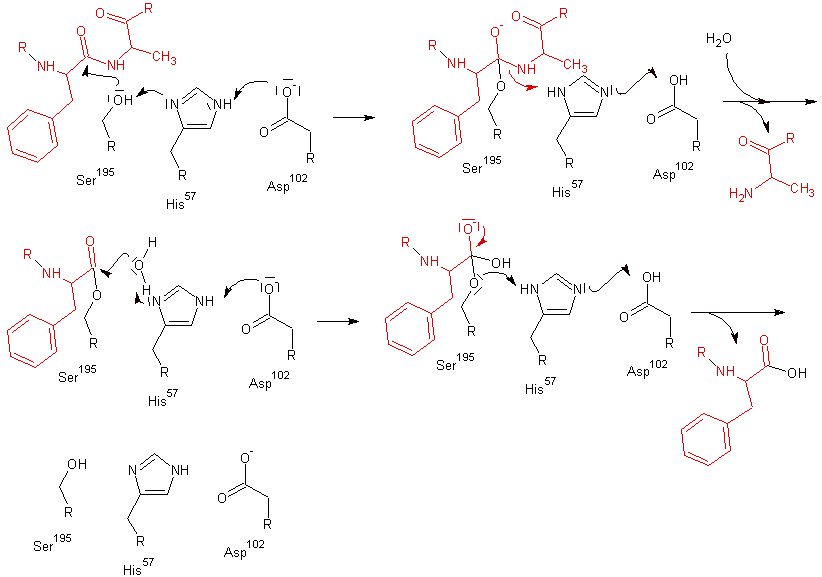
https://commons.wikimedia.org/wiki/File:Mechanism_of_peptide_bond_cleavage_in_%CE%B1-chymotrypsin.gif. Felix Plasser. Creative Commons Attribution-Share Alike 3.0 Unported license.
Wize Tip
Because His has a pKa at round 7, it can be both protonated and deprotonated easily at physiological pH. Allowing it to act as both an acid and a base over the course of the reaction.
0:00 / 0:00
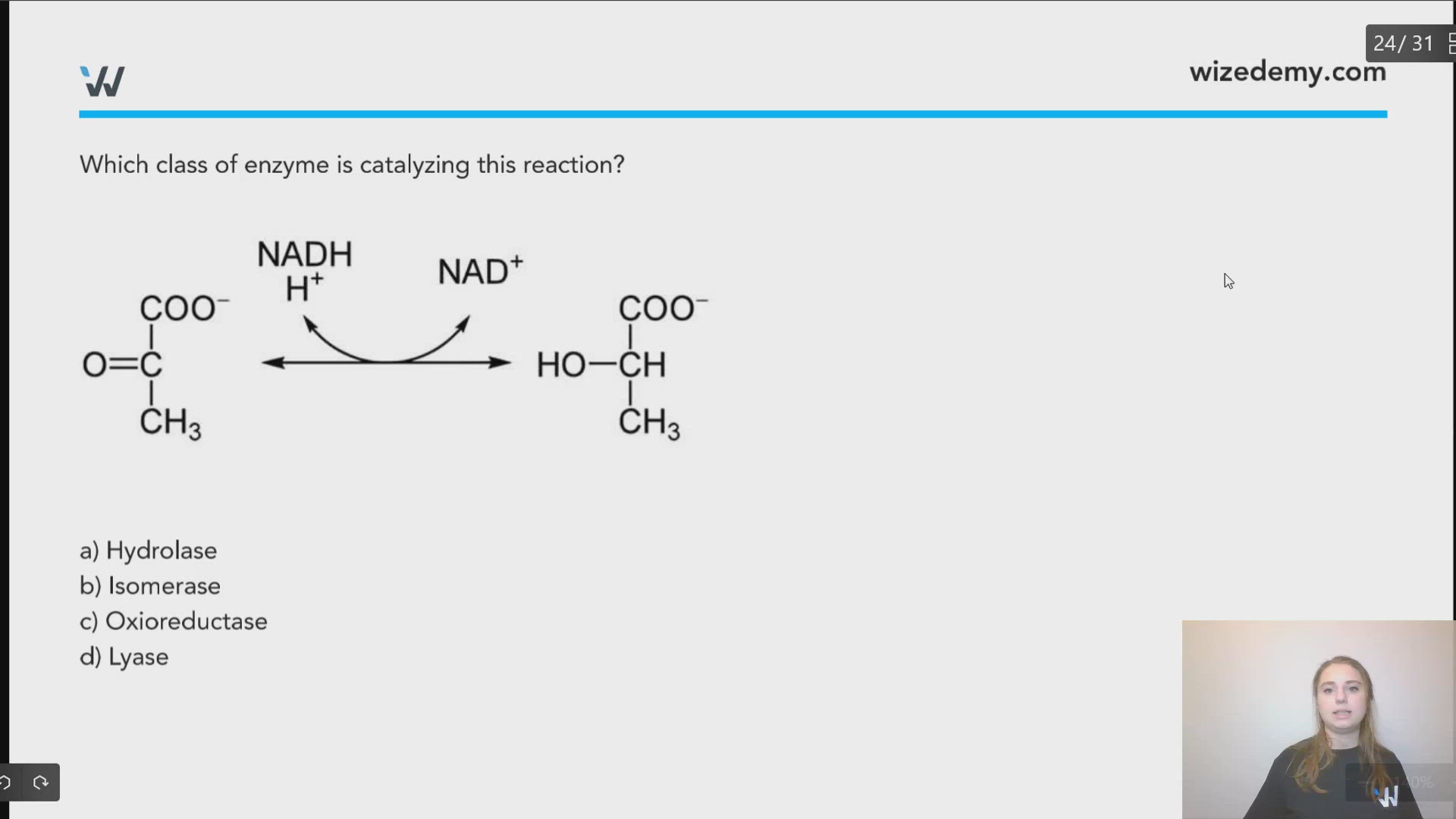
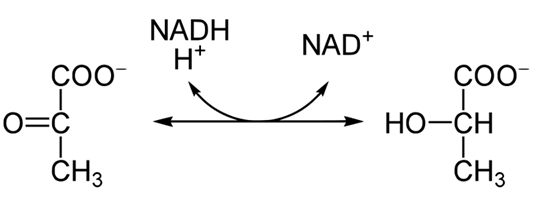
Which class of enzyme is catalyzing this reaction?
a) Hydrolase
b) Isomerase
c) Oxidoreductase
d) Lyase
c) oxidoreductase. The substrate is getting reduced and the NADH was oxidized.
0:00 / 0:00
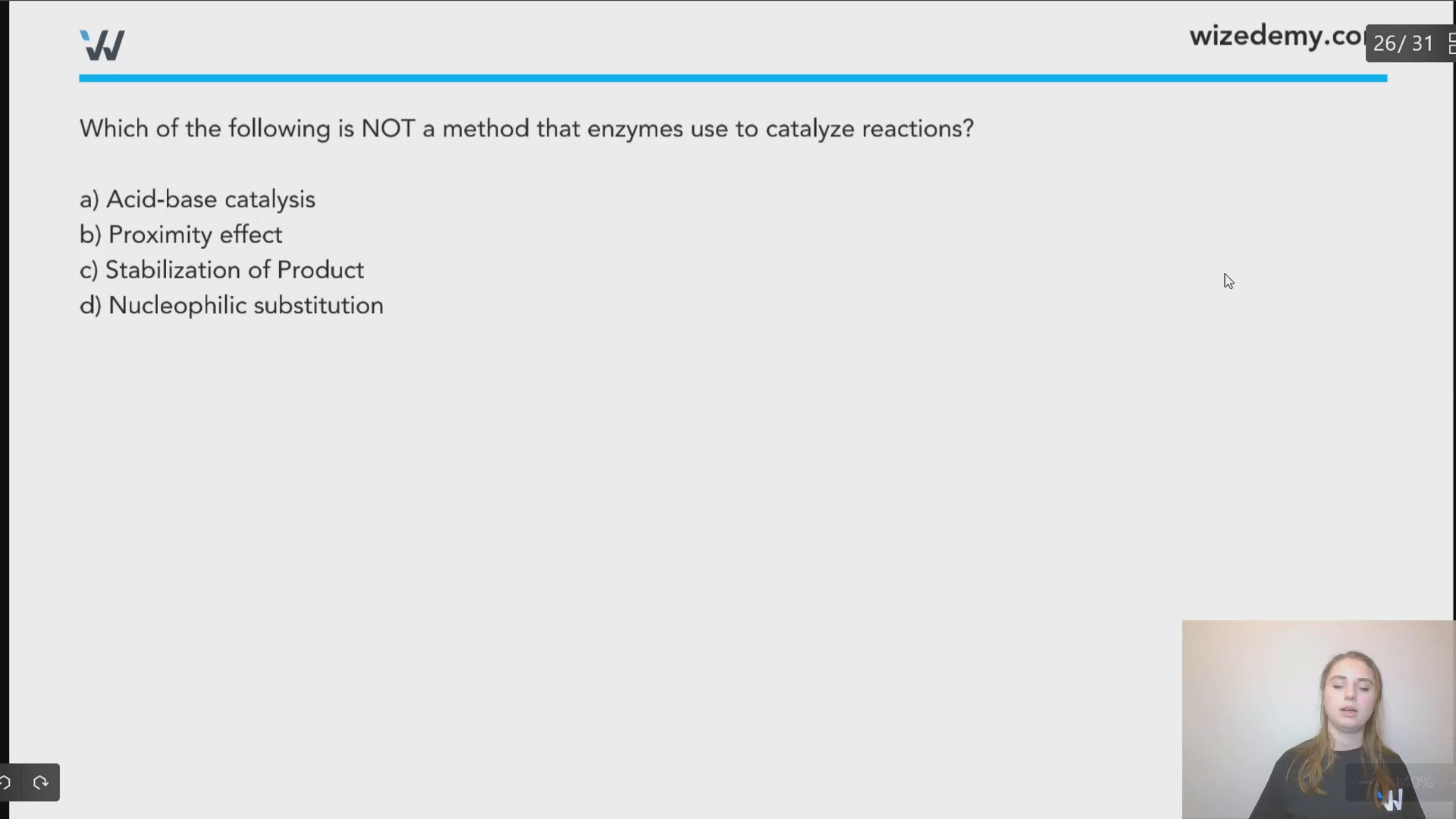
Which of the following is NOT a method that enzymes use to catalyze reactions?
a) Acid-base catalysis
b) Proximity effect
c) Stabilization of Product
d) Nucleophilic substitution
c) Enzymes stabilize the transition state not the products
0:00 / 0:00
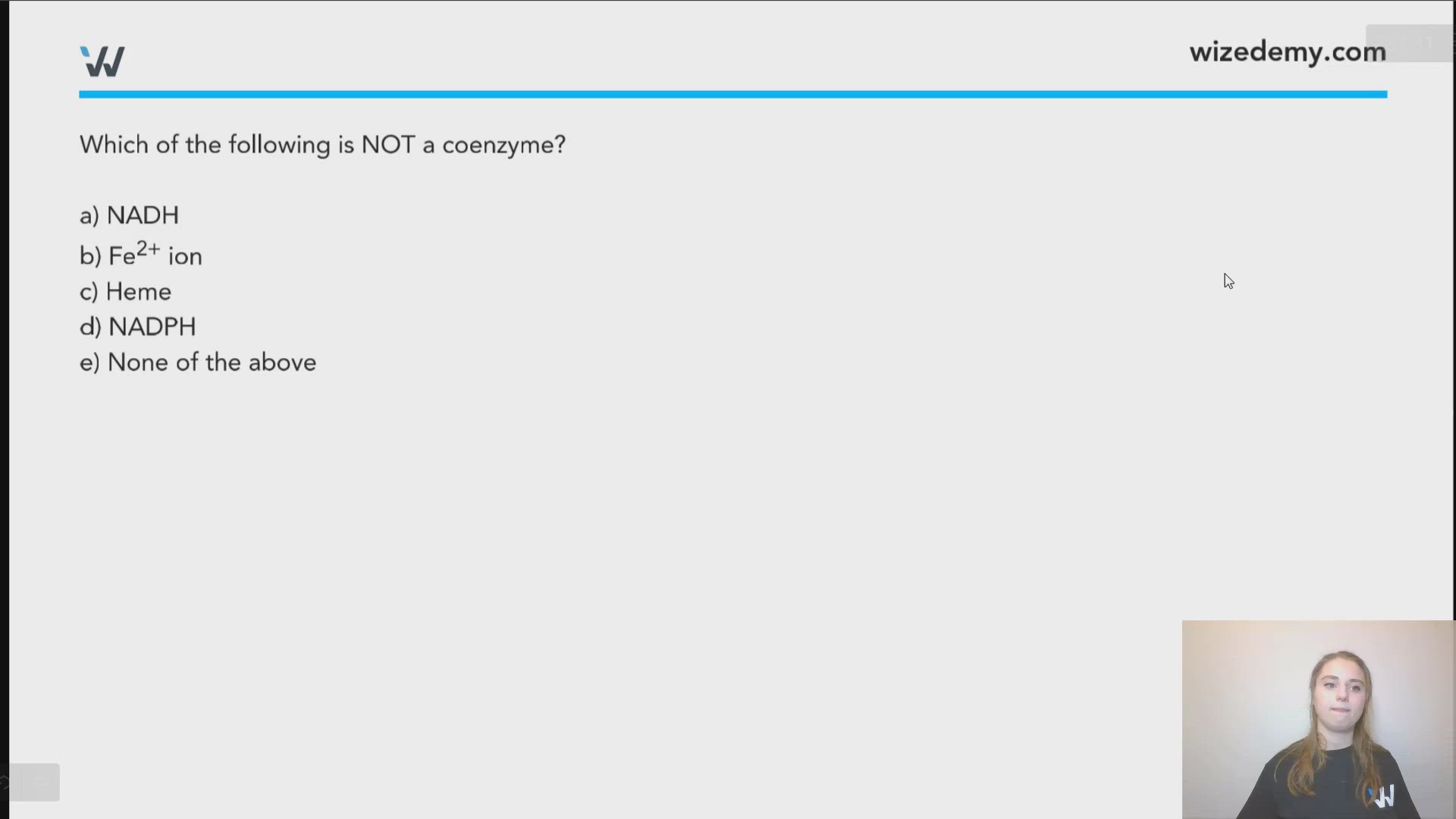
Which of the following is NOT a coenzyme?
a) NADH
b) Fe2+ ion
c) Heme
d) NADPH
e) None of the above
b) Fe2+ ion is a cofactor not a coenzyme
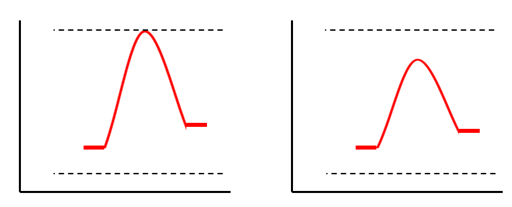
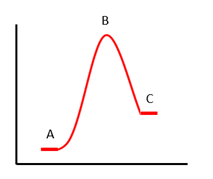
What is FALSE about this energy diagram of an uncatalyzed reaction?
0:00 / 0:00
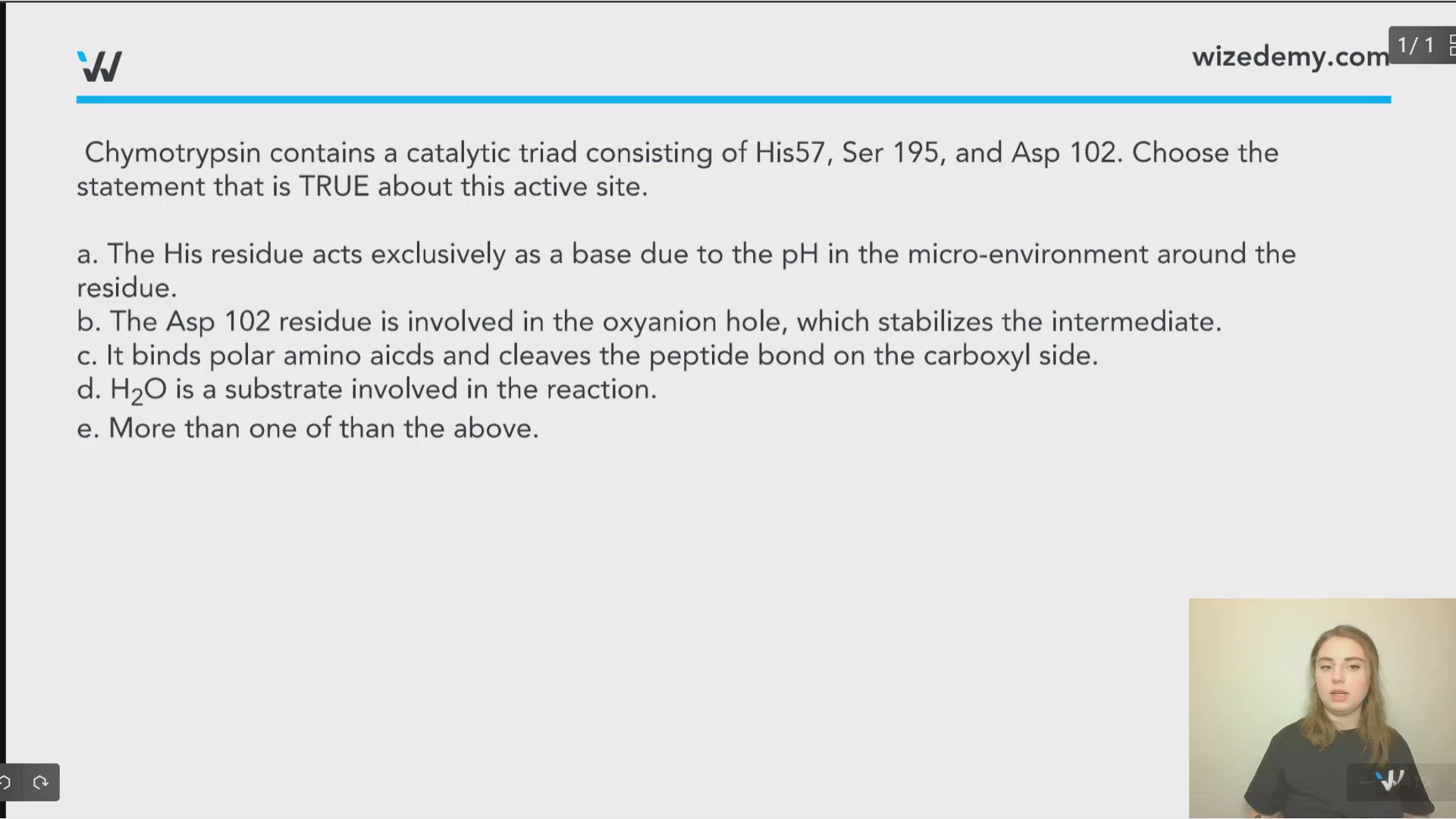
Chymotrypsin contains a catalytic triad consisting of His57, Ser 195, and Asp 102. Choose the statement that is TRUE about this active site.
a. The His residue acts exclusively as a base due to the pH in the micro-environment around the residue.
b. The Asp 102 residue is involved in the oxyanion hole, which stabilizes the intermediate.
c. It binds polar amino aicds and cleaves the peptide bond on the carboxyl side.
d. H2O is a substrate involved in the reaction.
e. More than one of than the above.
d. Is true.
The His residues alternates roles as both acid and base.
Ser 195 is involved in the oxyanion whole along with Gly 193.
Chymotrypsin cleaves peptide bonds on the carboxyl side of large hydrophobic residues.