Wize University Biochemistry Textbook > Ligand-binding: Myoglobin and Hemoglobin
Ligand-binding: Myoglobin and Hemoglobin
0:00 / 0:00
Globular Proteins
- Proteins which are typically spherical and mainly consist of secondary structures
- Many globular proteins are enzymes. Meaning they bind to a molecule and facilitate a reaction
eg. Myoglobin and Ribonuclease A
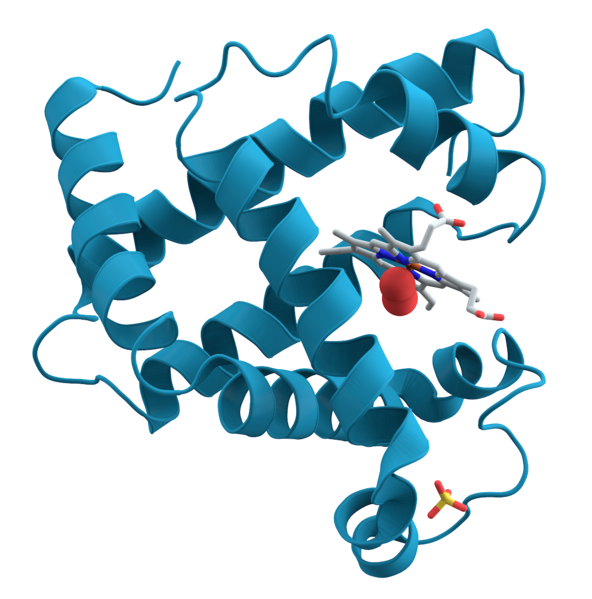
Myoglobin
- Found in the muscles of aquatic vertebrates
- It's structural arrangement is seen in globin proteins and contains a binding pocket for a heme group
- The heme group binds oxygen and is stored by the protein until used
- Myoglobin is 153 amino acids long with 121 of those making up 8 α-helix units which are folded via β-turns
0:00 / 0:00
Hemoglobin
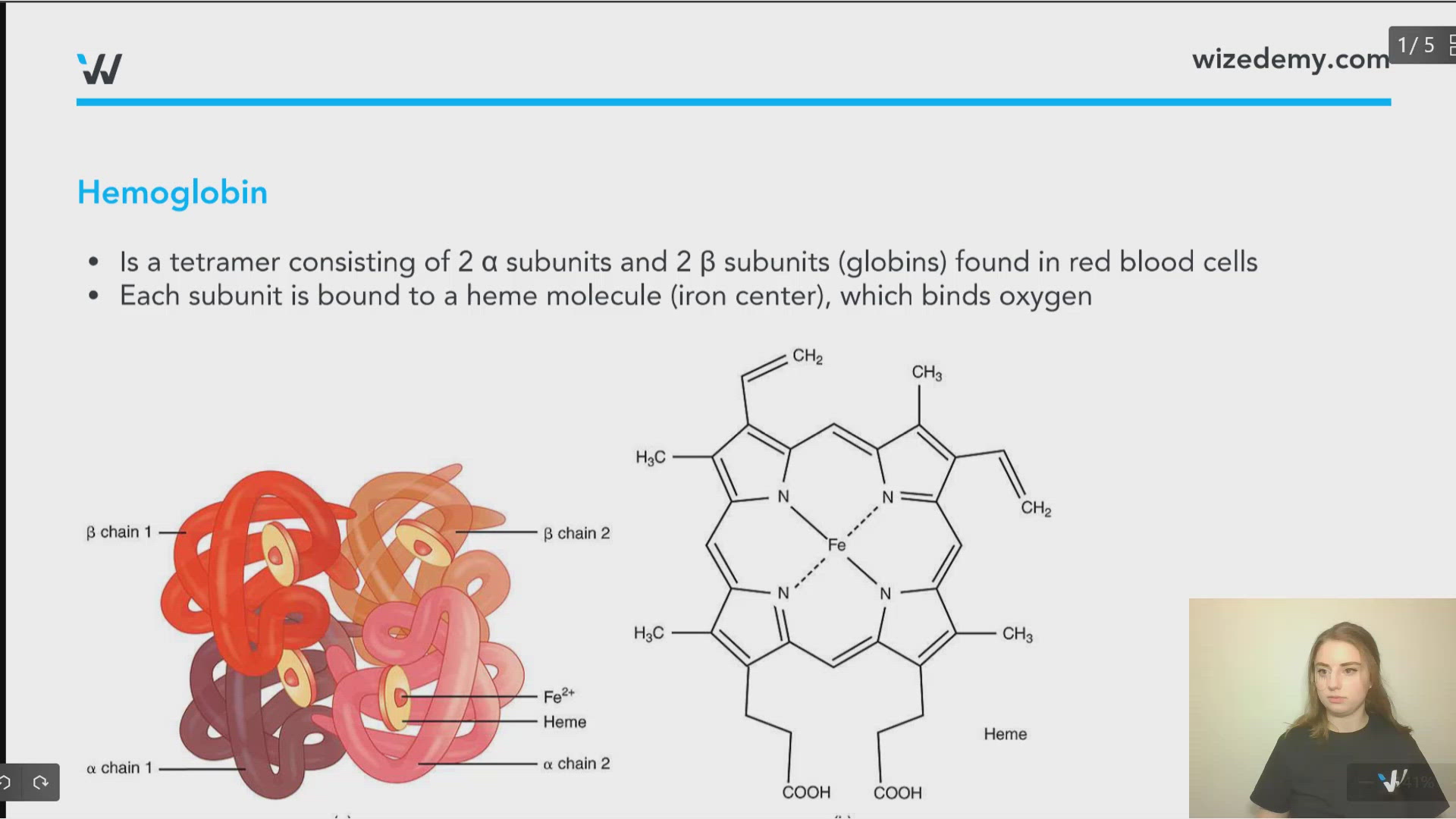
- Is a tetramer consisting of 2 α subunits and 2 β subunits (globins) found in red blood cells
- Each subunit is bound to a heme molecule (iron center), which binds oxygen
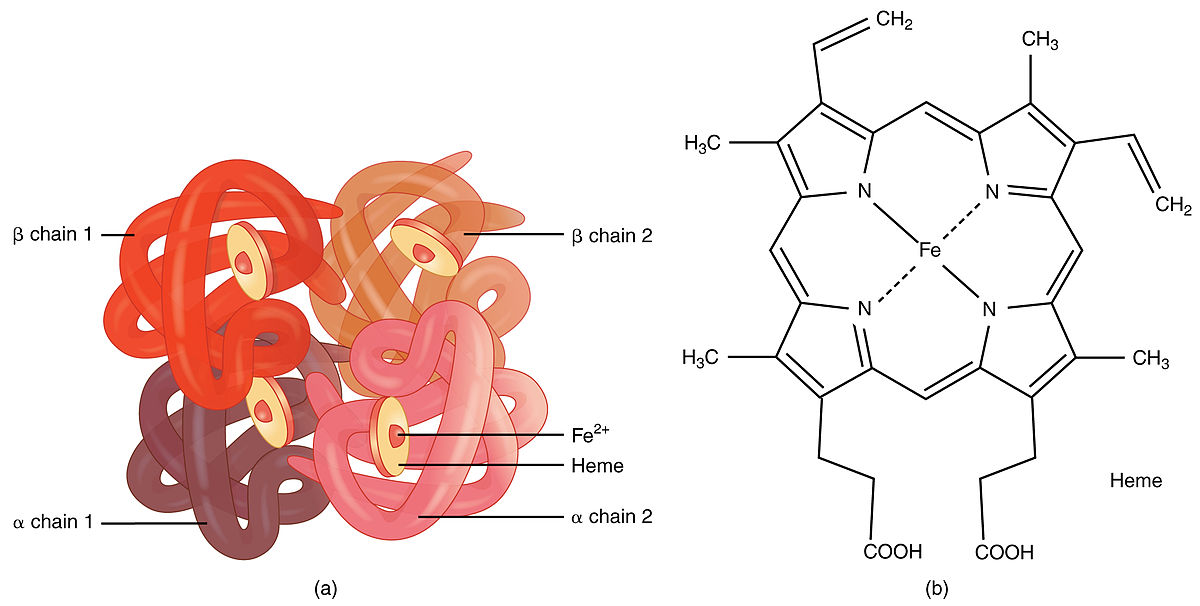
https://commons.wikimedia.org/wiki/File:1904_Hemoglobin.jpg. OpenStax College. Creative Commons Attribution 3.0 Unported license.
Cooperative Binding:
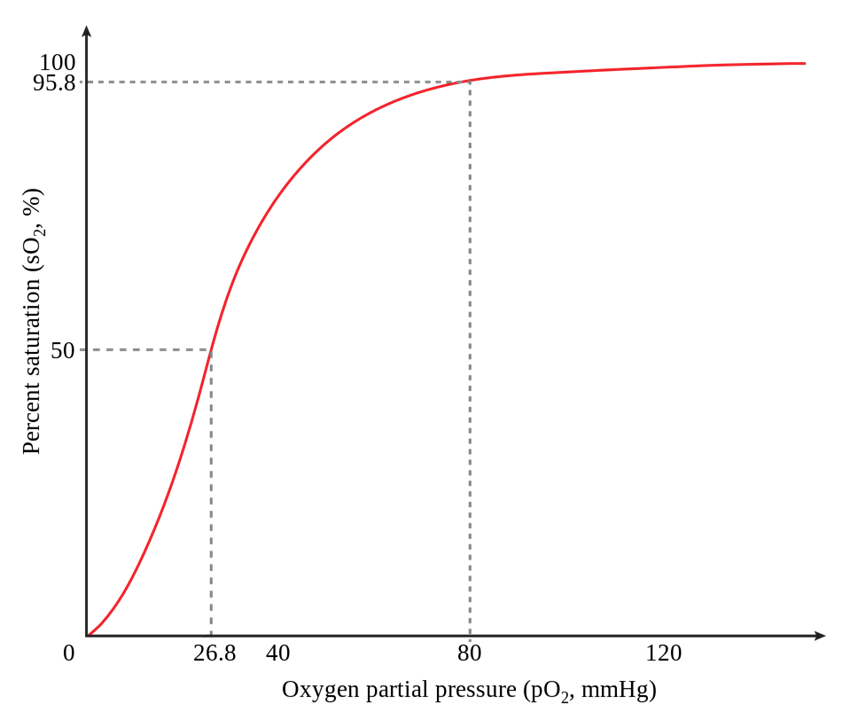
- Heme shows cooperative binding, binding of oxygen depends on the partial pressure of oxygen in its immediate environment
- In lungs the heme are ~98% saturated with oxygen, but that drops to ~32% saturation in tissues
- A much greater potential for O2 release compared to myoglobin alone
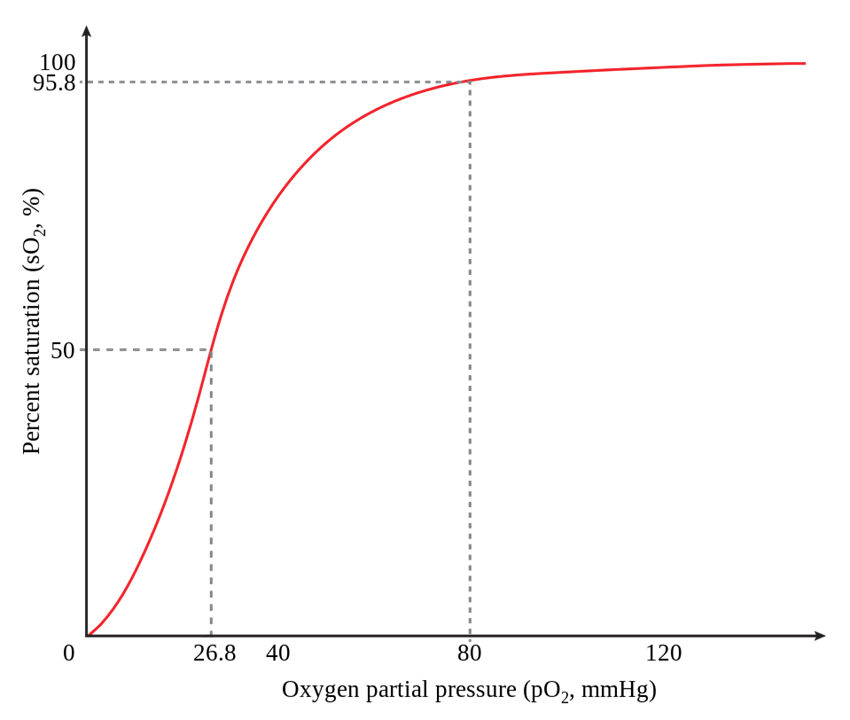
- The binding of oxygen to the first subunit results in a conformational change due to the His residue bound to the Iron center
- This leads to a change in the α/β interface converting the neighbouring subunit to change from the T-state (deoxyhemoglobin) into the R-state (oxyhemoglobin).
Allosteric Regulation
2,3-Bisphosphoglycerate:
- 2,3-Bisphosphoglycerate (2,3-BPG) is an allosteric regulator of hemoglobin.
- Binds to the T-state and stabilizes it
- In order to bind O2 (R-state) the 2,3-BPG must be removed from binding site
Wize Tip
The lower the affinity for 2,3-BPG, the higher the affinity for O2.
pH:
- Lower pH values will induce the release of O2 from heme
- Lower pH results in protonation of His195, allowing it to form a salt bridge that stabilizes the T-state
CO2:
- Muscles release CO2 and H+ (products of aerobic metabolism)
- The binding of CO2 to terminal amino groups forms carbamate, which forms salt bridges that stabilize the T-state
- Lowering O2 affinity and releasing oxygen
- Hemoglobin provides a way for CO2 to be taken up in tissues and released in the lungs and then exhaled
0:00 / 0:00
Disorders in Hemoglobin
Sickle Cell Anemia:
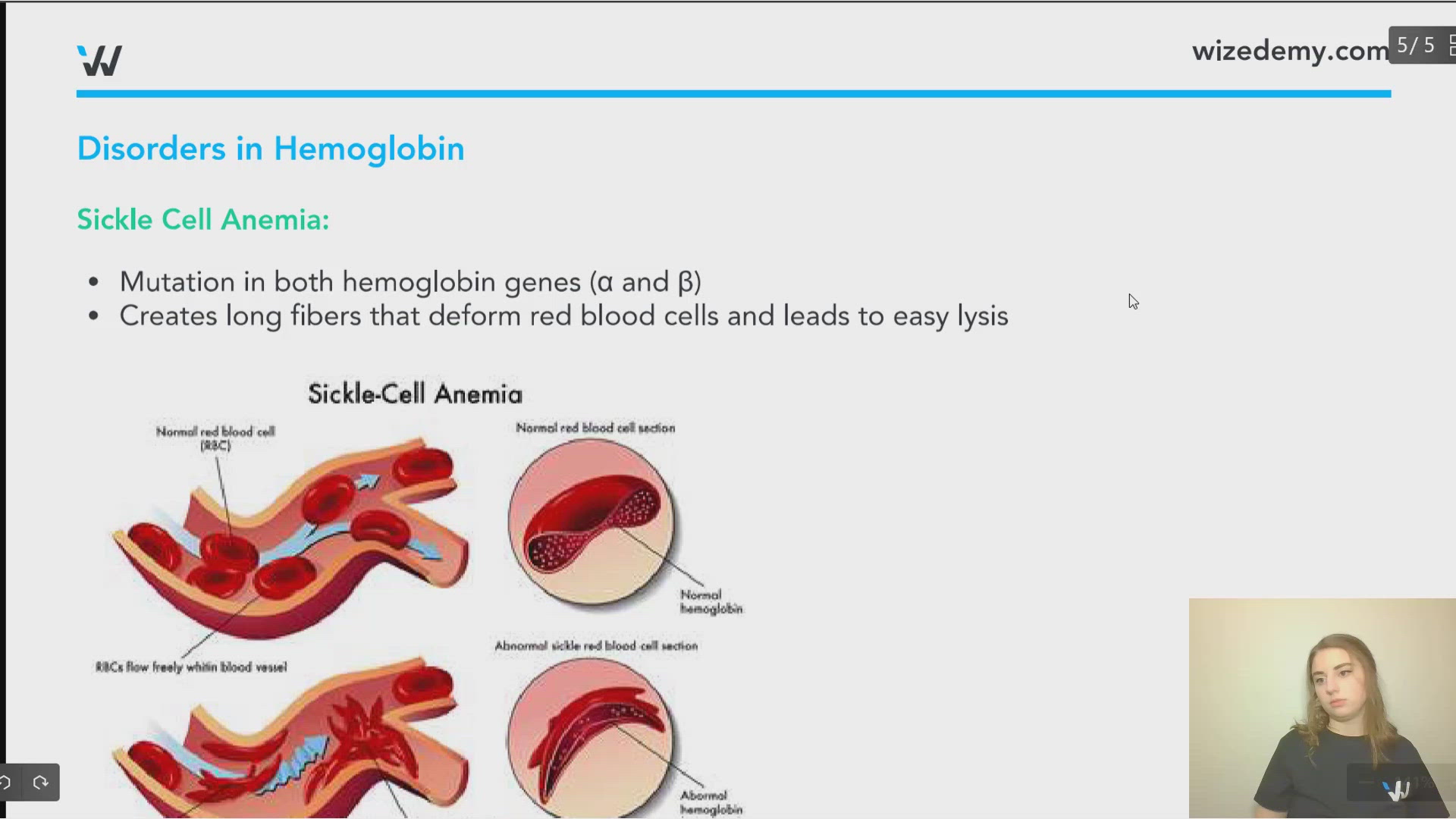
- Mutation in both hemoglobin genes (α and β)
- Creates long fibers that deform red blood cells and leads to easy lysis
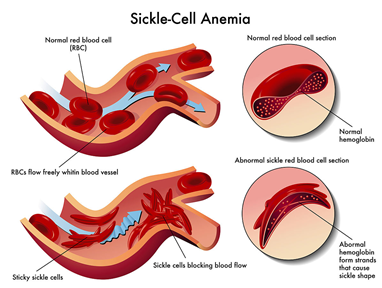
https://commons.wikimedia.org/wiki/File:Risk-Factors-for-Sickle-Cell-Anemia_(1)2.jpg. Diana grib. Creative Commons Attribution-Share Alike 4.0 International license.
Thalassemia:
- The loss of either the α hemoglobin chain (α-thalassemia) or the β hemoglobin chain (β-thalassemia)
- This prevents cooperative O2 binding
0:00 / 0:00
Ligand Binding
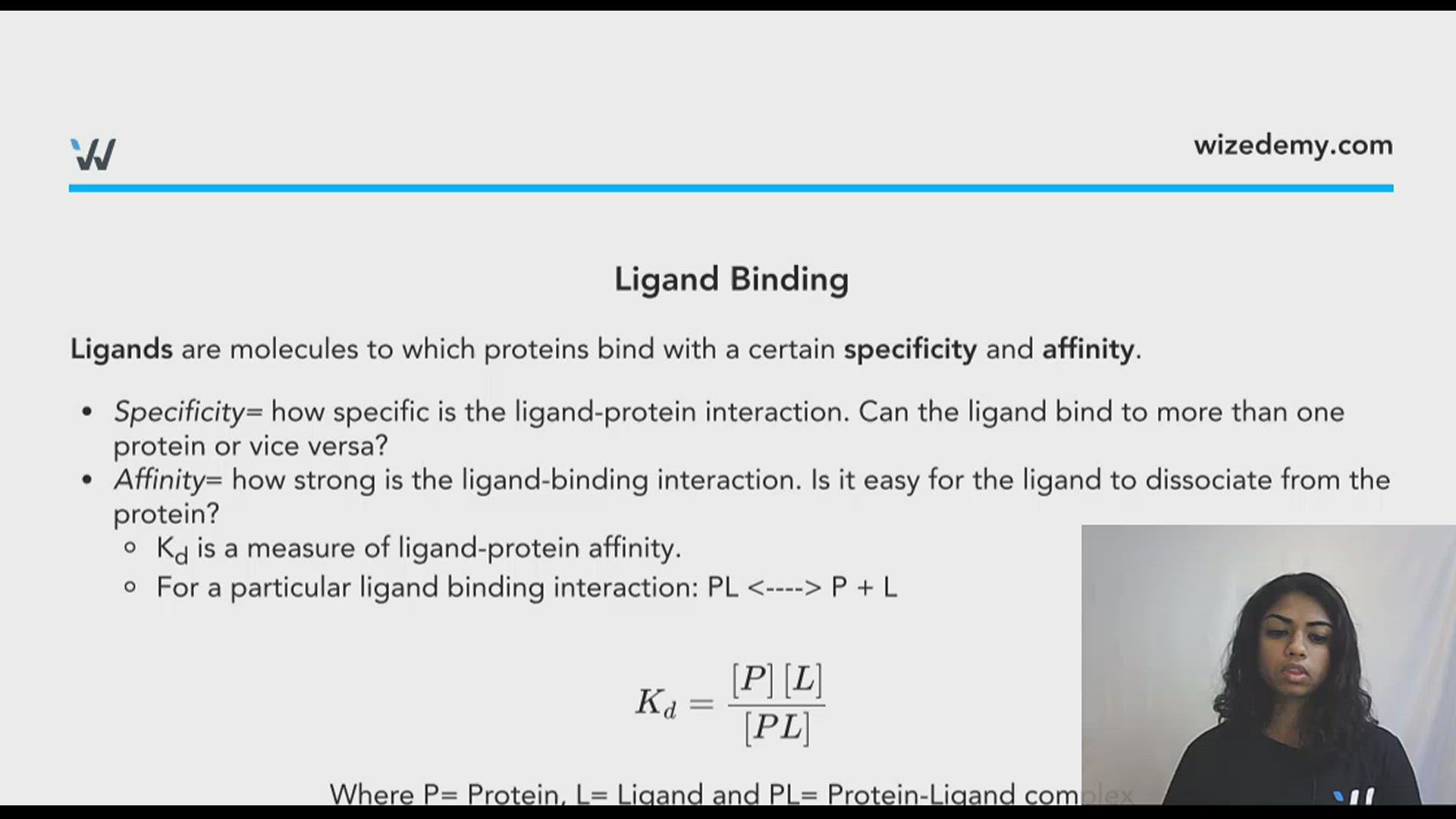
Ligands are molecules to which proteins bind with a certain specificity and affinity.
- Specificity= how specific is the ligand-protein interaction. Can the ligand bind to more than one protein or vice versa?
- Affinity= how strong is the ligand-binding interaction. Is it easy for the ligand to dissociate from the protein?
- Kd is a measure of ligand-protein affinity.
- For a particular ligand binding interaction: PL <----> P + L
Where P= Protein, L= Ligand and PL= Protein-Ligand complex
- When Kd is SMALL, the protein-ligand interaction is STRONG (high affinity) and vice versa
Specificity and affinity for a ligand-protein binding interaction depend on the physical and chemical properties of the protein's ligand binding site.
Example: Myoglobin and Hemoglobin
Myoglobin is a protein that binds to oxygen (O2)
The ligand binding interaction for Myoglobin is: Mb +O2 <-------> MbO2
Therefore:
As you increase the pressure of oxygen in a system (i.e. add more O2 molecules) myoglobin will bind keep binding oxygen until every myoglobin protein has an oxygen bound.
We want to know: At a given O2 pressure, how many myoglobin sites are bound to O2?
Where YO2= fraction of occupied binding sites
If you substitute the equation for Kd into the equation for YO2 and express O2 as it's partial pressure, pO2, you get the equation:
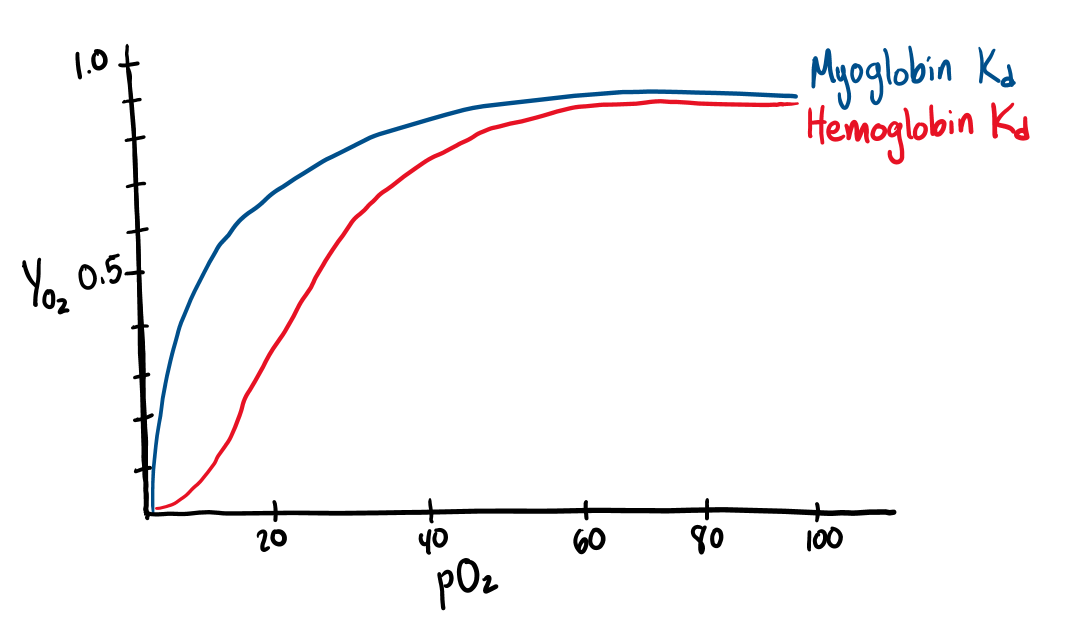
K=p50 is where half of the myoglobin or hemoglobin sites are saturated (bound) to oxygen.
Hemoglobin exhibits a form of allostery called "Cooperativity"
- Allostery= when a ligand (allosteric effector) binds to a protein at one ligand binding site and effects the binding affinity at ANOTHER ligand-binding site on the same protein by inducing a conformational change in the protein's tertiary or quaternary structure.
- Hemoglobin contains FOUR subunits which each contain one heme molecule. When the heme molecule in one subunit binds to O2, it increases the affinity for the other three heme molecules (i.e. they bind O2 more easily)
What statement is FALSE about hemoglobin?
Which of the following does not bind hemoglobin?
What is the role of the 8 helices present in the Myoglobin stucture?