Wize University Biochemistry Textbook > Enzyme Catalysis
Enzyme Kinetics
0:00 / 0:00
Enzymes Kinetics
- Kinetics: the study of enzymatic reactions
- Investigates the maximum rate of reaction as well as substrate and/or inhibitor specificity
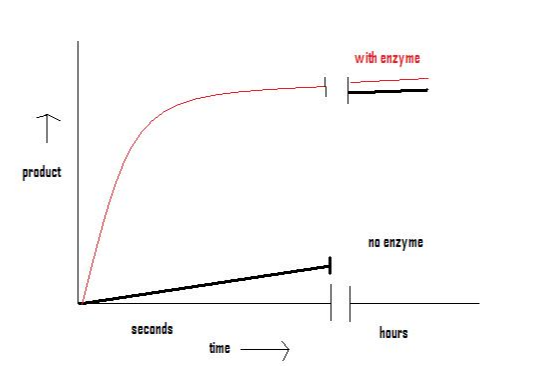
- Enzymes lower the energy barrier a reaction must overcome
- The enzyme does not contribute the the reaction (is in native state at the end of reaction)
- It does not alter the equilibrium of the reaction
- Rate of reaction (V): The quantity of substrate that disappears in a unit of time
- Initial rate of reaction (V0): Rate when substrate concentration is constant
- Maximum rate of reaction (Vmax): Maximum rate of reaction when the enzyme is saturated by substrate
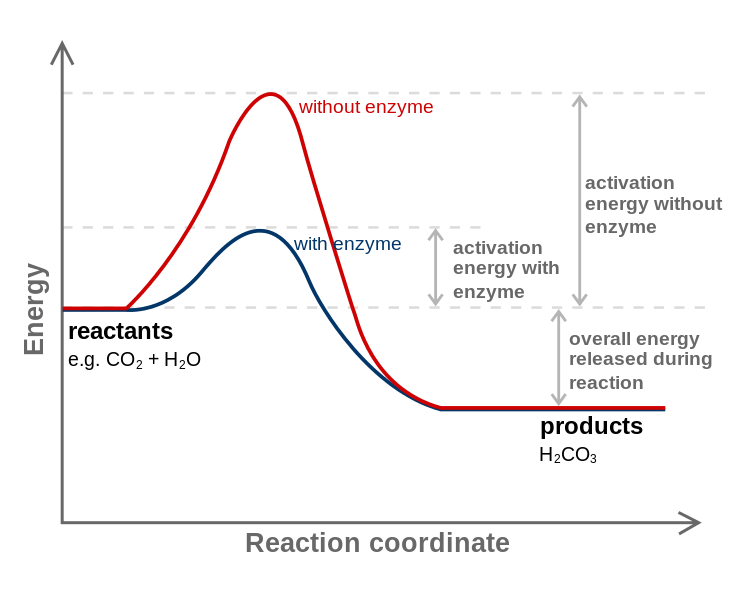
https://commons.wikimedia.org/wiki/File:Carbonic_anhydrase_reaction_in_tissue.svg. Fvasconcellos. This file is licensed under the Creative Commons Attribution-Share Alike 3.0 Unported license.
https://commons.wikimedia.org/wiki/File:Enzyme_accelerating_reaction.jpg. Kristie.leong. This file is licensed under the Creative Commons Attribution 3.0 Unported license.
0:00 / 0:00
Michaelis-Menten Equation
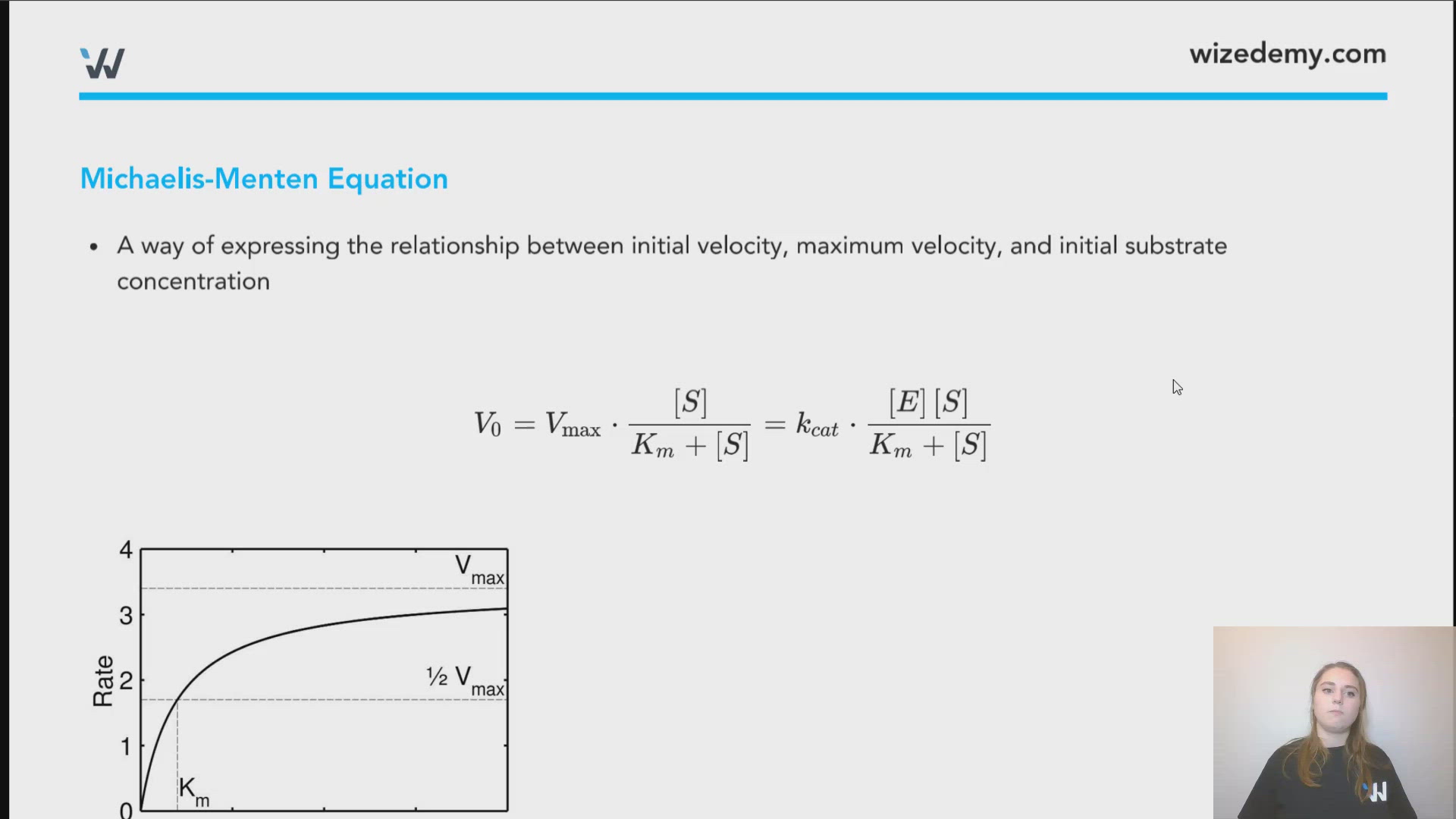
- A way of expressing the relationship between initial velocity, maximum velocity, and initial substrate concentration
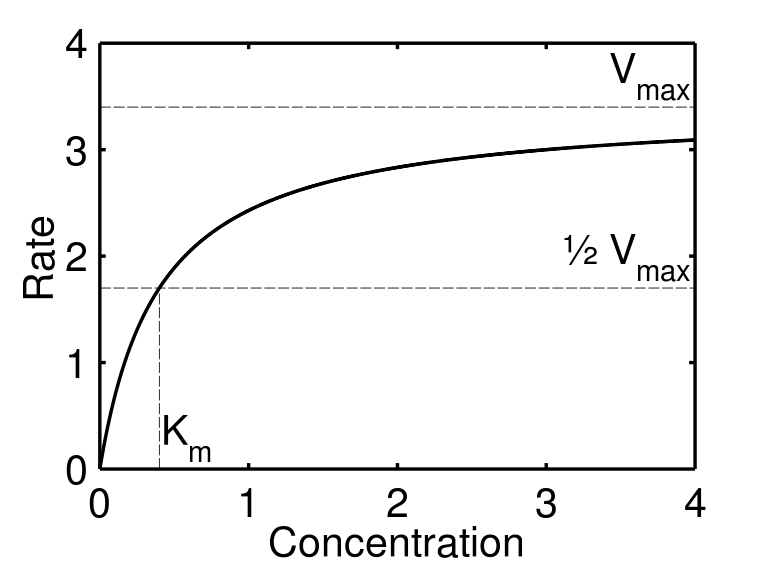
https://commons.wikimedia.org/wiki/File:Michaelis-Menten_saturation_curve_of_an_enzyme_reaction_LARGE.svg. U+003F. This file is made available under the Creative Commons CC0 1.0 Universal Public Domain Dedication.
Michaelis-Menten constant (Km): The [S] at which V0=1/2 Vmax
- Indicates how [S] affects enzyme function
Wize Tip
The lower the Km value, the more efficient the enzyme is.
Turnover Number (kcat): The maximum theoretical reaction rate for a single saturated enzyme
- eg. if kcat=9 s-1, then for every 1 second, 1 enzyme can process 9 substrate molecules
Wize Tip
The higher the kcat value, the more powerful the enzyme is.
Specificity Constant (kcat/Km): The ratio of the turnover number and the Michaelis-Menten constant.
- Used to compare enzymes
- The higher the ration the more efficient and more powerful (overall better) the enzyme
0:00 / 0:00
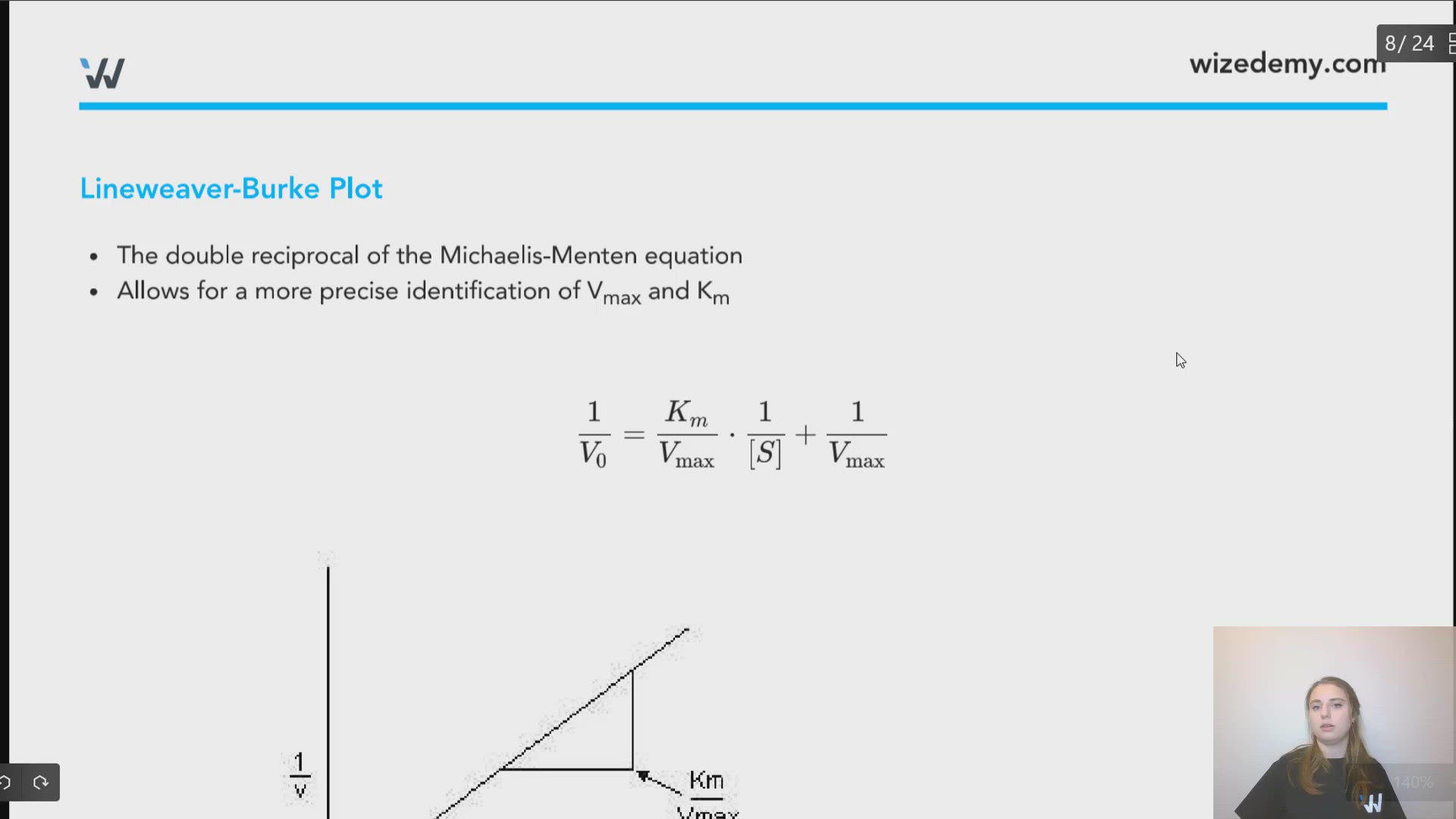
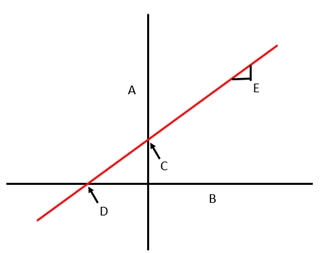
Lineweaver-Burke Plot
- The double reciprocal of the Michaelis-Menten equation
- Allows for a more precise identification of Vmax and Km
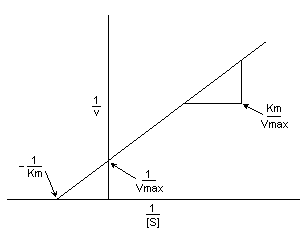
https://commons.wikimedia.org/wiki/File:Lineweaver-Burke_plot.PNG. GFDL. This file is licensed under the Creative Commons Attribution-Share Alike 3.0 Unported license.
0:00 / 0:00
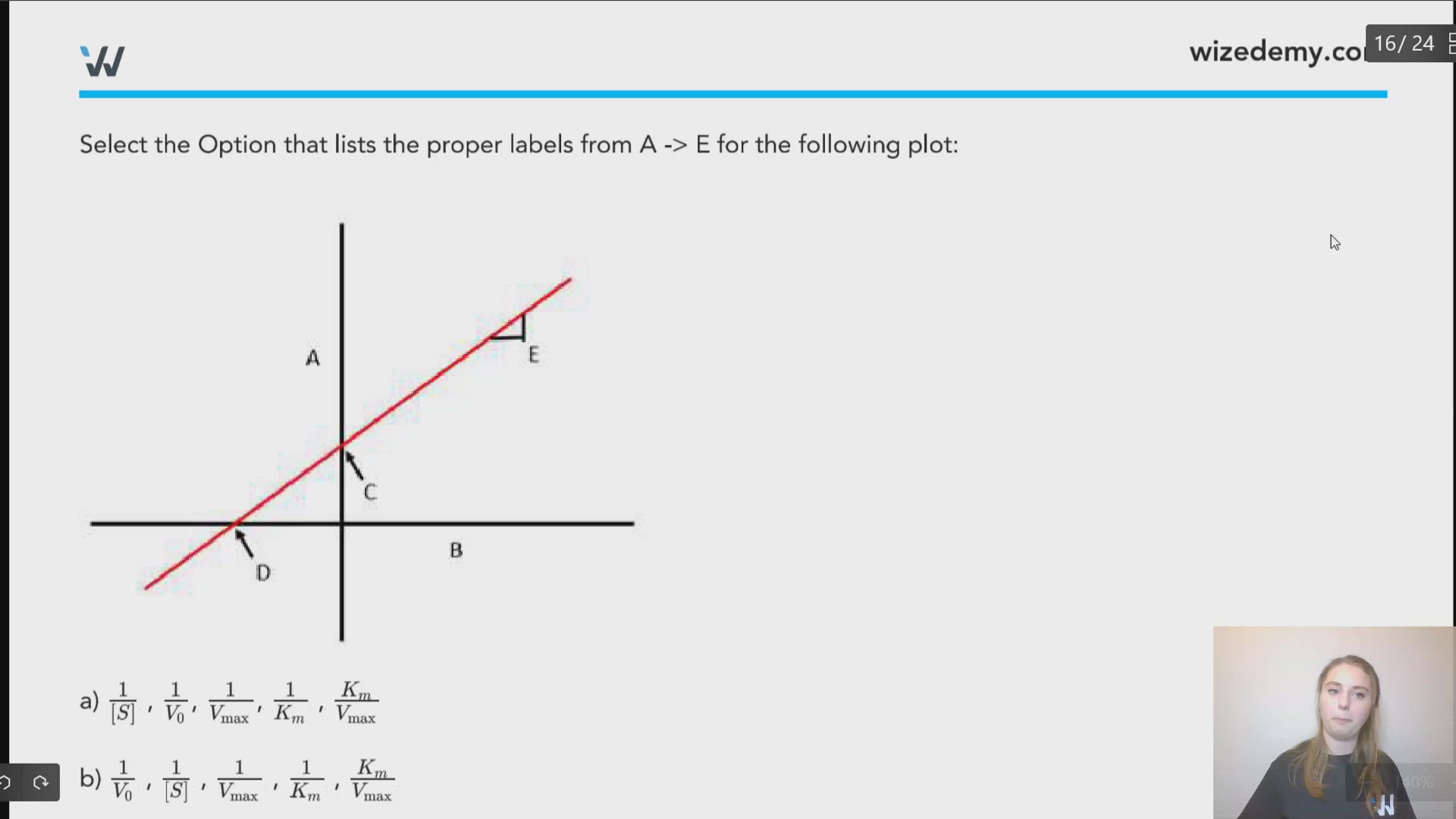
Select the Option that lists the proper labels from A -> E for the following plot:
a) , , , ,
b) , , , ,
c) , , , ,
d) , , , ,
d) Is the correct order of labels
Which Statement is TRUE about enzyme kinetics?
You are studying an enzyme and have calculated that the Michaelis-Menten constant is 2M. You also know that when the substrate concentration is 4M, the maximum velocity of the reaction is 6M/min. What is the initial velocity of this reaction?