Wize University Biochemistry Textbook > Hormone Signalling
Hormonal Metabolic Regulation
0:00 / 0:00
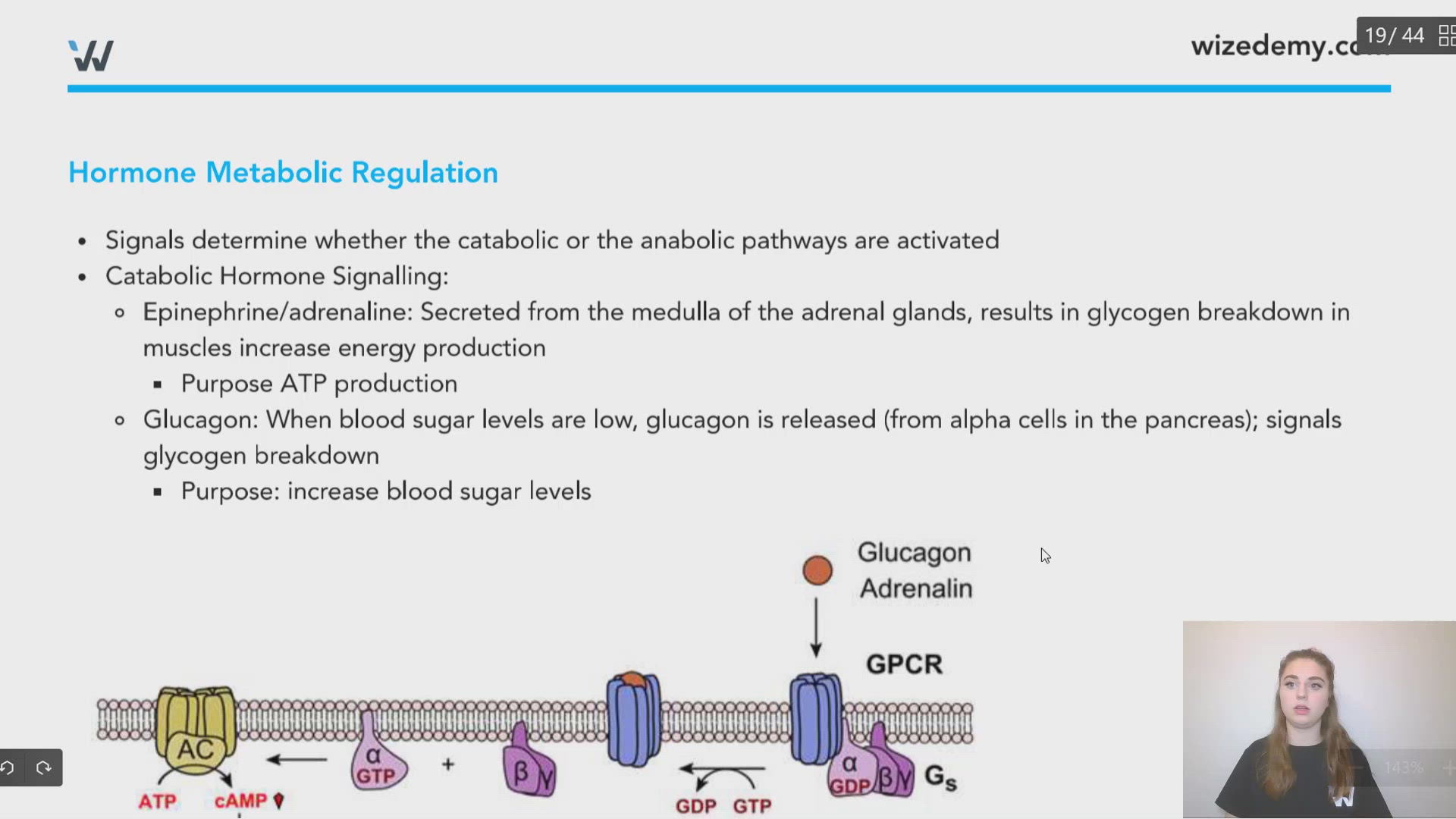
Hormone Metabolic Regulation
- Signals determine whether the catabolic or the anabolic pathways are activated
- Catabolic Hormone Signalling:
- Epinephrine/adrenaline: Secreted from the medulla of the adrenal glands, results in glycogen breakdown in muscles increase energy production
- Purpose ATP production
- Glucagon: When blood sugar levels are low, glucagon is released (from alpha cells in the pancreas); signals glycogen breakdown
- Purpose: increase blood sugar levels
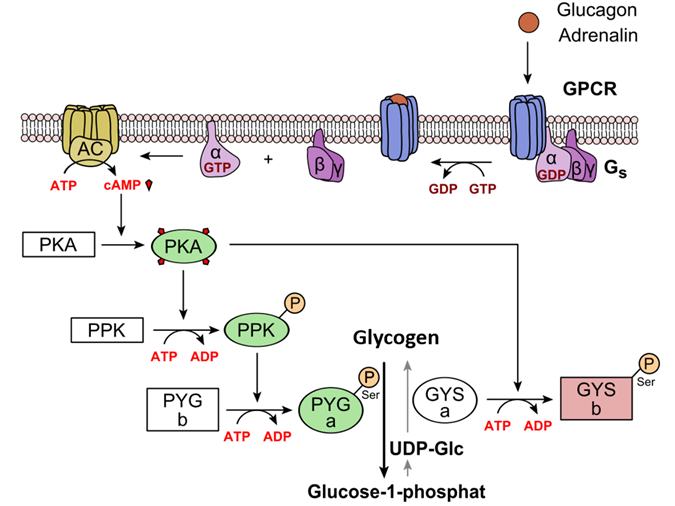
https://commons.wikimedia.org/wiki/File:Regulation_of_glycogen_metabolism_glucagon.svg. Yikrazuul. Creative Commons Attribution-Share Alike 3.0 Unported license.
Glycogenolysis
- Glycogen is cleaved by phospholylated glycogen phosphorylase into glucose-1-phosphate (G1P) from non-reducing ends
- Used in glycolysis (first has to be converted to glucose-6-phosphate) or released into the bloodstream
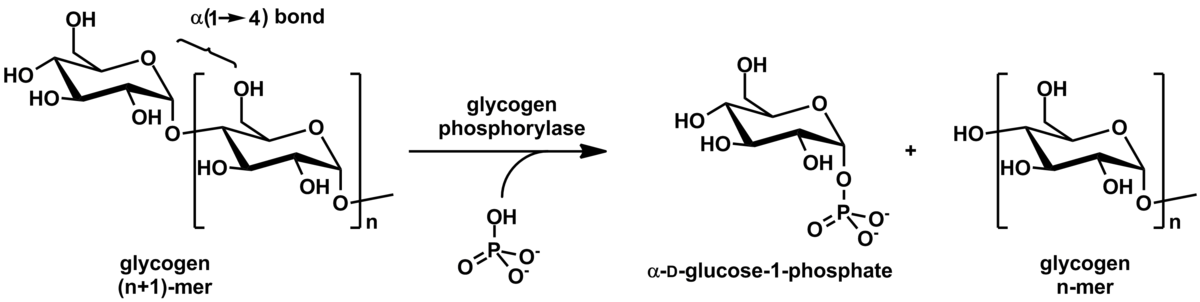
https://en.wikipedia.org/wiki/File:Glycogen_phosphorylase_stereo.png. Michał Sobkowski. Public domain.
0:00 / 0:00
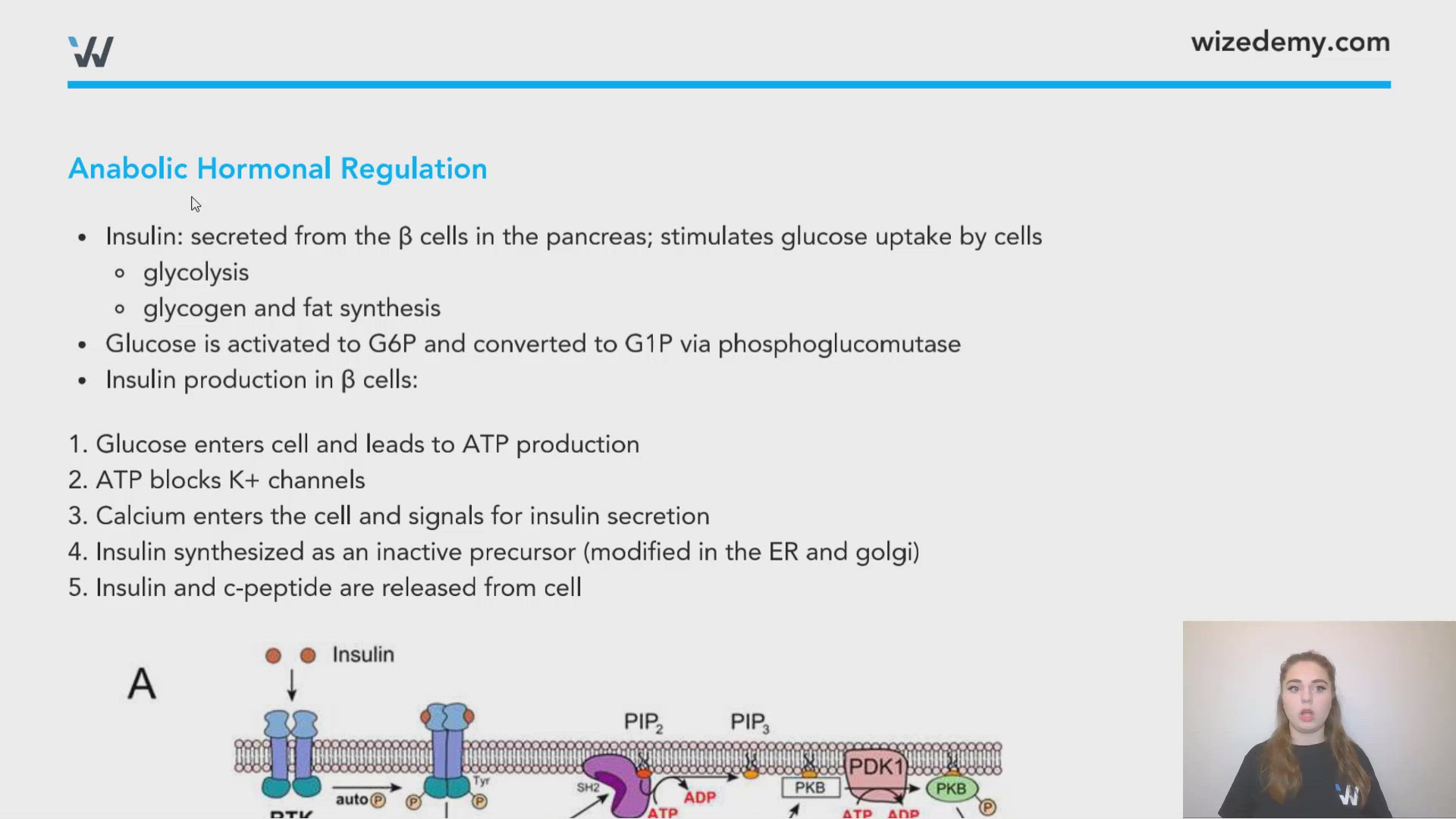
Anabolic Hormonal Regulation
- Insulin: secreted from the β cells in the pancreas; stimulates glucose uptake by cells
- glycolysis
- glycogen and fat synthesis
- Glucose is activated to G6P and converted to G1P via phosphoglucomutase
- Insulin production in β cells:
1. Glucose enters cell and leads to ATP production
2. ATP blocks K+ channels
3. Calcium enters the cell and signals for insulin secretion
4. Insulin synthesized as an inactive precursor (modified in the ER and golgi)
5. Insulin and c-peptide are released from cell
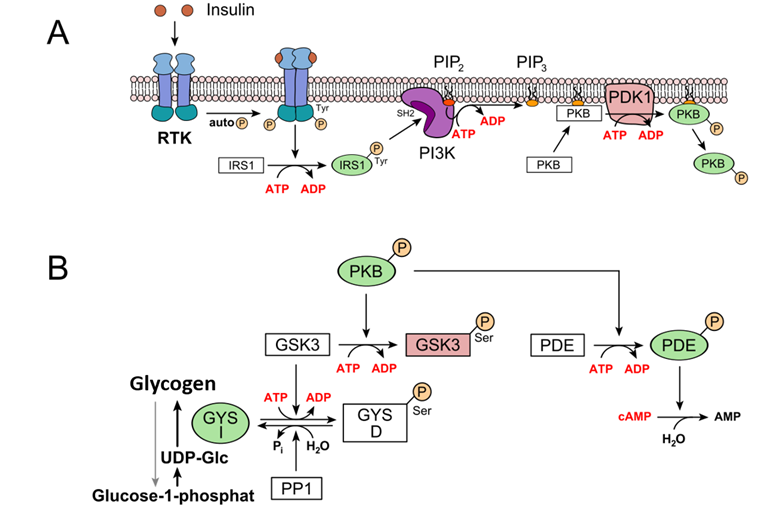
https://commons.wikimedia.org/wiki/File:Regulation_of_glycogen_metabolism_insulin.svg. Yikrazuul. Creative Commons Attribution-Share Alike 3.0 Unported license.
Wize Tip
Insulin:
Recruits GLUT transporters for glucose import into the cell
Stimulates glycogen/fat synthesis and inhibits glycogen/fat breakdown
Mechanisms of action varies by cell type
0:00 / 0:00
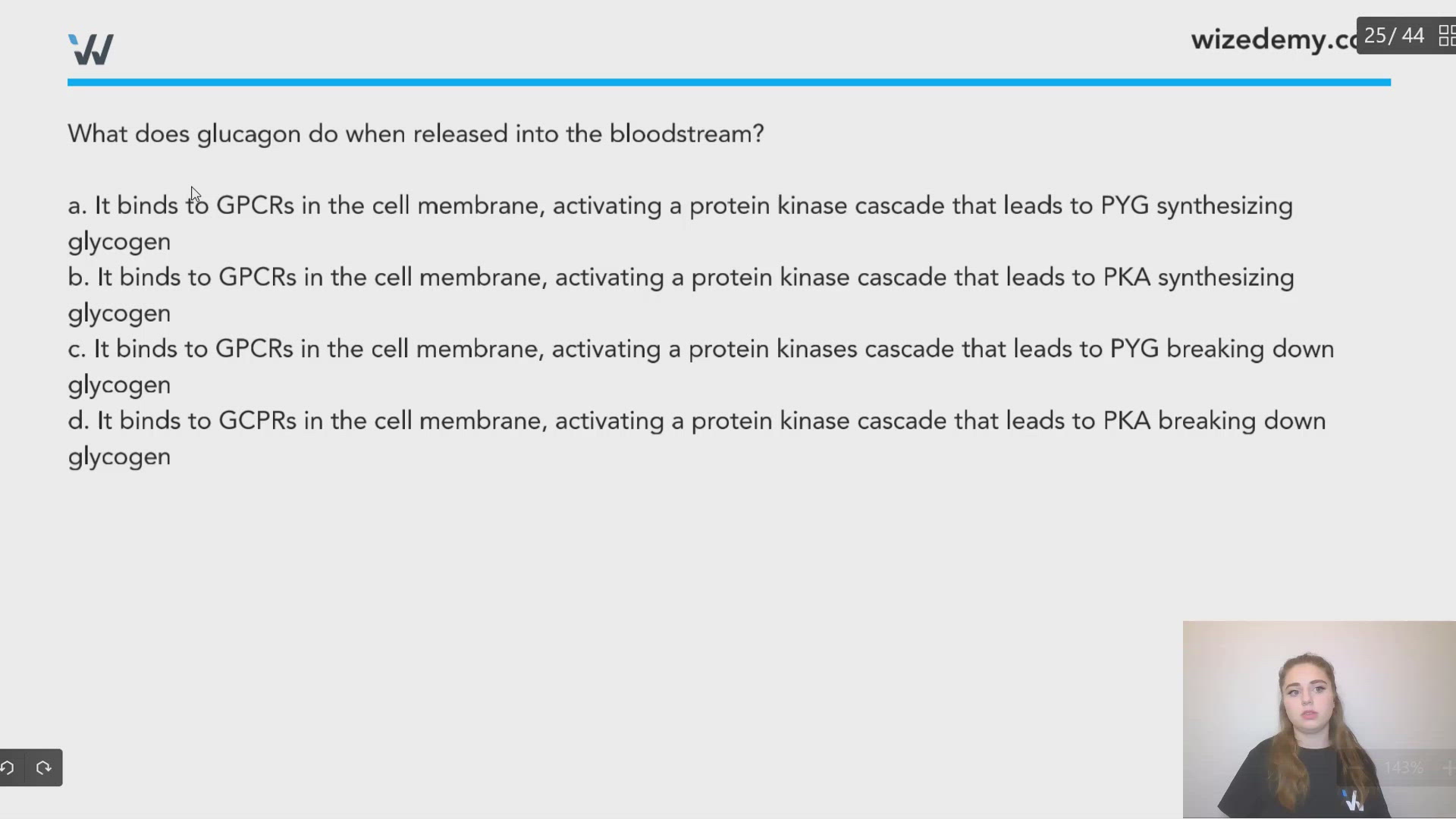
What does glucagon do when released into the bloodstream?
a. It binds to GPCRs in the cell membrane, activating a protein kinase cascade that leads to PYG synthesizing glycogen
b. It binds to GPCRs in the cell membrane, activating a protein kinase cascade that leads to PKA synthesizing glycogen
c. It binds to GPCRs in the cell membrane, activating a protein kinases cascade that leads to PYG breaking down glycogen
d. It binds to GCPRs in the cell membrane, activating a protein kinase cascade that leads to PKA breaking down glycogen
c. Glucagon signals the breakdown of glycogen via the enzyme PYG.
0:00 / 0:00
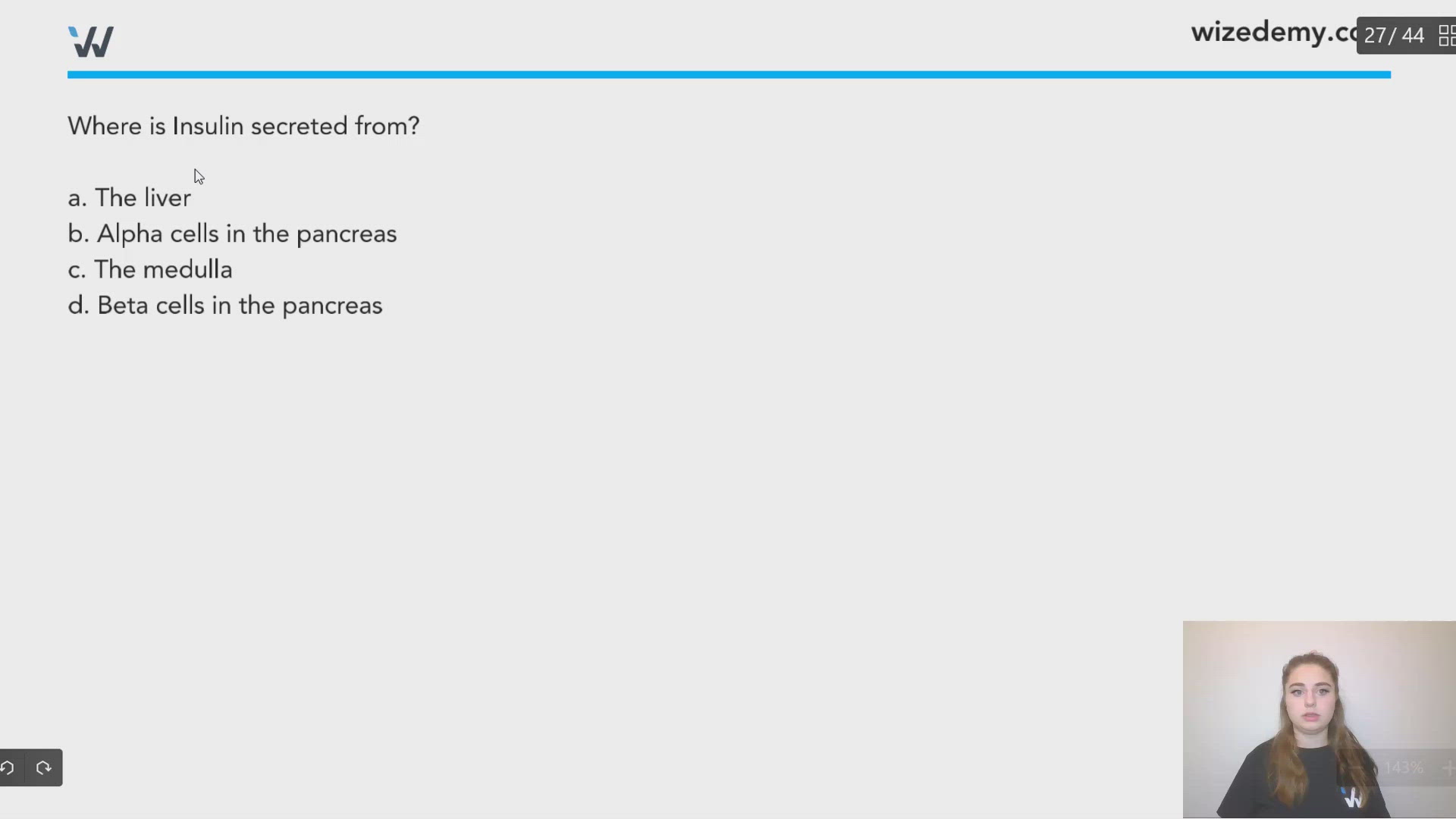
Where is Insulin secreted from?
a. The liver
b. Alpha cells in the pancreas
c. The medulla
d. Beta cells in the pancreas
d. Beta cells in the pancreas.
What statement about glucogenolysis is FALSE?