Wize University Biochemistry Textbook > Introduction to Metabolism: Redox Reactions
Introduction to Metabolism
0:00 / 0:00
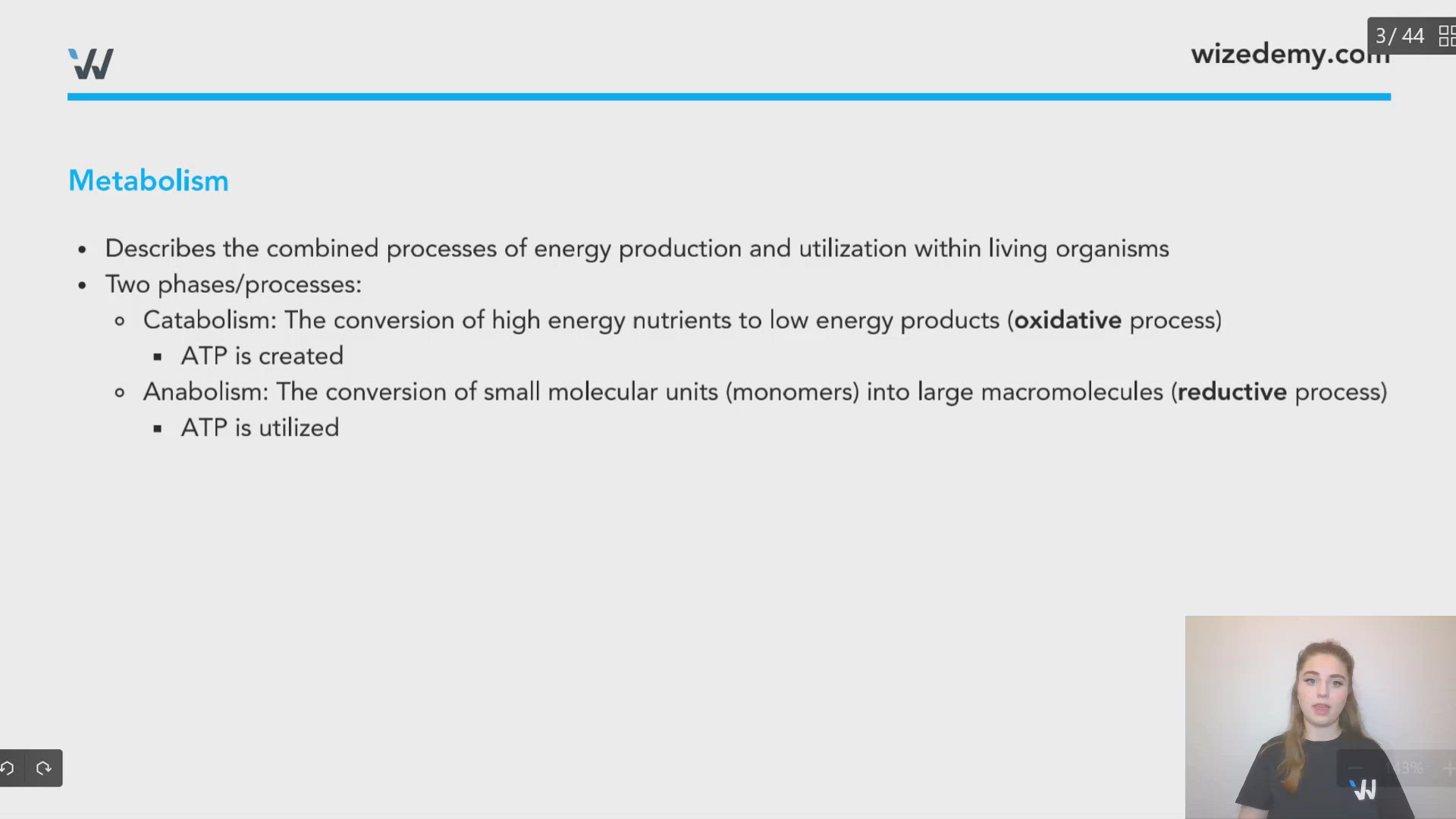
Metabolism
- Describes the combined processes of energy production and utilization within living organisms
- Two phases/processes:
- Catabolism: The conversion of high energy nutrients to low energy products (oxidative process)
- ATP is created
- Anabolism: The conversion of small molecular units (monomers) into large macromolecules (reductive process)
- ATP is utilized
Wize Tip
Catabolism results in the loss of energy from starting material making it exergonic (spontaneous)
Anabolism results in disordered and free floating small molecules being converted into ordered macromolecules making it endergonic (non-spontaneous)
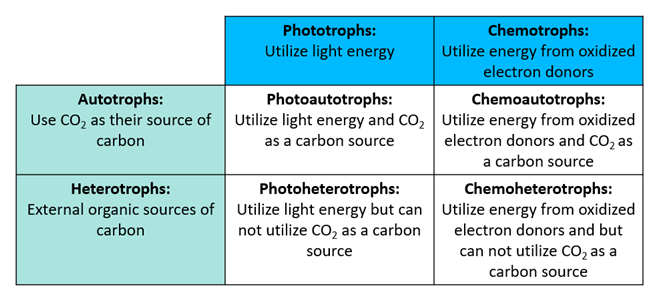
Metabolic Classifications
Metabolic Enzymes
- Enzymes are responsible for carrying out metabolic pathways
- These pathways can be regulated at any point
- The enzymes can be regulated in several ways
- Competitively
- Non-competitively
- Allosterically
0:00 / 0:00
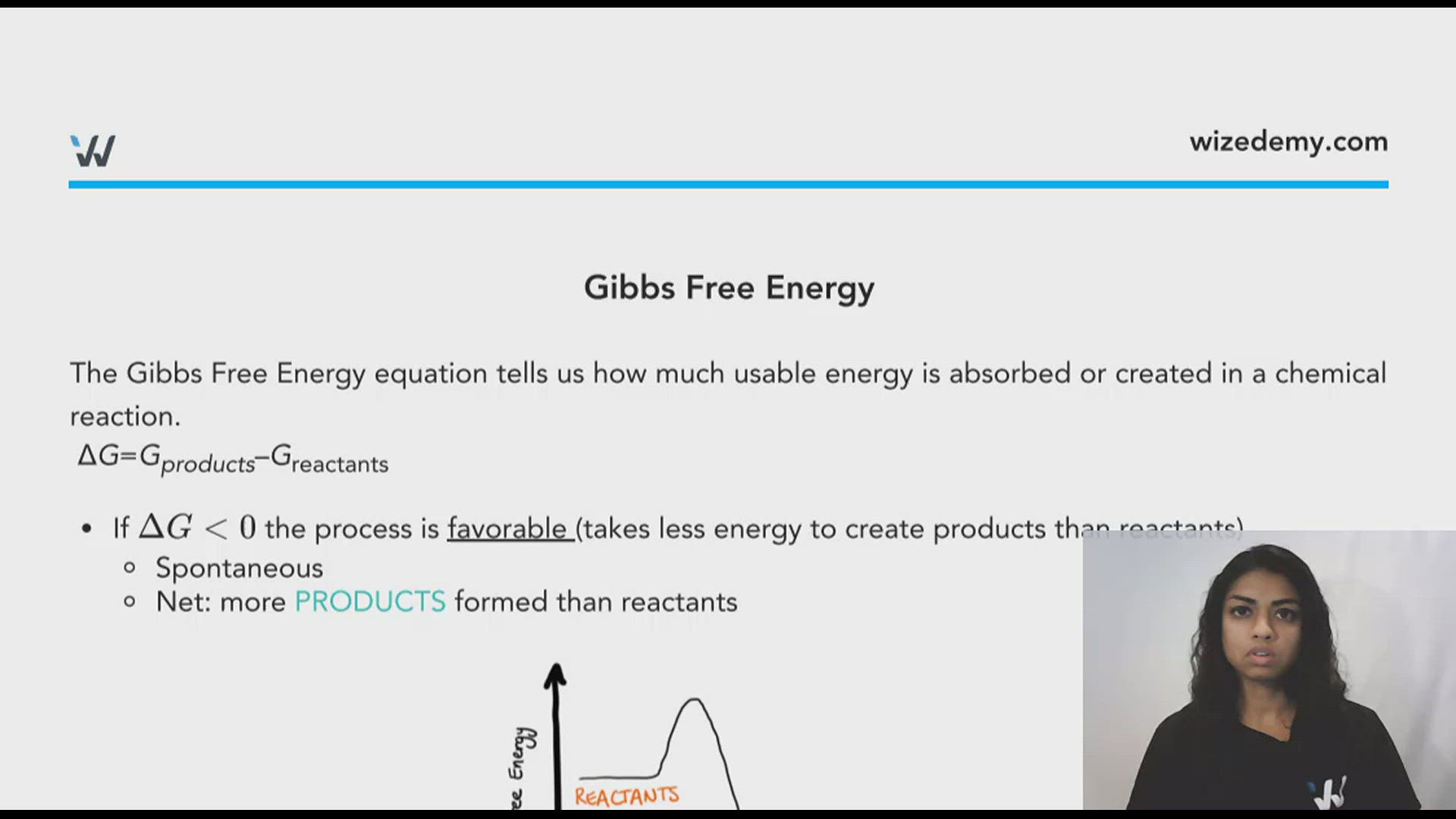
Gibbs Free Energy
The Gibbs Free Energy equation tells us how much usable energy is absorbed or created in a chemical reaction.
ΔG=Gproducts–Greactants
- If the process is favorable (takes less energy to create products than reactants)
- Spontaneous
- Net: more PRODUCTS formed than reactants
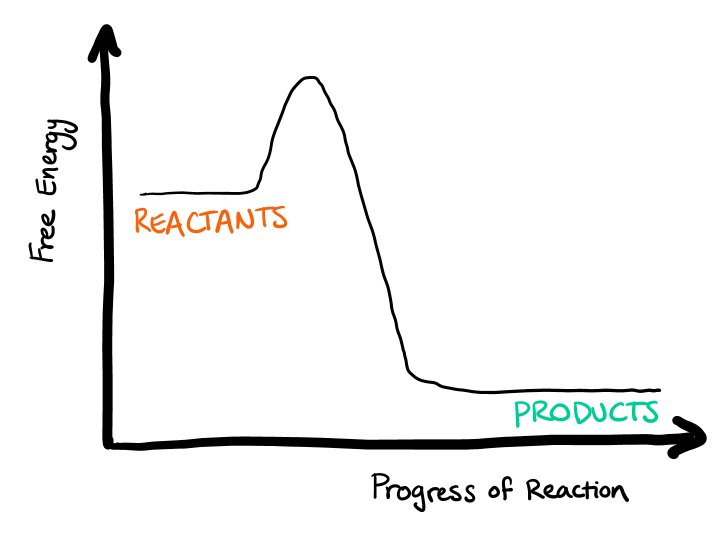
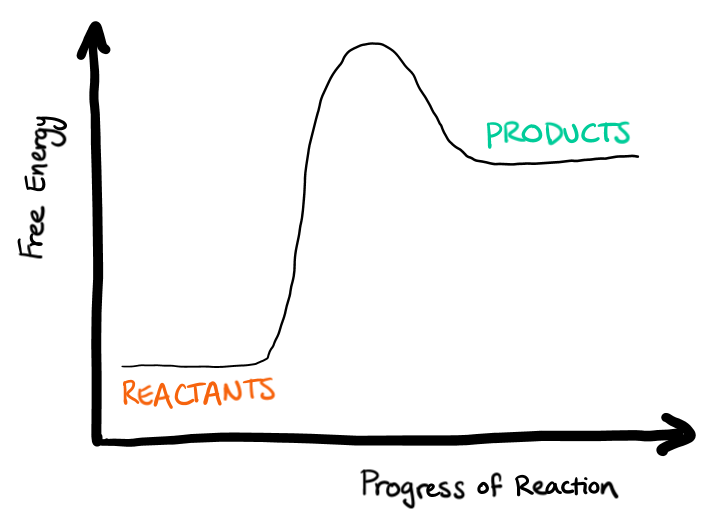
- If the process is unfavorable (takes more energy to create products than reactants)
- Non-spontaneous
- Net: more REACTANTS formed than products
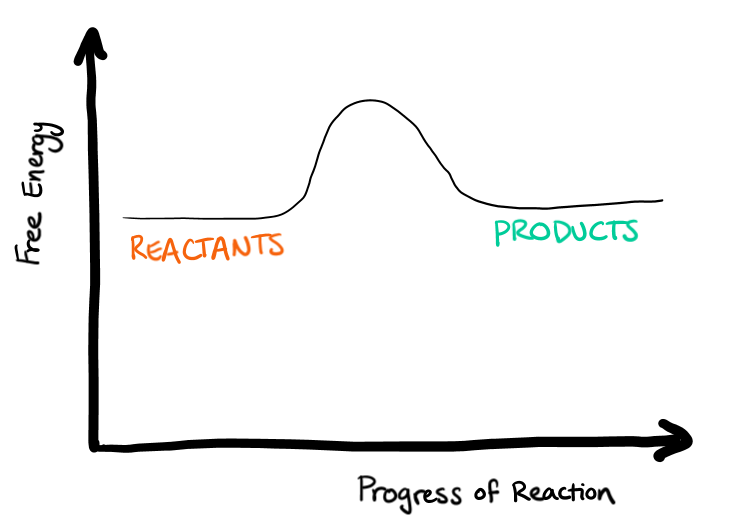
- If the process is reversible (takes equal energy to create products and reactants)
- No net reaction
Le' Chatelier's Principle
If you change the concentration of reactants/ products in a reaction, the equilibrium of the reaction will shift to counteract it.
Example: A + B <------> C + D
- If you increased [A + B] OR decreased [C + D], the equilibrium would shift to the right
- If you decreased [A + B] OR increased [C + D], the equilibrium would shift to the left
Reactions can be coupled
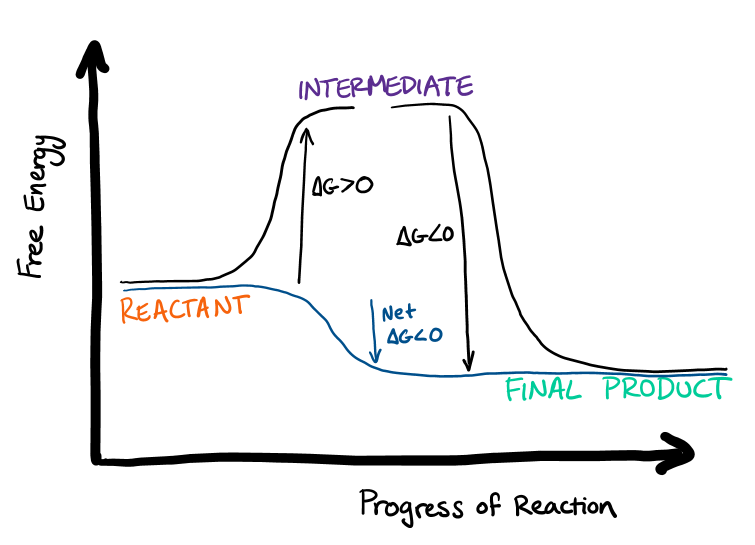
Example: Glutamine synthesis
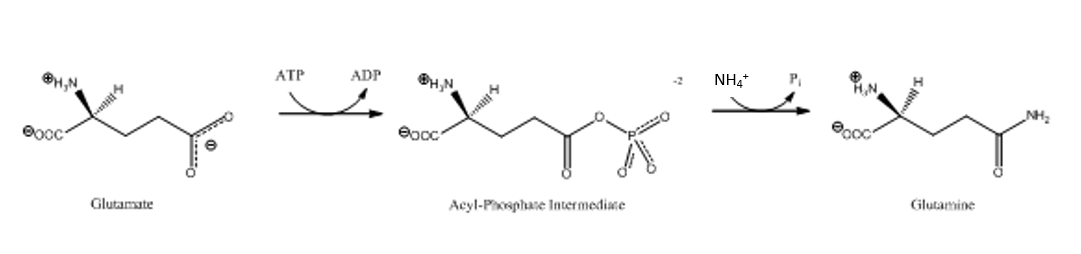
Glutamate--> Glutamine is an unfavorable reaction.
Use a favorable reaction (ATP--> ADP) to create free energy to drive the unfavorable reaction
1) Glutamate + ATP <----> phosphorylated glutamate + ADP
2) Phosphorylated glutamate + NH4+ <----> Glutamine + Pi
Net reaction: Glutamate + NH4+ + ATP <----> Glutamine + ADP + Pi
ΔG <0 so the overall process is FAVORABLE
0:00 / 0:00
High Energy Intermediates
- Molecules that can be broken down to release large amounts of energy
- Differences in free energy upon bond breakage depends on stabilization
- The more stable the product, the greater the energy release
Wize Tip
How to identify a highly stable product:
- elimination of bond strain
- stabilization by ionization
- isomerization
- resonance stabilization
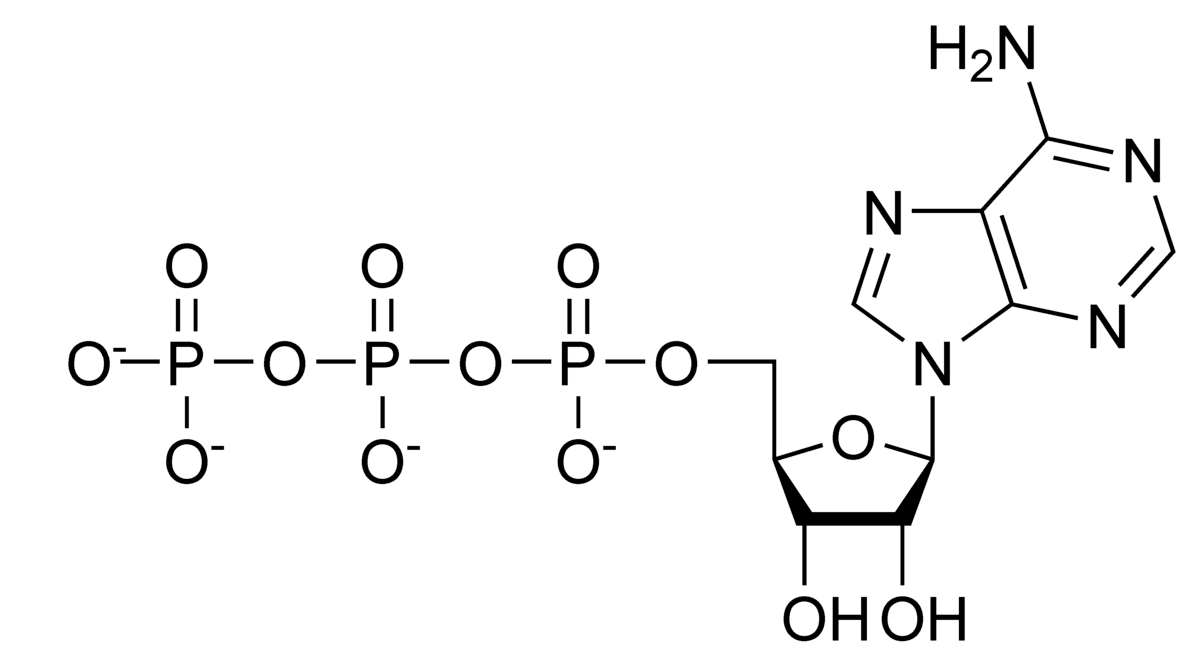
https://commons.wikimedia.org/wiki/File:ATP_chemical_structure.png. Creative Commons Attribution-Share Alike 3.0 Unported license.
- ATP can accept or donate phosphates
- Involved in both catabolism and anabolism pathways
- Other high energy intermediates
- Mixed anhydrides
- Enol phosphates
- Thioesters
- Phosphocreatine
- Phosphocreatine is a way of storing high energy phosphates. The ∆Go' = -43 kJ/mol allowing it to be cleaved to produce ATP in a favourable reaction.
0:00 / 0:00
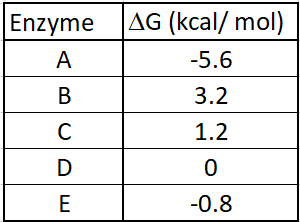
Consider the following table. Which of the enzymes facilitates a favorable/ spontaeous reaction? (Select all that apply)
A) Enzyme A
B) Enzyme B
C) Enzyme C
D) Enzyme D
E) Enzyme E
The correct answer is A and E.
When delta G < 0, the reaction is favorable because the products are at a lower free energy state than the reactants
0:00 / 0:00
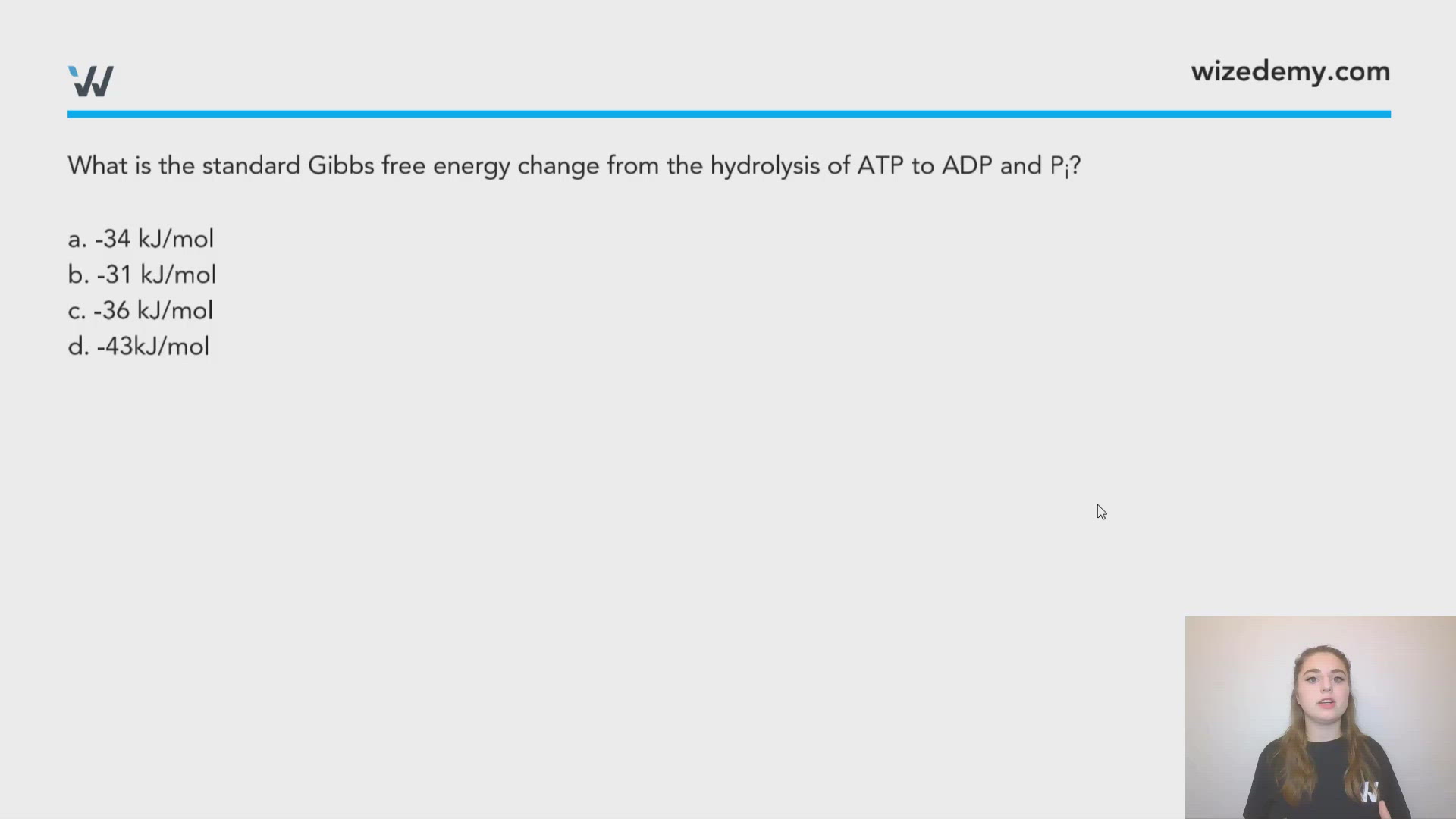
What is the standard Gibbs free energy change from the hydrolysis of ATP to ADP and Pi?
a. -34 kJ/mol
b. -31 kJ/mol
c. -36 kJ/mol
d. -43kJ/mol
b. -31 kJ/mol
What is the net free energy change of two reactions and indicate if it is favourable or unfavourabe. One with a free energy change of -26 kJ/mol and the other with +15 kJ/mol.