Wize University Biochemistry Textbook > Eukaryotic Transcription
Post-transcriptional Regulation
0:00 / 0:00
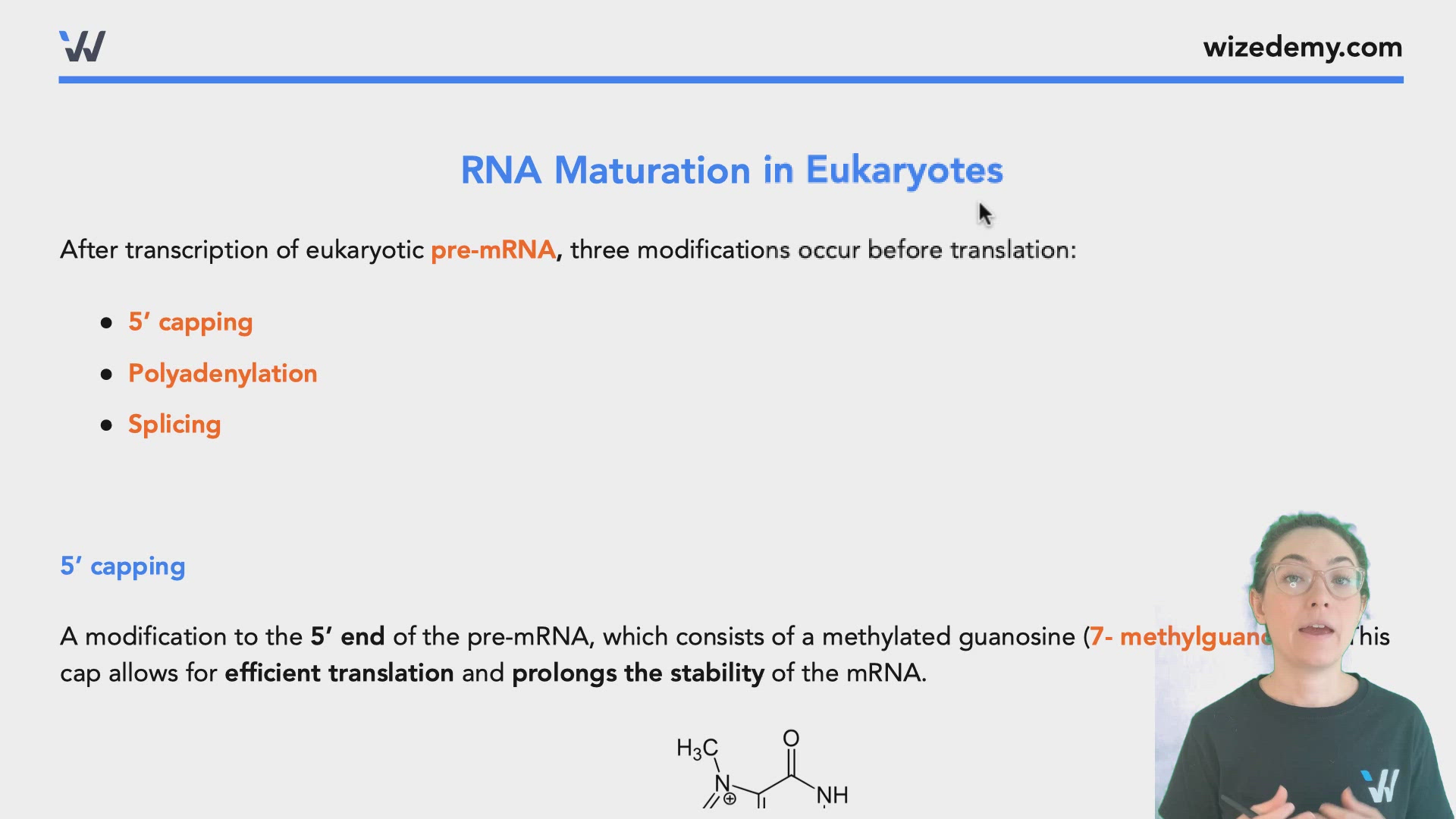
RNA Maturation in Eukaryotes
After transcription of eukaryotic pre-mRNA, three modifications occur before translation:
- 5’ capping
- Polyadenylation
- Splicing
5’ capping
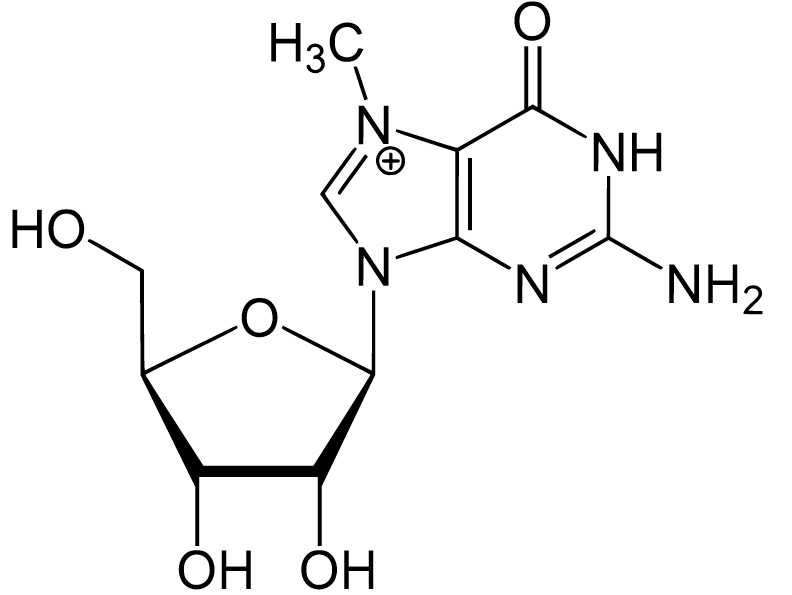
A modification to the 5’ end of the pre-mRNA, which consists of a methylated guanosine (7- methylguanosine). This cap allows for efficient translation and prolongs the stability of the mRNA.
Polyadenylation
A modification to the 3’ end of the pre-mRNA, which consists of several hundred “A” nucleotides to give a poly-A tail. Like the 5’ cap, the poly-A tail helps prevent RNA degradation and helps export pre-mRNA to cytoplasm.
Splicing
Eukaryotic genes contain introns and exons. The resulting mRNA is spliced to join together exons and remove introns. (Hint: think “exons are expressed; introns are in between.”)

Wize Concept
After these modifications, the pre-mRNA is now fully matured and can be called mRNA.
Splicing occurs in the nucleus and is conducted by proteins called spliceosomes. This has to be a very precise process since leaving nucleotides in can cause frameshift mutations that generate nonfunctional proteins.

0:00 / 0:00
Post-Transcriptional Regulation
RNA Alternative Splicing
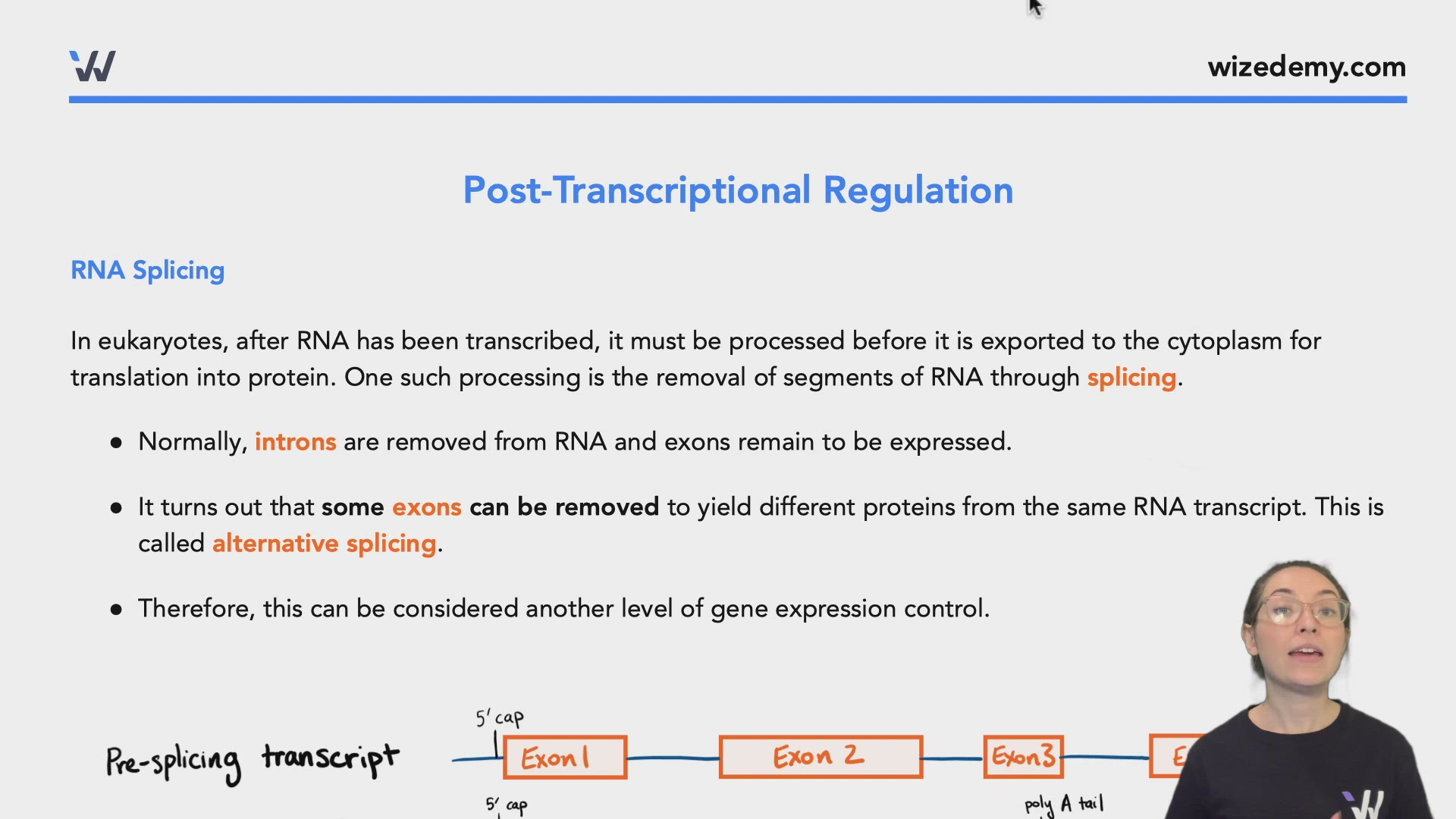
In eukaryotes, after RNA has been transcribed, it must be processed before it is exported to the cytoplasm for translation into protein. One such processing is the removal of segments of RNA through splicing.
- Normally, introns are removed from RNA and exons remain to be expressed.
- It turns out that some exons can be removed to yield different proteins from the same RNA transcript. This is called alternative splicing.
- Therefore, this can be considered another level of gene expression control.

RNA Stability
RNA processing also includes the addition of a 5' cap and a poly-A tail to increase its stability and prevent it from degradation before it gets to be translated.
- RNA will inevitably still be degraded. If it degrades very quickly (unstable), little protein can be produced from it.
- RNA-binding proteins (RBPs) can bind to RNA (specifically, to the untranslated regions (UTRs)) to control stability.
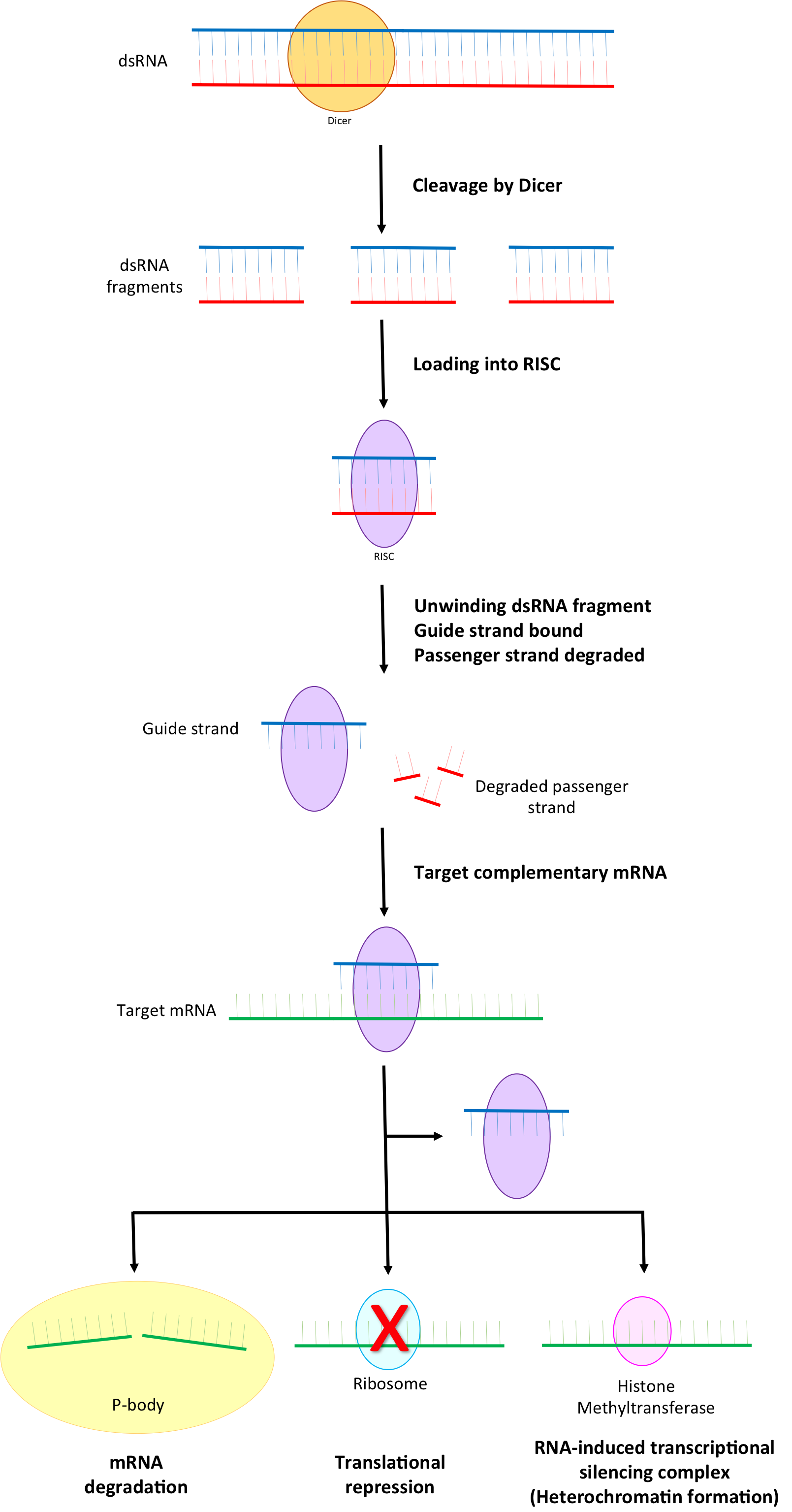
- MicroRNAs (miRNAs) are short RNAs that can bind to protein-coding RNA to be block translation or tag it for destruction by the RNA-induced silencing complex (RISC).
- Short interfering RNAs (siRNAs) work similarly to miRNAs.
0:00 / 0:00
Nuclear Import and Export
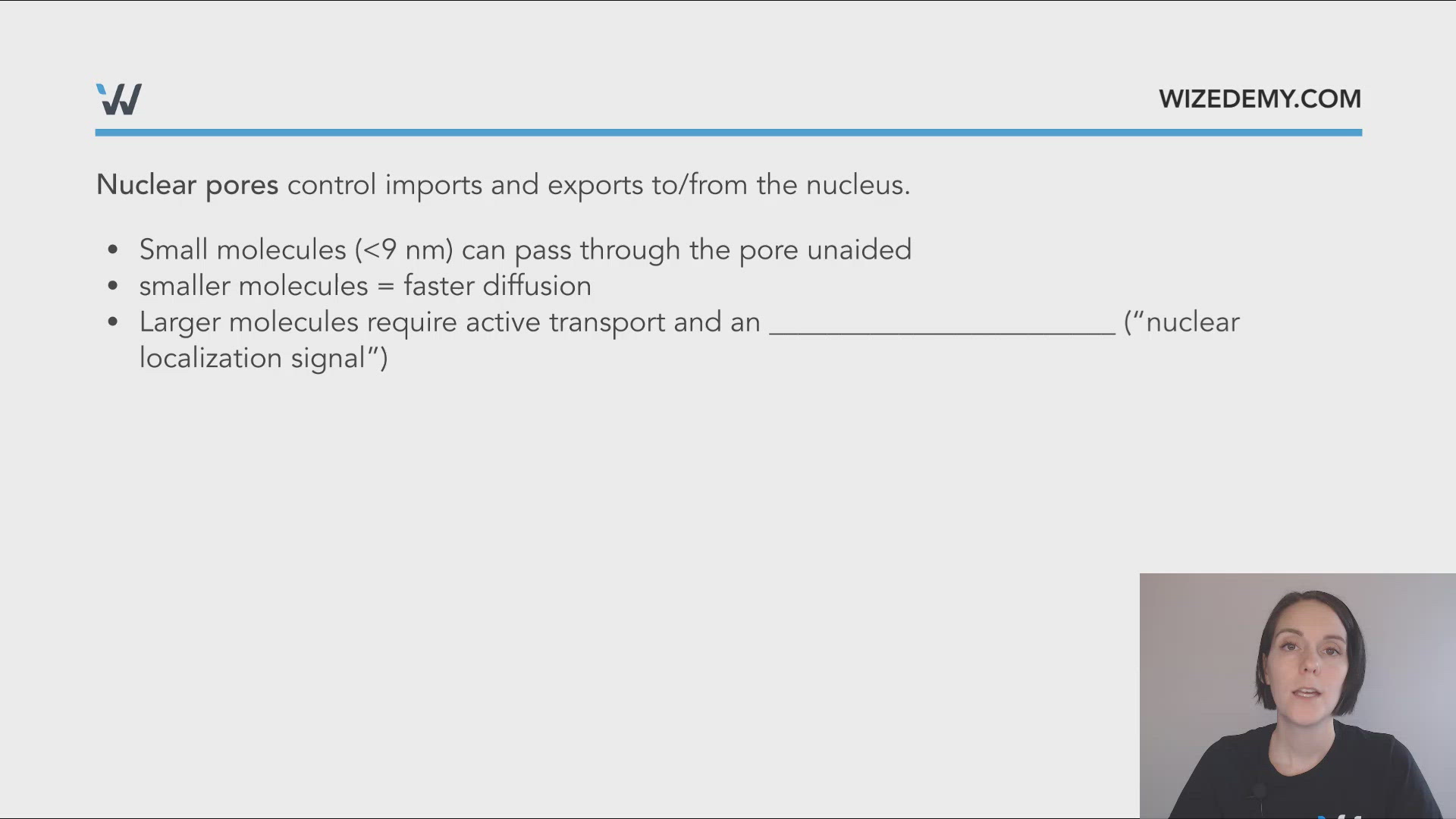
Nuclear pores control imports and exports to/from the nucleus.
- Small molecules (<9 nm) can pass through the pore unaided
- smaller molecules = faster diffusion
- Larger molecules require active transport and an NLS (“nuclear localization signal”)
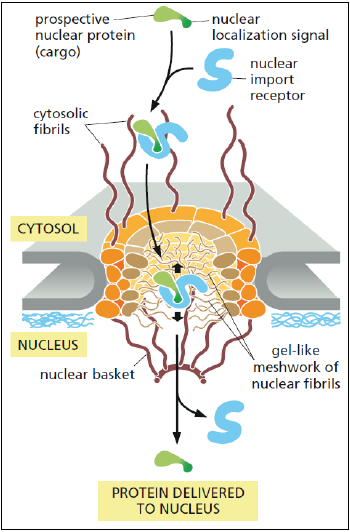
Nuclear import
- Proteins destined for the nucleus are translated using ribosomes in the cytosol
- Proteins which need to be imported: histones, proteins involved in DNA replication and transcription, ribosomal subunit assembly, and RNA processing
- Nuclear localization signal: targeting sequence (Lys-Lys-Lys-Arg-Lys) found in proteins destined for the nucleus
- binds to cytosolic nuclear import receptor proteins, which bring the NLS-tagged proteins into the nucleus
- necessary and sufficient for nuclear import (mutating this sequence prevents normal localization of nuclear proteins; adding it to a non-nuclear protein is sufficient for import
Nuclear export
• Products of the nucleus have export signals to determine their final destination
• Exported products include assembled ribosomal subunits, transfer RNA, messenger RNA
• Basically the reverse of nuclear import: requires a nuclear export signal (NES) and nuclear export receptor (NER)
0:00 / 0:00
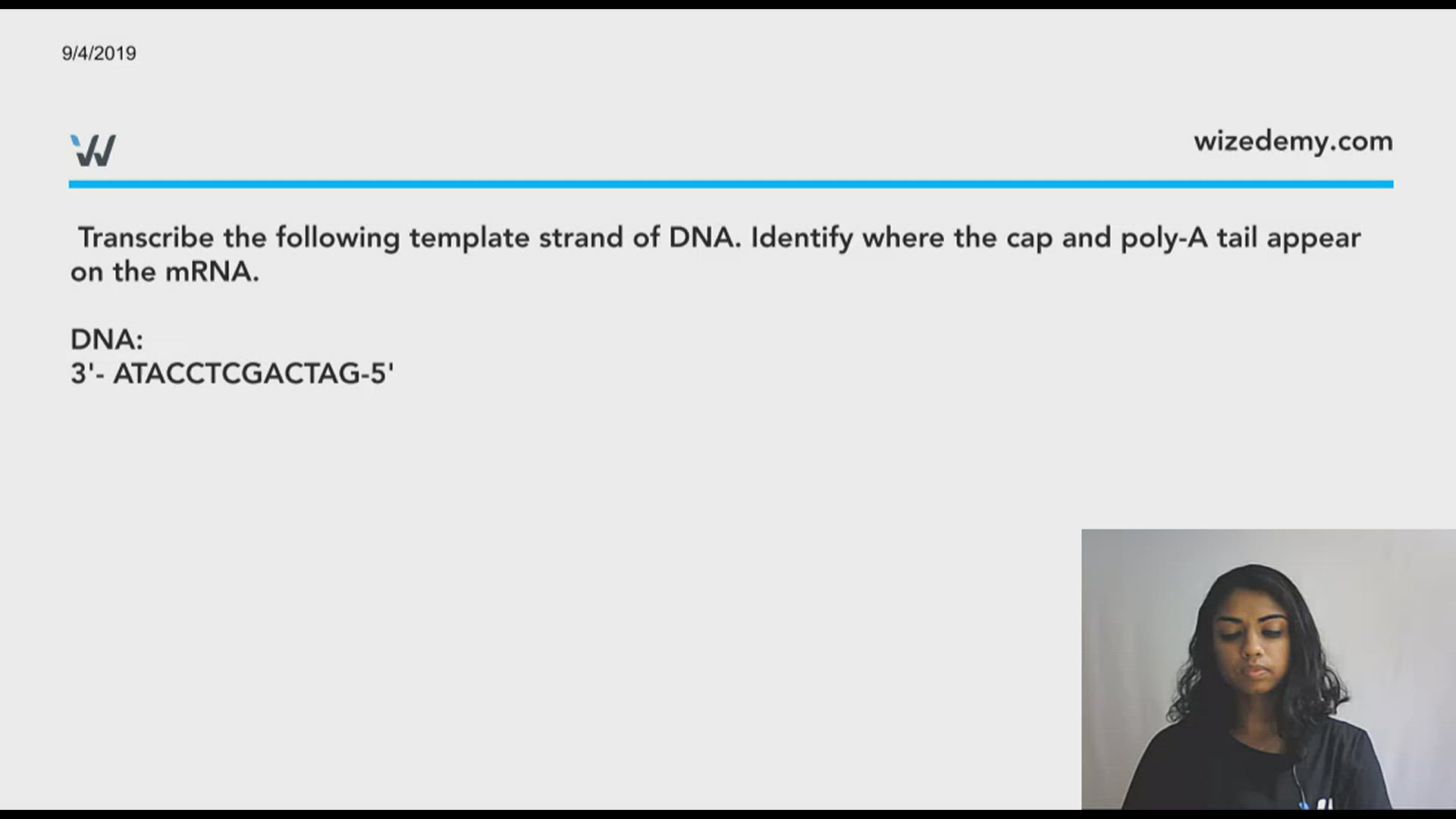
Transcribe the following template strand of DNA. Identify where the cap and poly-A tail appear on the mRNA.
DNA:
3'- ATACCTCGACTAG-5'
The resulting mRNA would be:
5'-UAUGGAGCUGAUC- 3'
The cap would be linked to the 5' end of the sequence and the poly-A tail would added to the 3' end of the sequence.
0:00 / 0:00
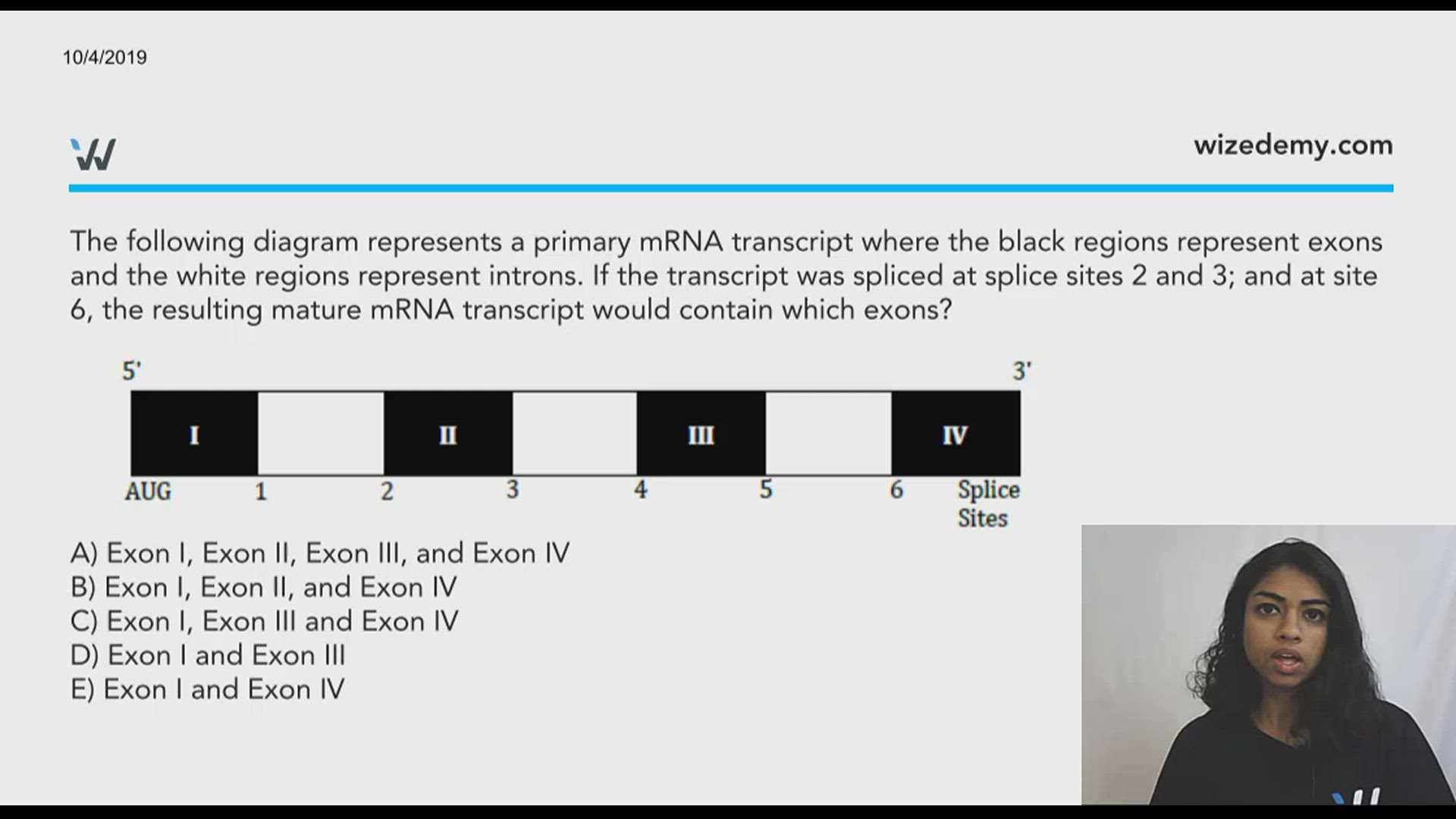
The following diagram represents a primary mRNA transcript where the black regions represent exons and the white regions represent introns. If the transcript was spliced at splice sites 2 and 3; and at site 6, the resulting mature mRNA transcript would contain which exons?

A) Exon I, Exon II, Exon III, and Exon IV
B) Exon I, Exon II, and Exon IV
C) Exon I, Exon III and Exon IV
D) Exon I and Exon III
E) Exon I and Exon IV
The correct answer is D. Exons I and III would remain in the final transcript.
Since exon II is located between splice site 2 and 4, it would be removed from the transcript during mRNA processing. Exon IV is located after splice site 6 so it would also be removed.