Wize University Biochemistry Textbook > Eukaryotic Transcription
Eukaryotic Transcription (extended version)
0:00 / 0:00
Eukaryotic Transcriptional Initiation
RNA polymerases
All three eukaryotic polymerases contain 5 core subunits:
- Two large subunits (similar to beta and beta' in bacterial)
- Two smaller subunits (similar to alpha subunits in bacteria)
- One omega subunit (similar to bacteria)
They also contain subunits specific to eukaryotic polymerases and enzyme specific subunits.
RNA Polymerase II Dependent Transcription
RNAPII is the most widely studied eukaryotic polymerase because it transcribes mRNA
Phosphorylation of the RNAP II carboxy-terminal domain (CTD)
- The CTD is made up of Tyr-Ser-Pro-Tyr-Ser-Pro-Ser heptapeptide repeats (52 repeats in humans)
- During initiation of transcription, the CTD is unphosphorylated
- As the polymerase begins the elongation phase of transcription, the CTD is phosphorylated
- RNA processing proteins, like capping, elongation, and splicing factors can bind to the CTD depending on it's phosphorylation state
General Transcription Factors (GTFs) are required for Initiation
Transcription Factor II (TFII) is made up of many multi-meric proteins which help position RNAP II at the start site and initiate transcription
- TFIID consists of a TATA box Binding Protein (TBP), which causes the DNA to bend, and 13 other TBP-Associated Factors (TAFs)
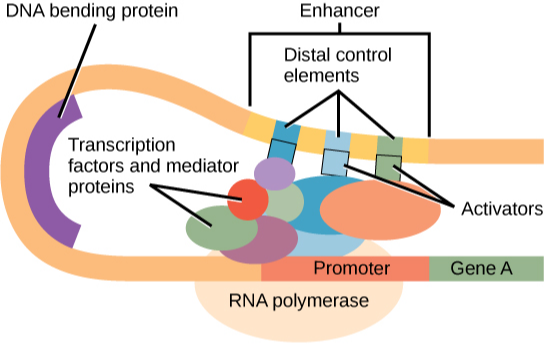
- TFIID forms a complex with TFII A and TFIIB and the TATA-box
- TFIIF and RNAP II then bind to the transcription start site
- TFIIE binds and creates a docking site for TFIIH to bind
- TFIIH has helicase activity which unwinds the DNA
- After transcription has been initiated, TFIIH has kinase activity which phosphorylates the CTD of RNAPII
0:00 / 0:00
5' Capping
Eukaryotic pre-mRNA primary transcripts must undergo addition processing after transcription. The resulting mature mRNA will be translated into protein.
The 5' end of the mRNA is capped with a 7-methylguanosine.
- This processing occurs co-transcriptionally (i.e when the gene is still actively being transcribed)
- TFIIH phosphorylates Serine 5 on the RNAPII CTD heptapeptide repeat after initiation
- This phosphylation allows the 5' capping enzyme to bind and activate
- Focuses the 5' capping activity to pre-mRNAs transcribed from RNAPII ONLY (not RNAPI or RNAPIII transcripts)
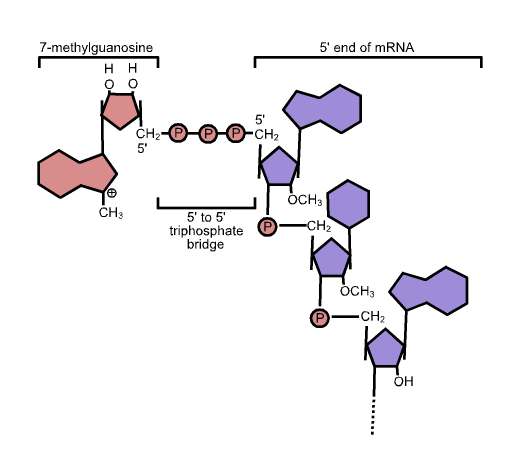
5" capping is important because:
- Stabilizes the pre-mRNA: protects it from being digested by RNA-digesting enzymes
- Allows elongation to proceed at a faster rate
- Serine 2 on the CTD is phophorylated and Negative Elongation Factor (NELF) is released from RNAPII
0:00 / 0:00
3' Polyadenylation
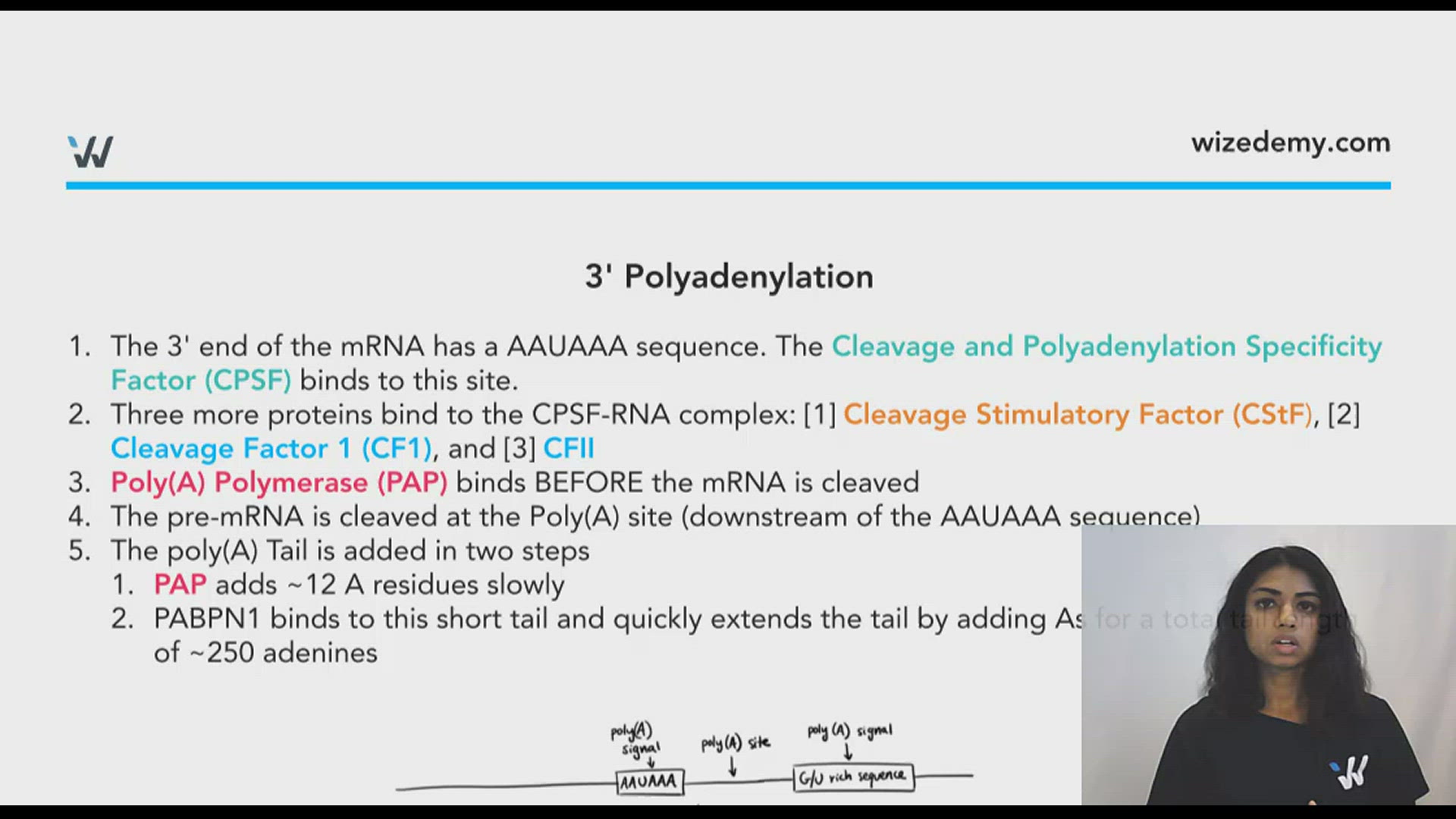
- The 3' end of the mRNA has a AAUAAA sequence. The Cleavage and Polyadenylation Specificity Factor (CPSF) binds to this site.
- Three more proteins bind to the CPSF-RNA complex: [1] Cleavage Stimulatory Factor (CStF), [2] Cleavage Factor 1 (CF1), and [3] CFII
- Poly(A) Polymerase (PAP) binds BEFORE the mRNA is cleaved
- The pre-mRNA is cleaved at the Poly(A) site (downstream of the AAUAAA sequence)
- The poly(A) Tail is added in two steps
- PAP adds ~12 A residues slowly
- PABPN1 binds to this short tail and quickly extends the tail by adding As for a total tail length of ~250 adenines

The poly(A) tail is important for:
- mature mRNA stability
- export of the mature mRNA to the cytoplasm
0:00 / 0:00
Splicing
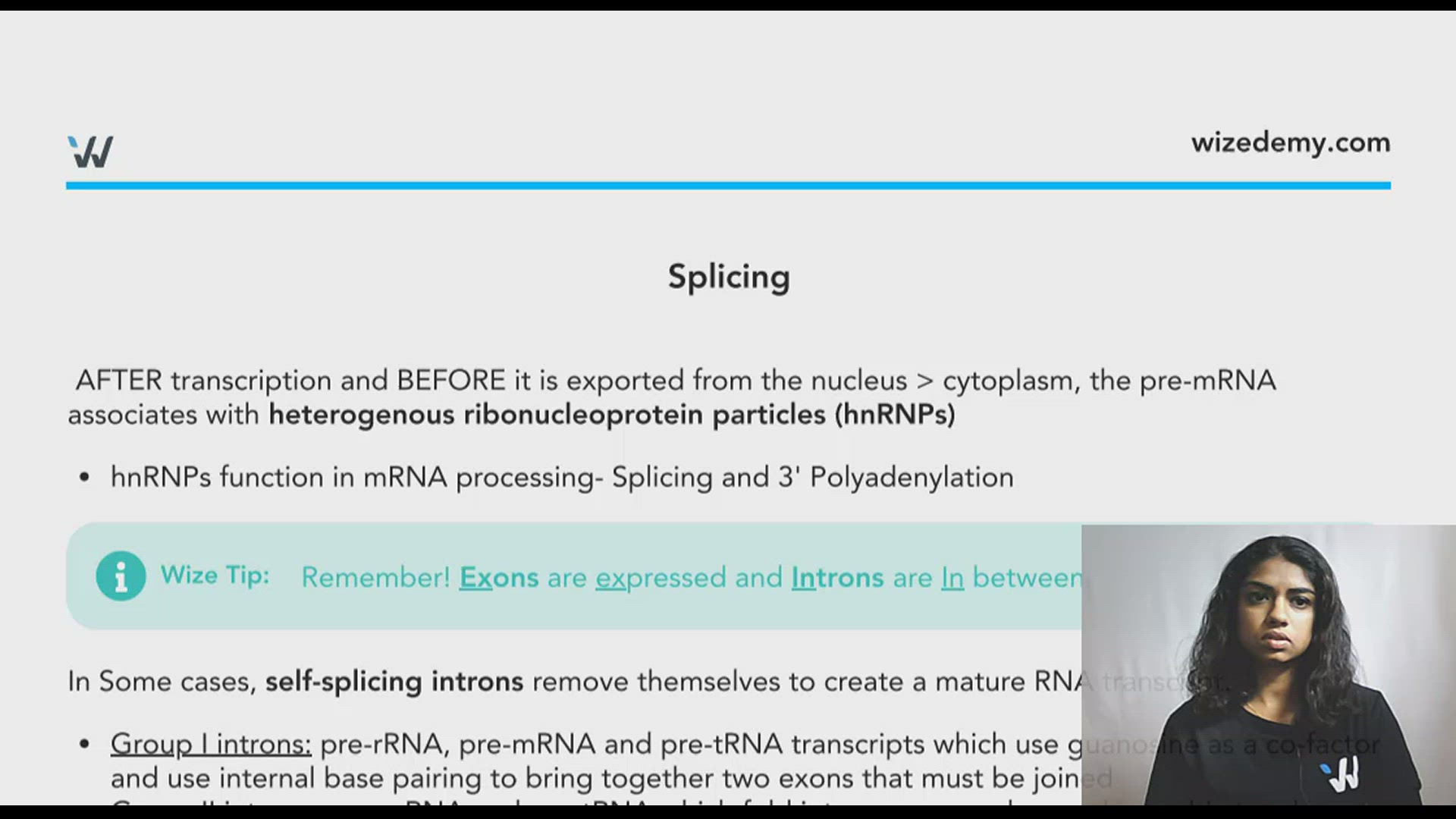
AFTER transcription and BEFORE it is exported from the nucleus > cytoplasm, the pre-mRNA associates with heterogenous ribonucleoprotein particles (hnRNPs)
- hnRNPs function in mRNA processing- Splicing and 3' Polyadenylation
Wize Tip
Remember! Exons are expressed and Introns are In between.
In Some cases, self-splicing introns remove themselves to create a mature RNA transcript.
- Group I introns: pre-rRNA, pre-mRNA and pre-tRNA transcripts which use guanosine as a co-factor and use internal base pairing to bring together two exons that must be joined
- Group II introns: pre-mRNA and pre-tRNA which fold into a conserved, complex multi-stem loop structure
In MOST pre-mRNAs, the Spliceosome removes introns to create the final protein coding mature mRNA.
- [U-rich small nuclear RNAs (snRNAs)] + [proteins]= snRNPs (small nuclear RiboNuceloprotein Particles)
- snRNPs= U1, U2, U4, U5 and U6
- Each snRNP has a different snRNA, which base pairs with the pre-mRNA transcript
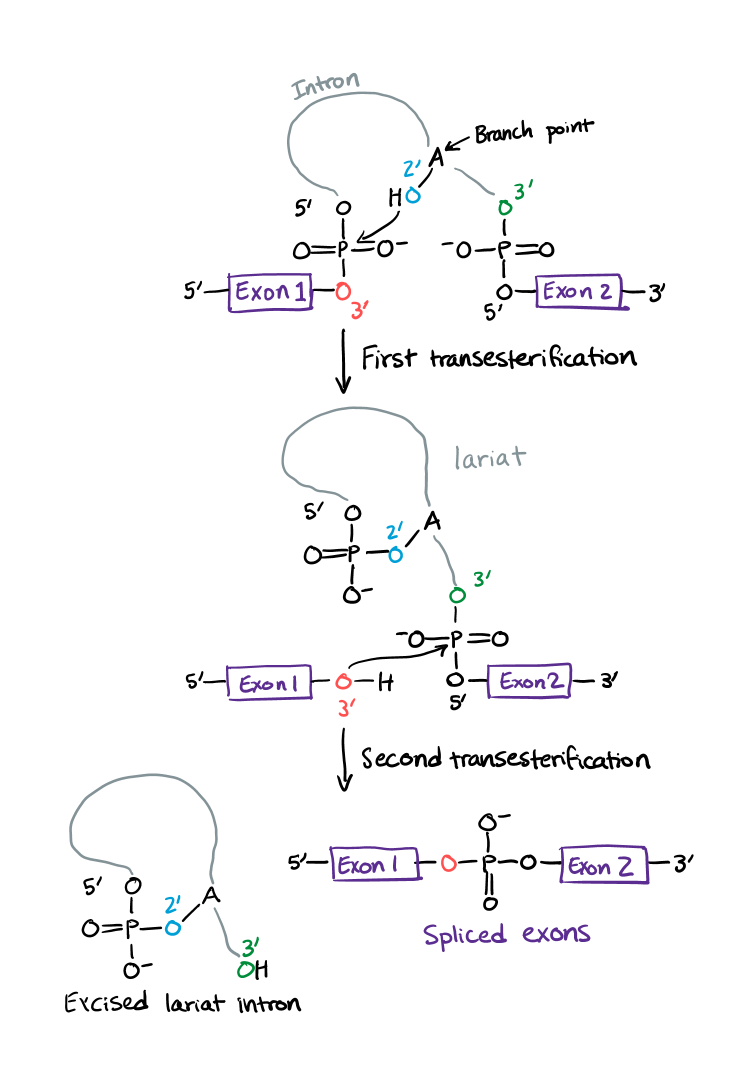
Splicing occurs via two transesterification reactions
- The ester bond between the intron's 5' phosphorus and the first exon's 3' oxygen is EXCHANGED with an ester bond on the 2' oxygen of the branch point A
- The ester bond between the second exons's 5' phosphorus and the intron's 3' oxygen is EXCHANGED with an ester bond with the first exon's 3' oxygen
0:00 / 0:00
Alternative Splicing
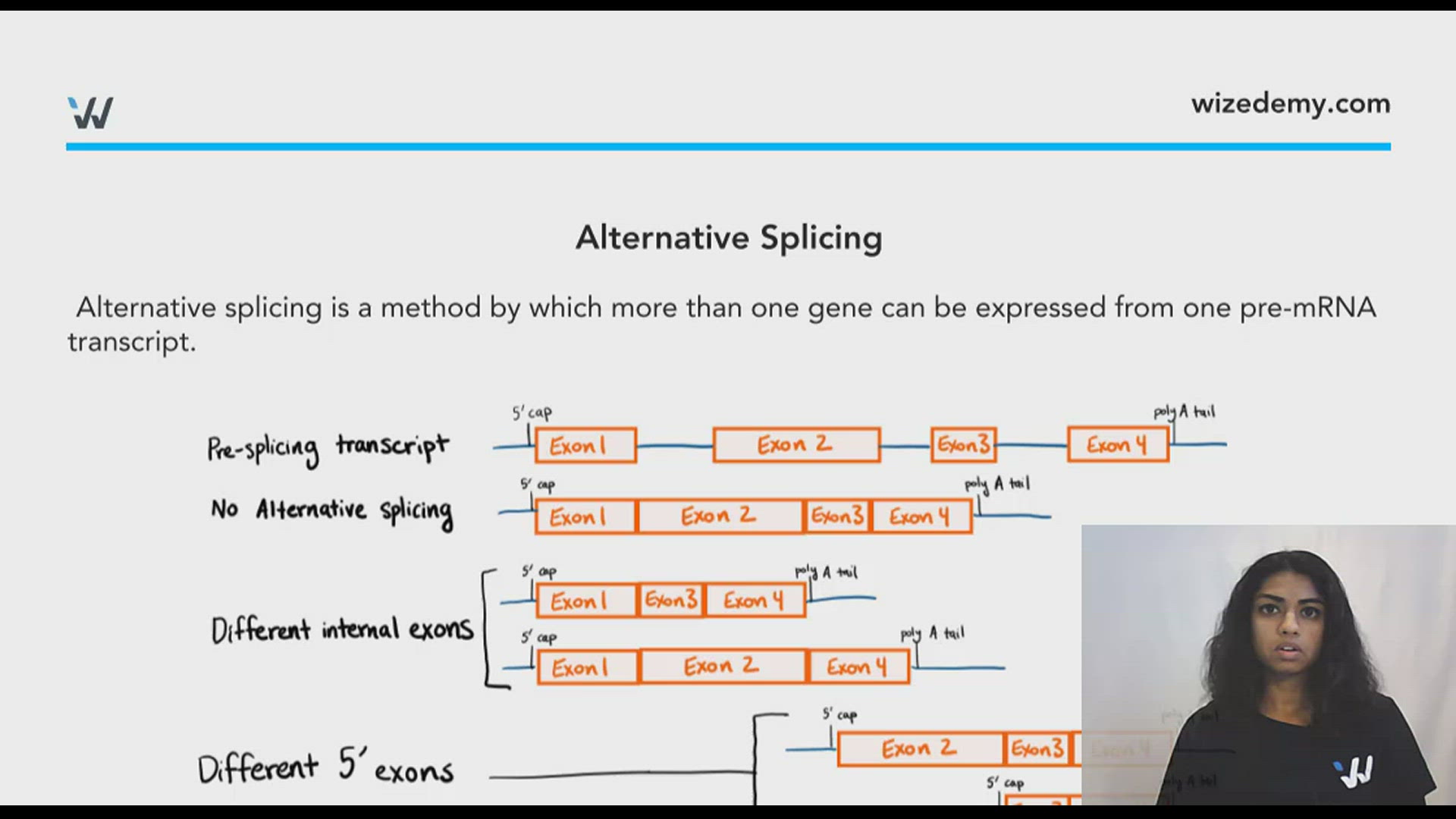
Alternative splicing is a method by which more than one gene can be expressed from one pre-mRNA transcript.
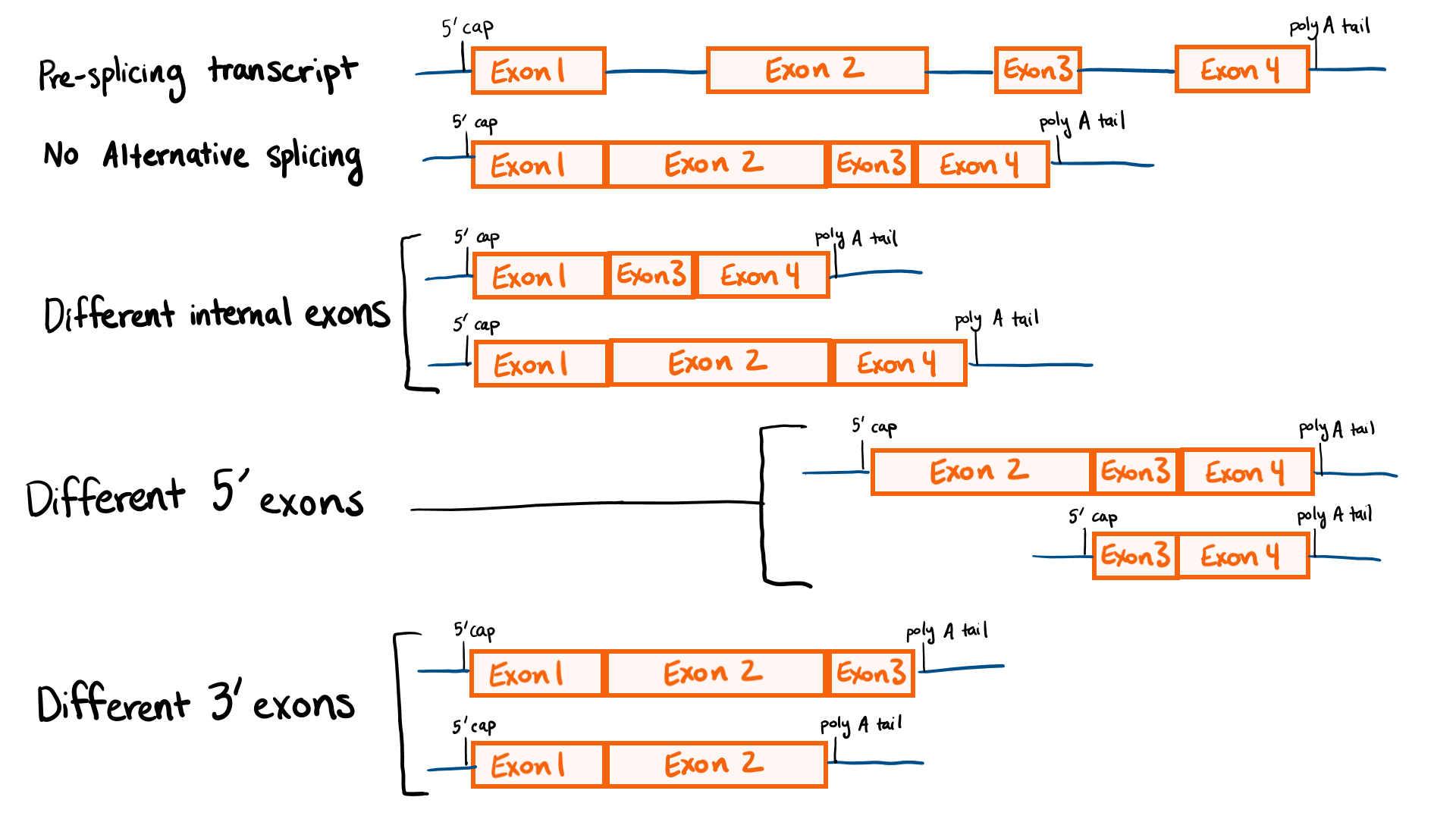
The Sex-lethal (Sxl) protein in Drosophila is an example of alternative splicing.
In the Sxl transcript, exon 3 has a premature stop codon.
- FEMALE Drosophila:
- A promoter that is active only in females transcribes Sxl protein
- The female specific promoter turns off and a male/ female promoter for Sxl is turned on
- The Sxl protein produced from the female specific promoter blocks the spliceosome from accessing the splice site between exon 2 and 3
- Alternative splicing causes exon 3 to be SKIPPED in the final mRNA transcript
- More functional Sxl protein is produced
- MALE Drosophila
- The female specific Sxl promoter is absent. There is no early Sxl protein
- The male/ female promoter for Sxl is turned on
- Without the early Sxl protein, nothing blocks the spliceosome from accessing the splice site between exon 2 and 3
- Exon 3 with the stop codon is INCLUDED in the final mRNA transcript
- No Sxl protein is produced
Sxl is an intronic splicing silencer for the Transformer (Tra) protein.
The Tra pre-mRNA transcript has a stop codon in exon 2.
- FEMALES: the Sxl protein is present and blocks the splice site between exon 1 and exon 2 of the Tra pre-mRNA transcript. Exon 2 is skipped a functional Tra protein is formed.
- MALES: the Sxl protein is absent, so the spliceosome can access the splice site between exon 1 and exon 2. Exon 2, with it's stop codon, is included in the mature mRNA transcript and a functional Tra protein is not formed.
Tra is an exonic splicing enhancer for the Doublesex (Dsx) protein.
- FEMALES: The Tra protein is present. It binds to Exon 4 on the Dsx pre-mRNA transcript and promotes the splicing of exon 3 to exon 4 and the addition of a poly A tail to Exon 4. This results in a short Dsx protein in females.
- MALES: The Tra protein is absent. Therefore, Exon 4 is skipped. Exon 3 is spliced to Exon 5 and then to Exon 6. This results in a long Dsx protein in males.
0:00 / 0:00
mRNA Nuclear Export
After RNA processing, mature RNA transcripts and other molecules involved in protein synthesis must be exported out of the nucleus.
- mRNAs bound by hnRNPs= mRNPs
- tRNAs
- ribosomal subunits
Wize Concept
It is important to note that only fully mature mRNAs can be exported from the nucleus. If mRNAs that are not fully processed are allowed to leave the nucleus, translation could begin on an mRNA that still contains introns, resulting in defective proteins. To prevent this, pre-mRNAs that are associated with spliceosome snRNPs are unable to leave the nucleus.
These molecules cross the nuclear envelope double membrane through the nuclear pore complex (NPC).
- Membrane embedded ring structure with an aqueous center.
- Multiple copies of nucleoporins make up the NPC structure.
- Eight filaments extend into the nucleoplasm to form the nuclear basket. The same occurs on the cytoplasmic side.
Large molecules, like mRNPs can not go through the NPC without help: they need assistance from a complex, called the mRNP exporter.
- Nuclear Export Factor 1 (NXF1): large subunit
- Nuclear Export Transporter (NXT1): small subunit
- NXF binds to specific proteins associated with mRNPs, for example, RNA export factor (REF) proteins.
- REF proteins are found along the length of the mRNA transcript, 20 nucleotides 5' from every exon-exon junction
- Associates with SR proteins, which are bound to exonic splicing enhancers
Gle2, an adaptor protein that binds to the NPC nuclear basket and to NXF1 brings the mRNP closer to the NPC
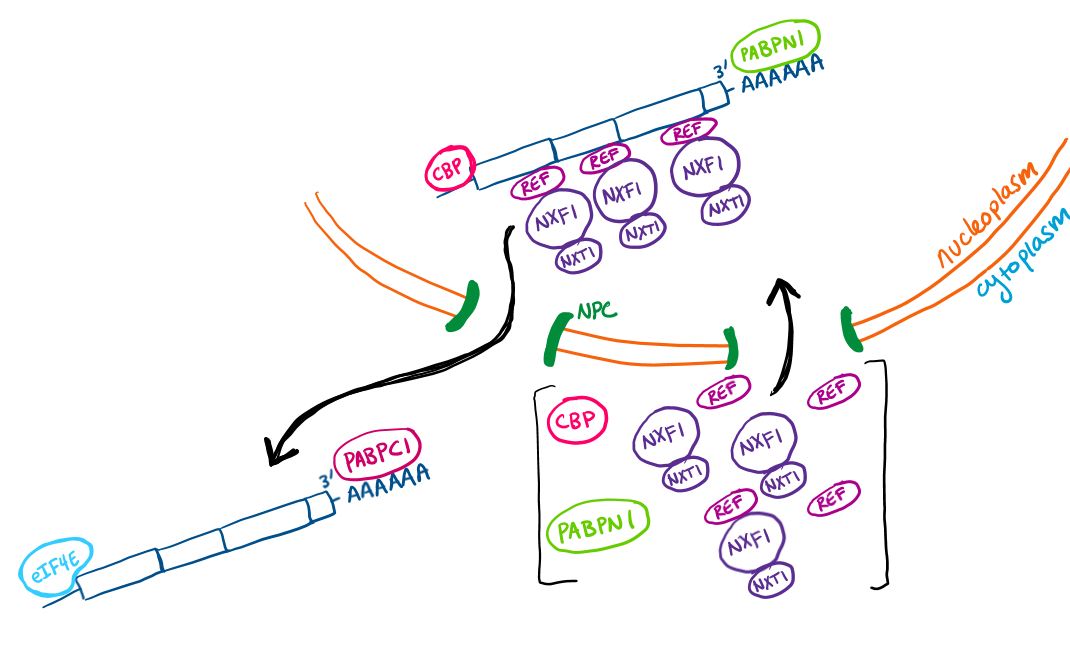
mRNP remodeling: As the mRNP passes through the NPC, Dbp5, which has helicase activity, dissociates hnRNP proteins from the mRNP. These proteins are exchanged for different proteins.
- eIF4E: translation initiating factor replaces cap binding protein (CBP)
- PABPC1: replaces PABPN1 on the poly(A) tail
- CBP, PABPN1, NXF1, NXT1 and REF dissociate from the mRNP in they cytoplasm and are recycled back to the nucleus
Transport through the NPC is regulated through de/phosphorylation of SR proteins
Example: Yeast SR protein Nlp3
- Nlp3 is phosphorylated when bound to pre-mRNA
- After the poly(A) tail is added, Nlp3 is dephosphorylated
- Only dephosphorylated Nlp3 can bind to mRNP exporter: QUALITY CONTROL for properly adenylated mRNAs
- Once in the cytoplasm, Nlp3 is phosphorylated again
- Nlp3 dissociates from the mRNP, taking the mRNP exporter with it
0:00 / 0:00
Cytoplasmic Processing of mRNAs
Once in the cytoplasm, mRNAs can be further processed. These processes may affect the rate of translated protein created from the mRNA.
N6 Methylation of Adenines
Pre-mRNAs, mRNAs and lncRNAs can be methylated at the N6 position on adenine
m6A is found on ALL rRNAs, tRNAs and snRNAs. In contrast, only SOME mRNAs and lncRNAs have m6A.
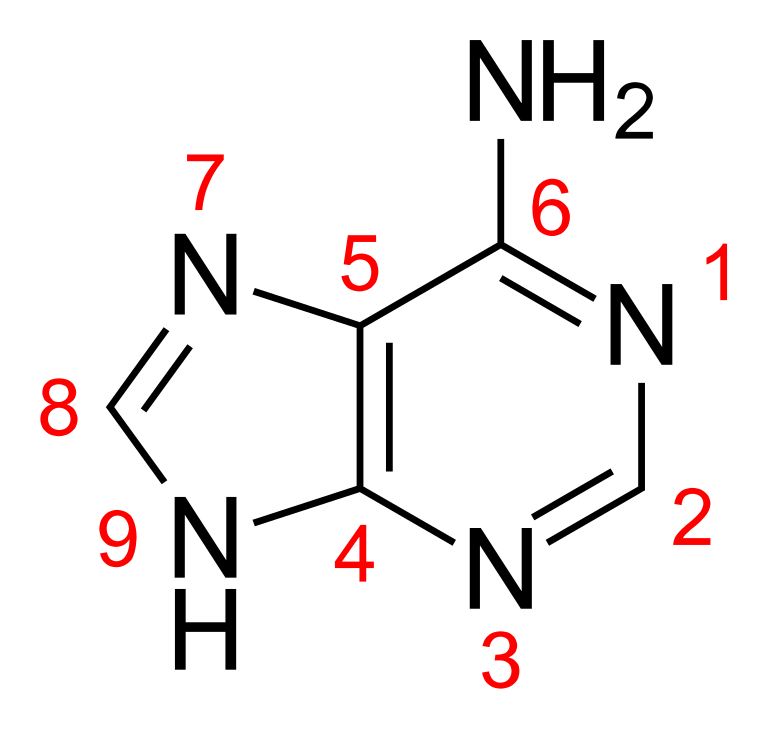
Research into the function of m6A is still ongoing. Scientists think it might regulate RNA splicing, nuclear export, translation and degredation.
m6A mRNAs also seem to be less stable and associate more with P Bodies than mRNAs without m6A.
MicroRNAs Inhibit Translation
First discovered in the nematode C. elegans when researchers were studying the lin-4 and let-7 genes.
These genes coded for miRNAs, which are 20-26 nucleotides in length.
miRNAs hybridize to the 3'UTR of target mRNAs and repress translation.
Wize Tip
Unlike siRNAs, hybridization between miRNAs and their target mRNA does not need to be perfect!
miRNA Biosynthesis
- Primary transcript miRNAs (Pri-miRNAs) are transcribed by RNAPII.
- Within the pri-miRNA, certain regions fold into hairpin structures that are ~70nt long
- Drosha, an RNase acts with a double stranded RNA binding protein (DGCR8 in humans/ Pasha in Drosophila) to cut the hairpin out of the pri-miRNA transcript
- The pre-miRNAs are exported to the cytoplasm by the nuclear export factor exportin 5
- Dicer, an RNAse processes the pre-miRNA into a mature miRNA
- One of the miRNA strands is bound by an argonaute protein, forming a RNA-induced silencing complex (RISC)
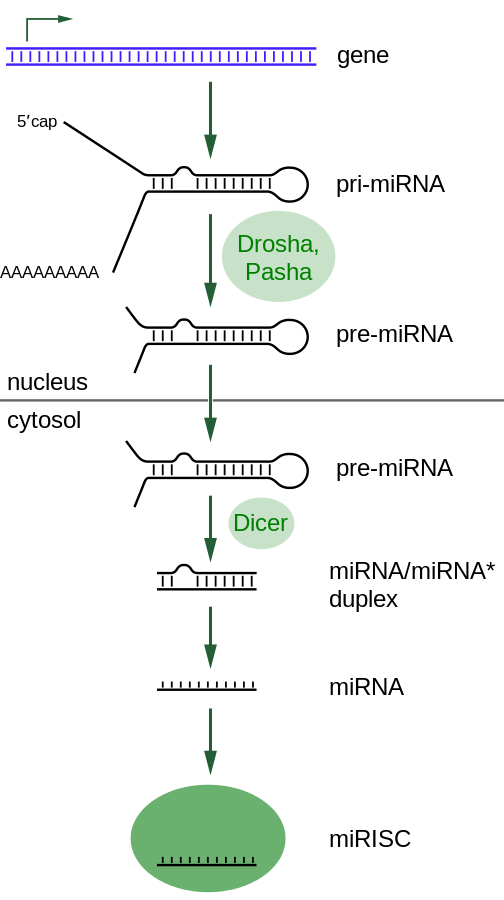
The miRNA-RISC complexes associate with the target mRNA based on the miRNA hybridizing with complementary sequences in the target mRNA 3'UTR. The more miRNA-RISC complexes associated with the mRNA, the greater the translational repression.
The miRNA-RISC complex also causes mRNPs to associate with P Bodies--> degredation.
Alternative Polyadenylation
Two or more Poly(A) siganls on the mRNA transcript.
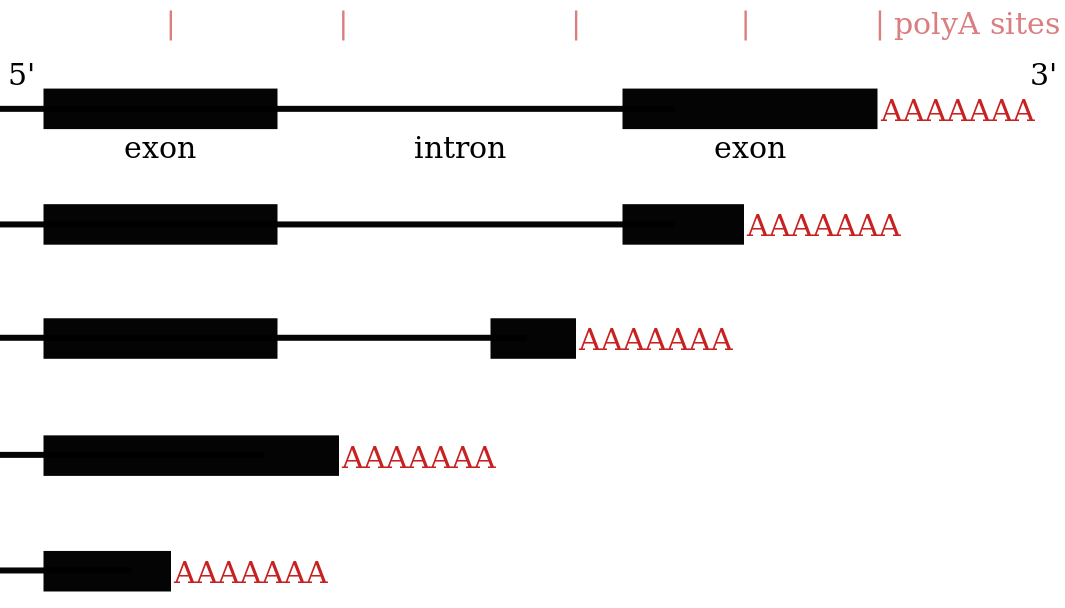
mRNAs with a longer 3' exon/ longer transcript may have more sites where miRNAs can bind. Thus, miRNAs have more control over genes with multiple polyadenylation sites.
Can also be coupled to alternative splicing.
Cytoplasmic Polyadenylation
RNA binding proteins that bind to specific sequences in the 3'UTR of mRNA transcripts can REPRESS translation.
Example: Egg cells of many animals contain mRNAs that should not be translated until after fertilization.
- Before fertilization: These egg cells have short Poly(A) tails, so only a few molecules of PABPC1 can bind to the tail, thus these mRNAs are not translated efficiently.
- After fertilization: ~150 As are added to the poly A tail, thereby kickstarting translation.
In addition to the AAUAAA Poly(A) signal, these mRNAs have a U-rich cytoplasmic polyadenylation element (CPE) which is bound by CPE-binding protein (CPEB).
- Before fertilization: CPEB binds to Maskin, which binds to eIF4E. Therefore eIF4E cannot interact with other translation initiating proteins.
- After fertilization: A specific CPEB serine is phosphorylated. Maskin dissociates from the complex and CPSF and PAP cleave the mRNA and extend the Pol(A) tail. More PABPC1 can associate with the longer POly(A) tail, stabilizing eIF4E and its interaction with translation initiating factors.