Wize University Biology Textbook > Photosynthesis
Light-Dependent Reactions of Photosynthesis [detailed]
Popular Courses
AP Biology Exam Prep Course
AP Exam Prep
Biology
General Course
General Biology
University Study Guides
BIOLOGY 1002B
Western University
BIOL 211
University of Calgary
BIOL 107
University of Alberta
BIOL 102
Queen's University
BIOL 112
University of British Columbia
Grade 12 Biology
Canada High School
DAT
General Course
High School Biology
US High School
General Biology
University Study Guides
BIOL 130
University of Waterloo
SC/BIOL 1000 3.00
York University
BLG 143
Toronto Metropolitan University
BIOL 112
McGill University
BIOL 186
University of Victoria
BIOL-1101
University of Windsor
BIOL 1201
Western University
BISC 101
Simon Fraser University
0:00 / 0:00
Light-Dependent Reactions of Photosynthesis
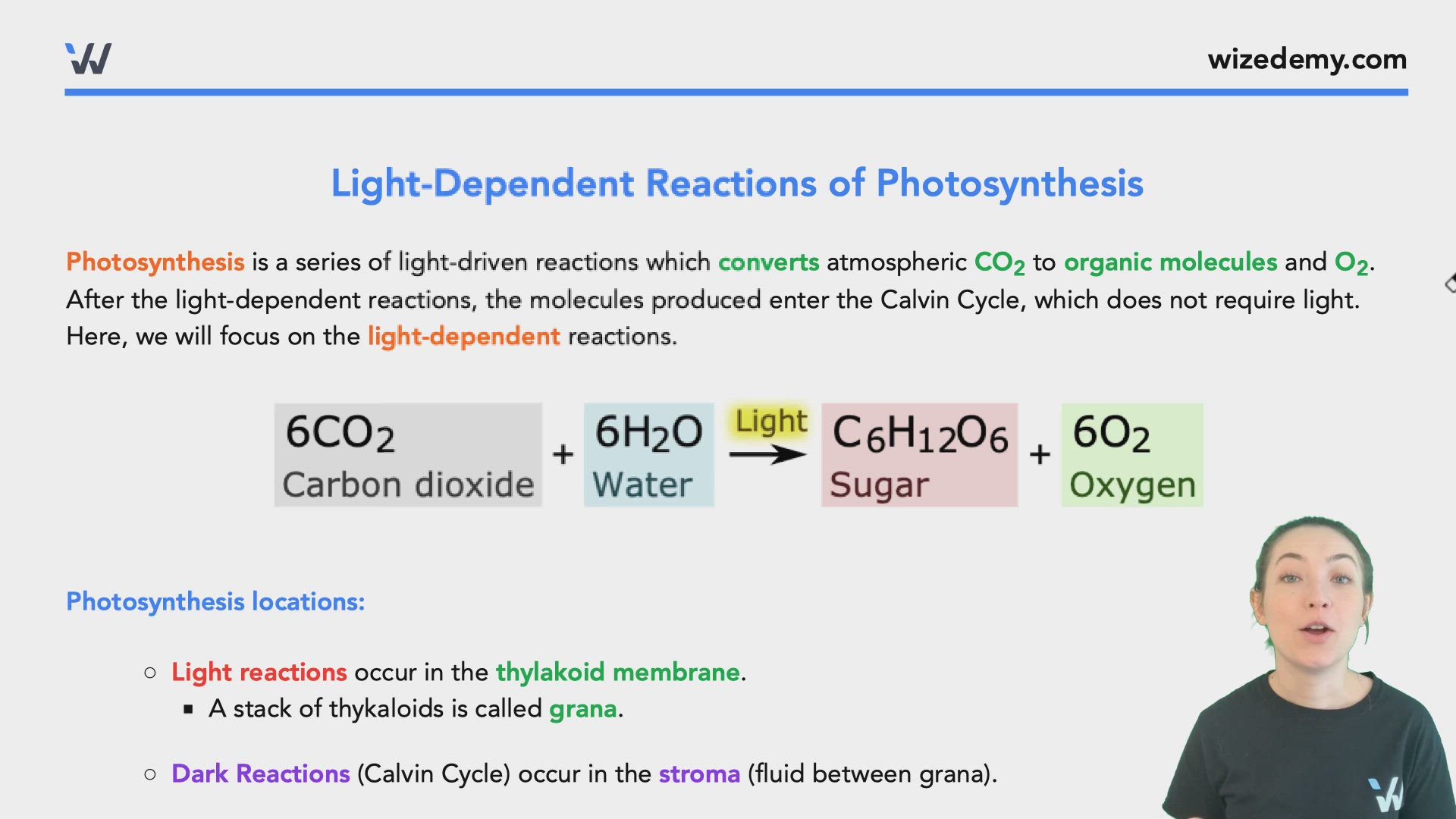
Photosynthesis is a series of light-driven reactions which converts atmospheric CO2 to organic molecules and O2. After the light-dependent reactions, the molecules produced enter the Calvin Cycle, which does not require light. Here, we will focus on the light-dependent reactions.

Photosynthesis locations:
- Light reactions occur in the thylakoid membrane.
- A stack of thykaloids is called grana.
- Dark Reactions (Calvin Cycle) occur in the stroma (fluid between grana).
Light absorbing pigments
Pigments absorb as certain visible light wavelength.
- Chlorophylls a and b
- Absorb 70% of red and blue wavelength; highest O2 production at these wavelengths.
- Only present in green plants and green algae.
- Carotenoids
- Absorb violet and blue-green light.
- Phycobilins – present in algae.
Photochemistry Components
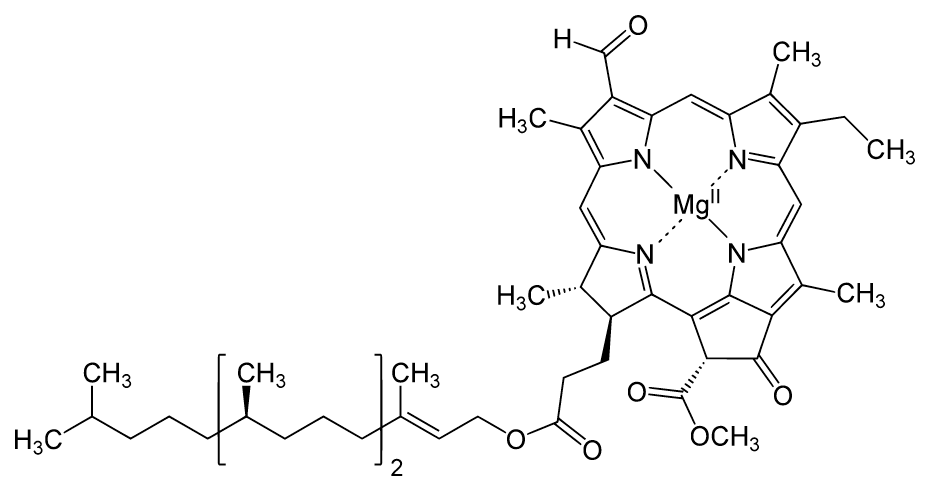
- Chlorophyll contains a porphyrin ring
- Light absorbing head containing magnesium and many double bonds that can be excited.
- Light harvesting complexes (aka antenna complex) – link pigments together and are connected to reaction centers.
- Electrons transferred to primary electron acceptor.
- Photosystem (PS) = light harvesting complexes + reaction center embedded in thylakoid membrane.
Photosynthesis Steps
Photosynthesis starts with light photons striking the pigments. Follow the steps below:

Remember that the combination of a light harvesting complex with the reaction center makes up a photosystem. There are two relevant photosystems that differ in (1) which molecules they split (i.e. what they oxidize) and (2) where they deliver their electrons (i.e. what they reduce).
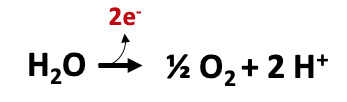
- Photosystem II (P680): Obtains an electron by splitting water (H2O) and releasing oxygen (O2) as a waste product.
- Note that electron energy is also used to pump H+ from the stromal side to the lumen of the thykaloid.
- These hydrogen atoms will be used to produce ATP later.
- Since the traveling electrons loose energy, they must be "reenergized" by photosystem I.
- Electron Transport Chain (ETC): Passing of electrons between PS II and PS I.


- Photosystem I (P700): Similar to PS II, it absorbs a photon from light, which passes through pigments, to chlorophyll a and then the reaction center.
- In this case, an electron came from PS II to replace that one given away by chlorophyll a.
- PS I becomes oxidized and sends an electron to NADP+, reducing it to NADPH.
- ATP Synthase:
- The buildup of H+ in the thykaloid lumen creates a gradient that drives the production of ATP as the ions rush through ATP synthase.
- This is called chemiosmosis.
Wize Tip
This process of using light energy to produce ATP is called photophosphorylation.

0:00 / 0:00
Non-Cyclic and Cyclic Versions of Light-Dependent Reactions
- Non-Cyclic Photophosphorylation
- What was discussed so far was the non-cyclic version of the light-dependent reactions, also known as Z-scheme. It is called that because the energy of the electrons involved goes up and down, in a pattern that resembles a "Z".

Wize Concept
Note that in this scheme 1 ATP is formed for every 1 NADPH. Therefore, their ratio is 1:1 ATP:NADPH.
- Cyclic Photophosphorylation
- If ATP and NADPH are needed at different ratios, electrons can be cycled through photosystem I only.
- Instead of going to reduce NADP+, the electron goes through the ETC, driving H+ into the lumen.
- This gradient is used to produce ATP from ADP.
Practice: Light Reactions Product
What is one of the products of the light reactions?
Practice: Types of Photophosphorylation
Which of the following is correct?