Wize University Biology Textbook > Lab Techniques for Biology
Nucleic Acid Detection [Northern and Southern Blots]
Popular Courses
MCAT
General Course
Biology
General Course
General Biology
University Study Guides
BIOLOGY 1002B
Western University
DAT
General Course
Grade 12 Biology
Canada High School
High School Biology
US High School
BIOL 200
McGill University
General Biology
University Study Guides
SC/BIOL 1000 3.00
York University
BIOL 112
McGill University
HMB265H1
University of Toronto
BIOL 1010
Dalhousie University
BIO230H1
University of Toronto
BIOL 1201
Western University
BIOL 202
McGill University
BIOL 1P91
Brock University
BIOL 1020
University of Manitoba
BIOL 331
University of Calgary
BIOA01H3
University of Toronto
0:00 / 0:00
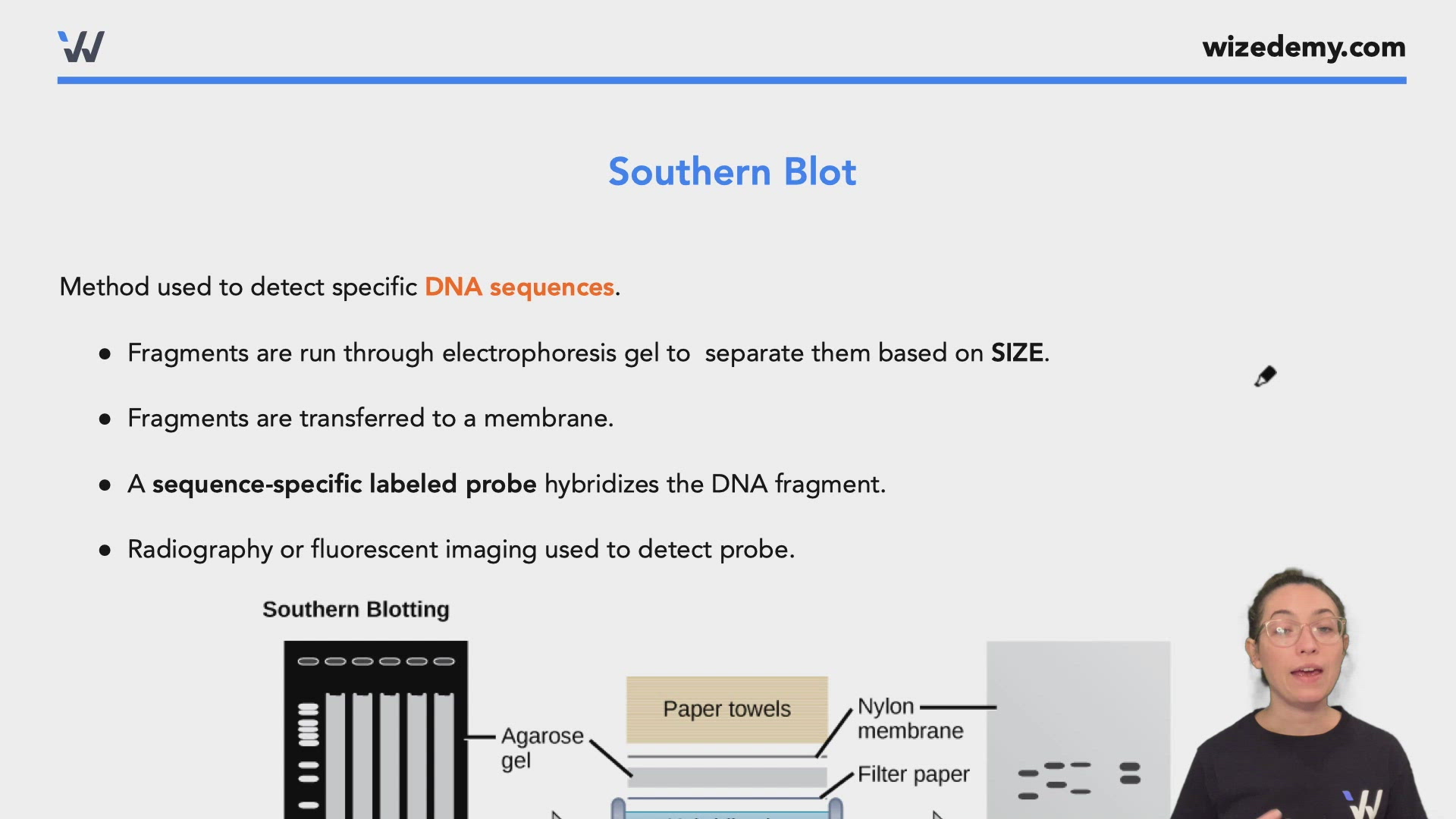
Southern Blot
Method used to detect specific DNA sequences.
- Fragments are run through electrophoresis gel to separate them based on SIZE.
- Fragments are transferred to a membrane.
- A sequence-specific labeled probe hybridizes the DNA fragment.
- Radiography or fluorescent imaging used to detect probe.

0:00 / 0:00
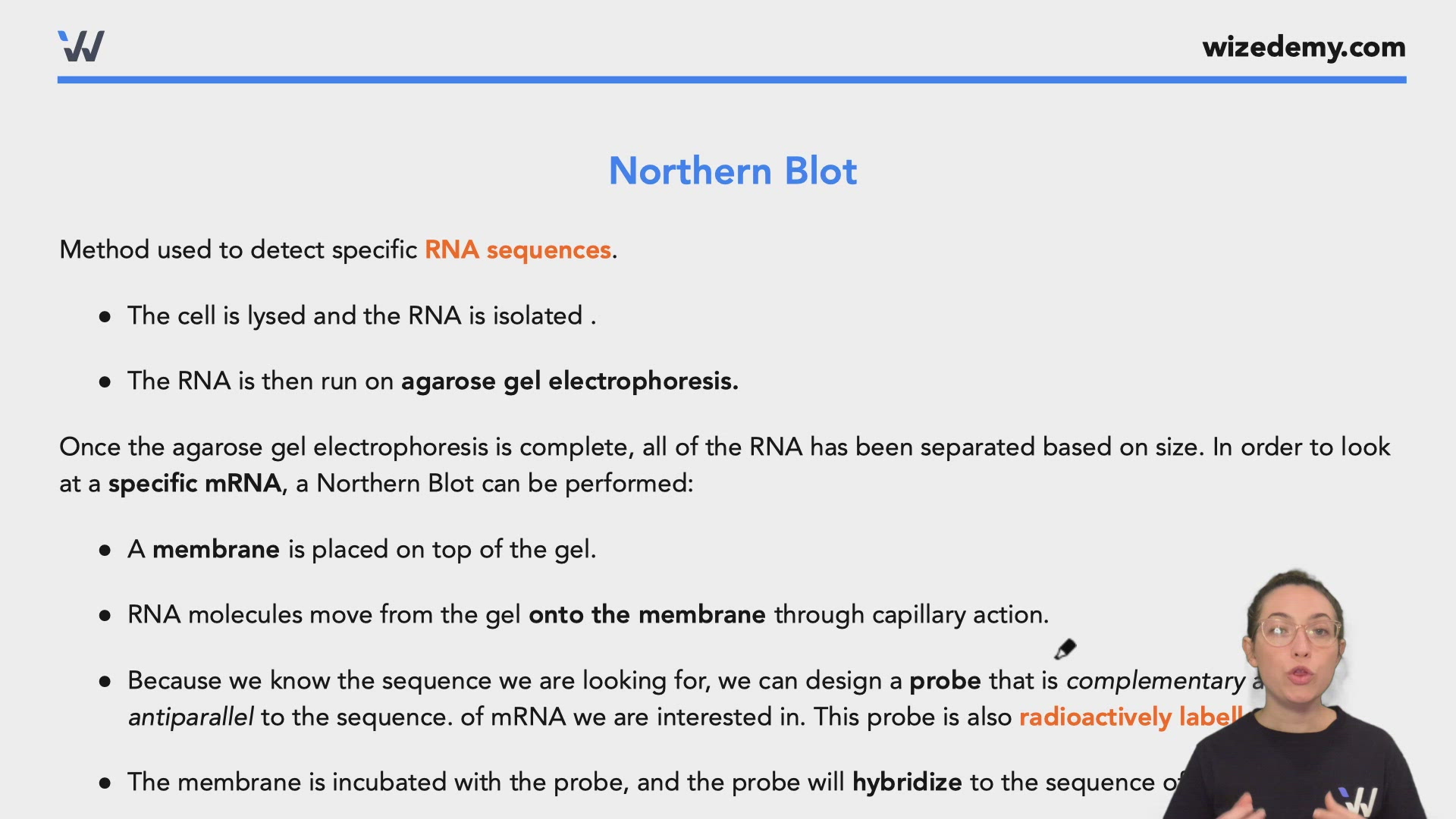
Northern Blot
Method used to detect specific RNA sequences.
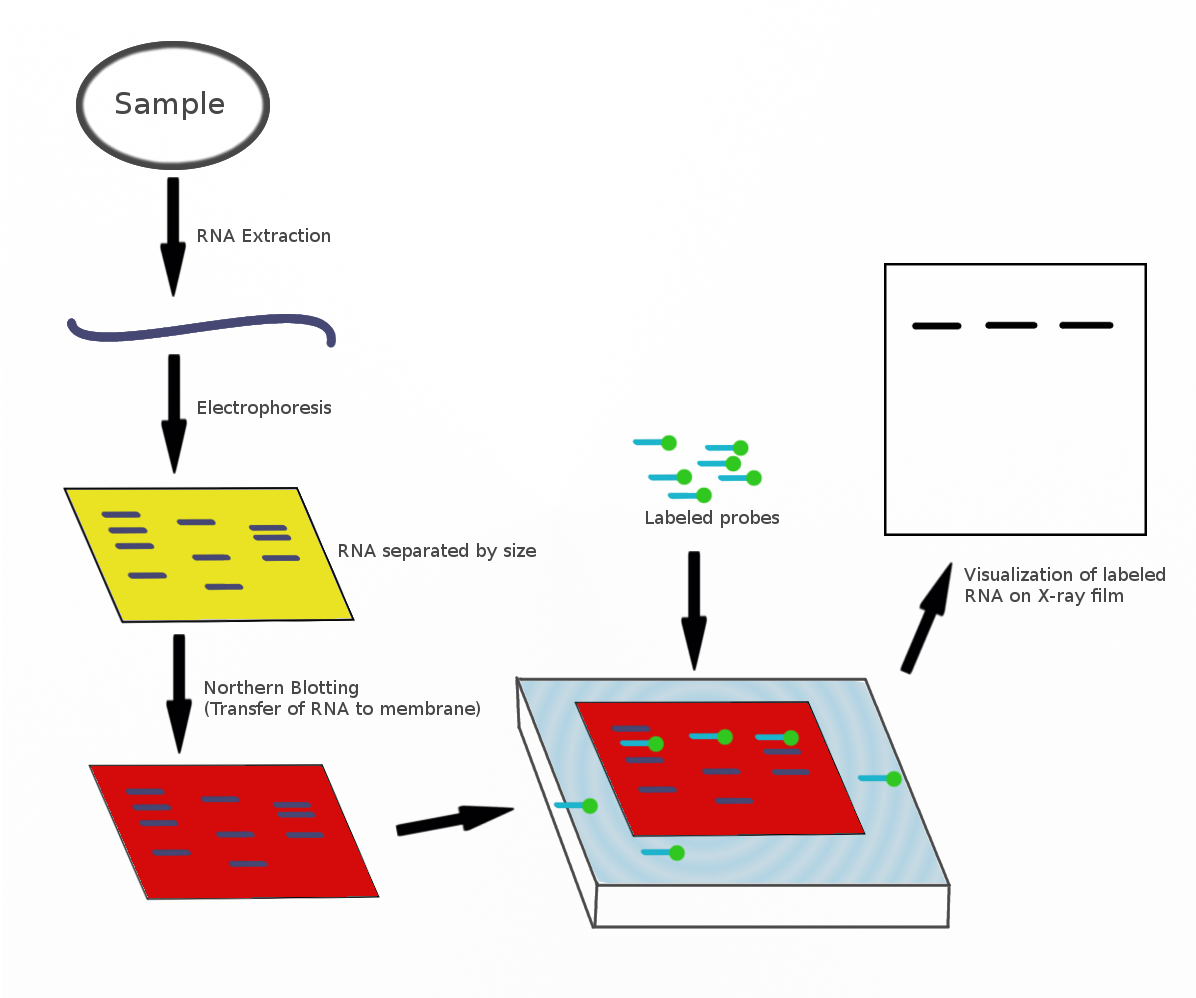
- The cell is lysed and the RNA is isolated .
- The RNA is then run on agarose gel electrophoresis.
Once the agarose gel electrophoresis is complete, all of the RNA has been separated based on size. In order to look at a specific mRNA, a Northern Blot can be performed:
- A membrane is placed on top of the gel.
- RNA molecules move from the gel onto the membrane through capillary action.
- Because we know the sequence we are looking for, we can design a probe that is complementary and antiparallel to the sequence. of mRNA we are interested in. This probe is also radioactively labelled.
- The membrane is incubated with the probe, and the probe will hybridize to the sequence of interest.
- The membrane is washed and then radioactivity is measured.
Practice: Hybridization
The ability of nucleic acids to hybridize to each other is important for which of the following methods? (Select all the apply)