
The Endomembrane System
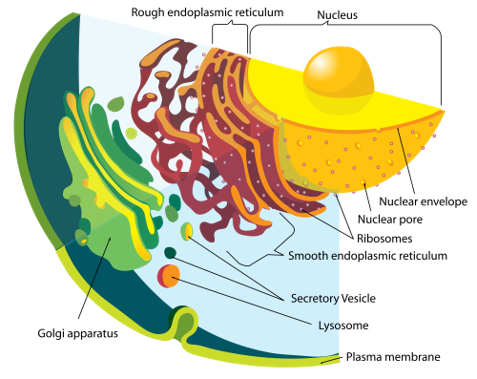
The endomembrane system is a group of membranes in eukaryotic cells which forms a network. The different components of the endomembrane system work together by sharing membranes and/or contents of organelles.
- Membrane-bound vesicles bud off of one component of the endomembrane system, and fuse with others.
- These vesicles transport proteins, other biomolecules, and membrane lipids.
- Transport through the endomembrane system is highly regulated. Vesicles are marked for specific destinations in the cell.
Components of the endomembrane system:
- Nucleus
- Endoplasmic Reticulum (rough and smooth ER)
- Golgi Apparatus
- Lysosomes & Vacuoles
- Plasma Membrane


The Nucleus
The nucleus is often the largest cellular compartment; it stores, protects, replicates and expresses genetic information.
Nucleus Components


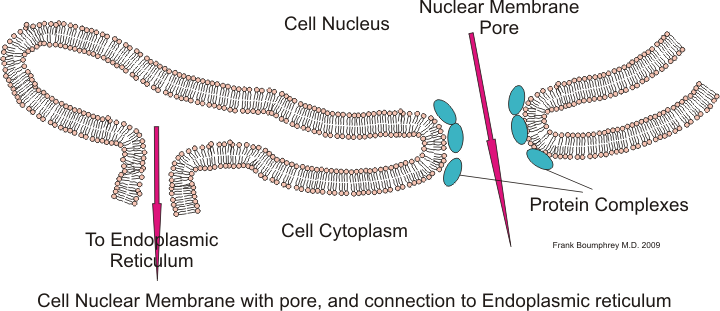
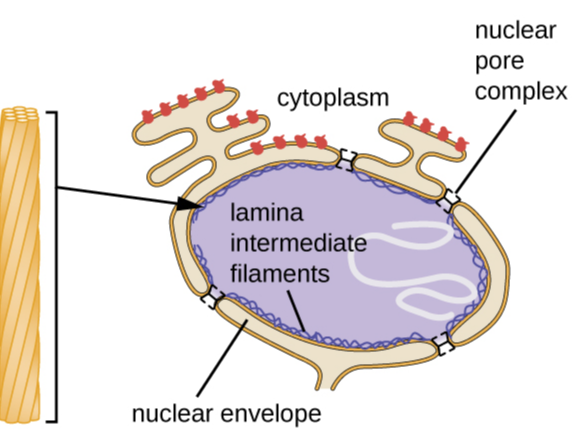
- Nuclear Envelope – has a double membrane, contains nucleoplasm.
- Perinuclear Space – space between membranes.
- Nuclear Pore Complexes – transmit traffic between nucleoplasm and cytosol.

- Nucleoplasm – similar to the cytoplasm of the cell, but in this case it contains DNA and proteins.
- Nucleolus – contains machinery necessary for assembling ribosomal RNA (rRNA); then, rRNA is exported through the nuclear pores to the cytoplasm to be part of ribosomes.
- Recall that ribosomes are made of rRNA and proteins!
- No chromosomes are found here.
- Nuclear Lamina – close to inner nuclear membrane, gives nucleus shape and mechanical support.
- Meshwork of lamins which are intermediate filaments proteins.
- Make up chromosome attachment sites for organizing nuclear contents.
Adapted from photo by CNX OpenStax / CC BY

- Nuclear Matrix – framework of fibers throughout nucleus, somewhat similar to cell's cytoskeleton.
The Endoplasmic Reticulum (ER)
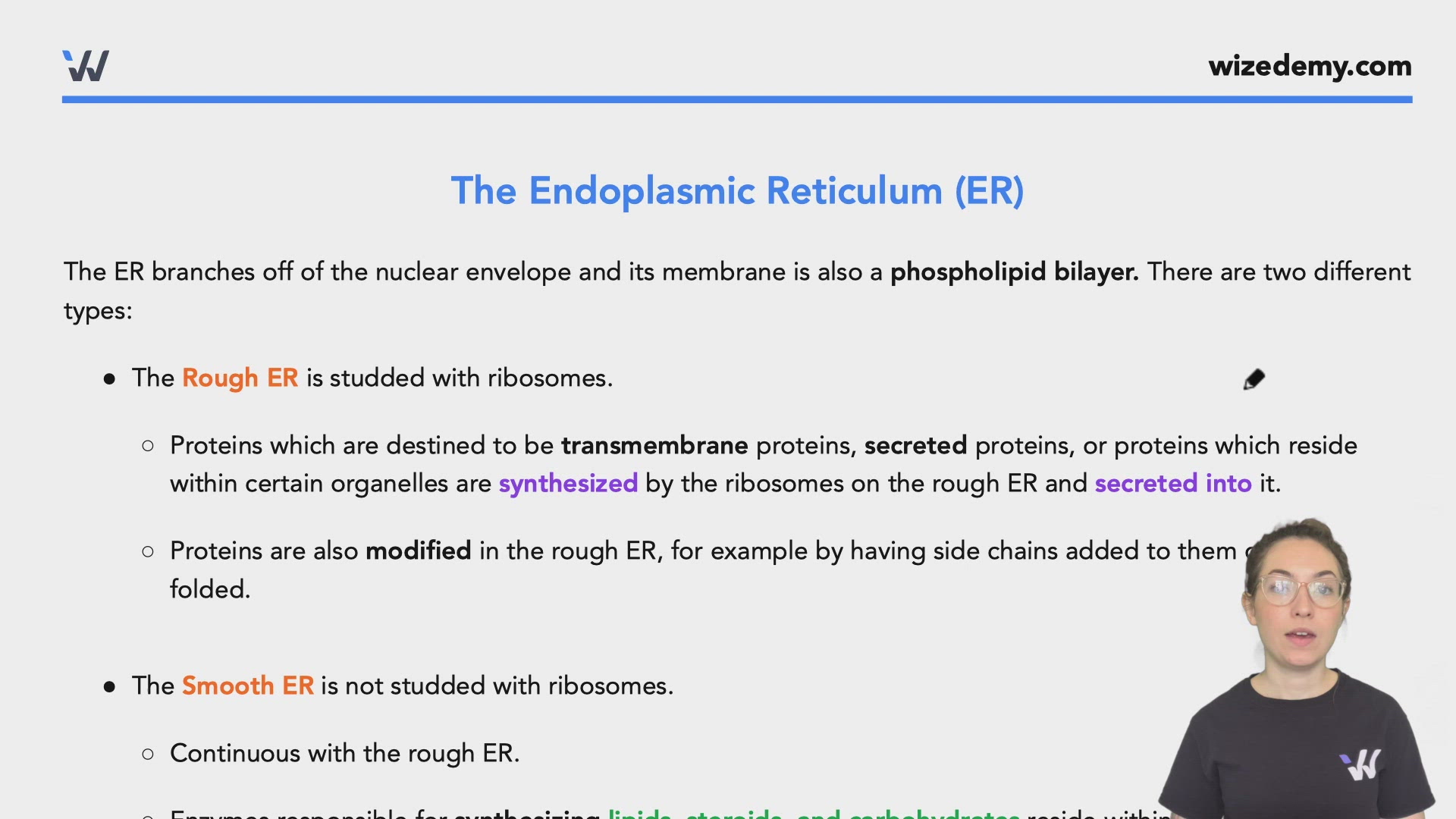
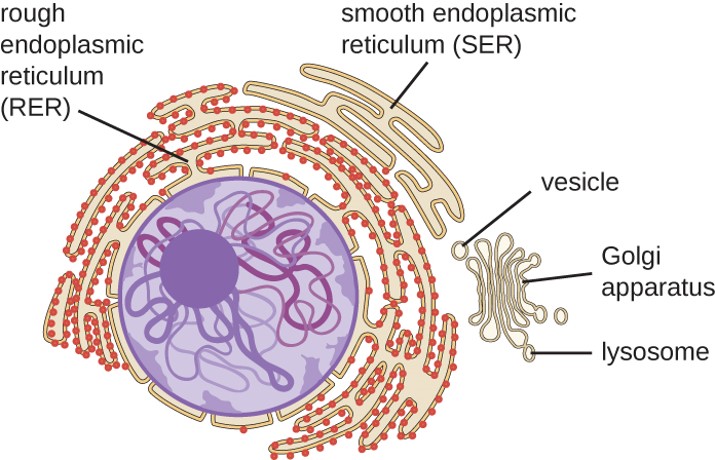
The ER branches off of the nuclear envelope and its membrane is also a phospholipid bilayer. There are two different types:
- The Rough ER is studded with ribosomes.
- Proteins which are destined to be transmembrane proteins, secreted proteins, or proteins which reside within certain organelles are synthesized by the ribosomes on the rough ER and secreted into it.
- Proteins are also modified in the rough ER, for example by having side chains added to them or being folded.
- The Smooth ER is not studded with ribosomes.
- Continuous with the rough ER.
- Enzymes responsible for synthesizing lipids, steroids, and carbohydrates reside within the smooth ER which is the location of their production.
- Can also do detoxification of drugs or poisons.


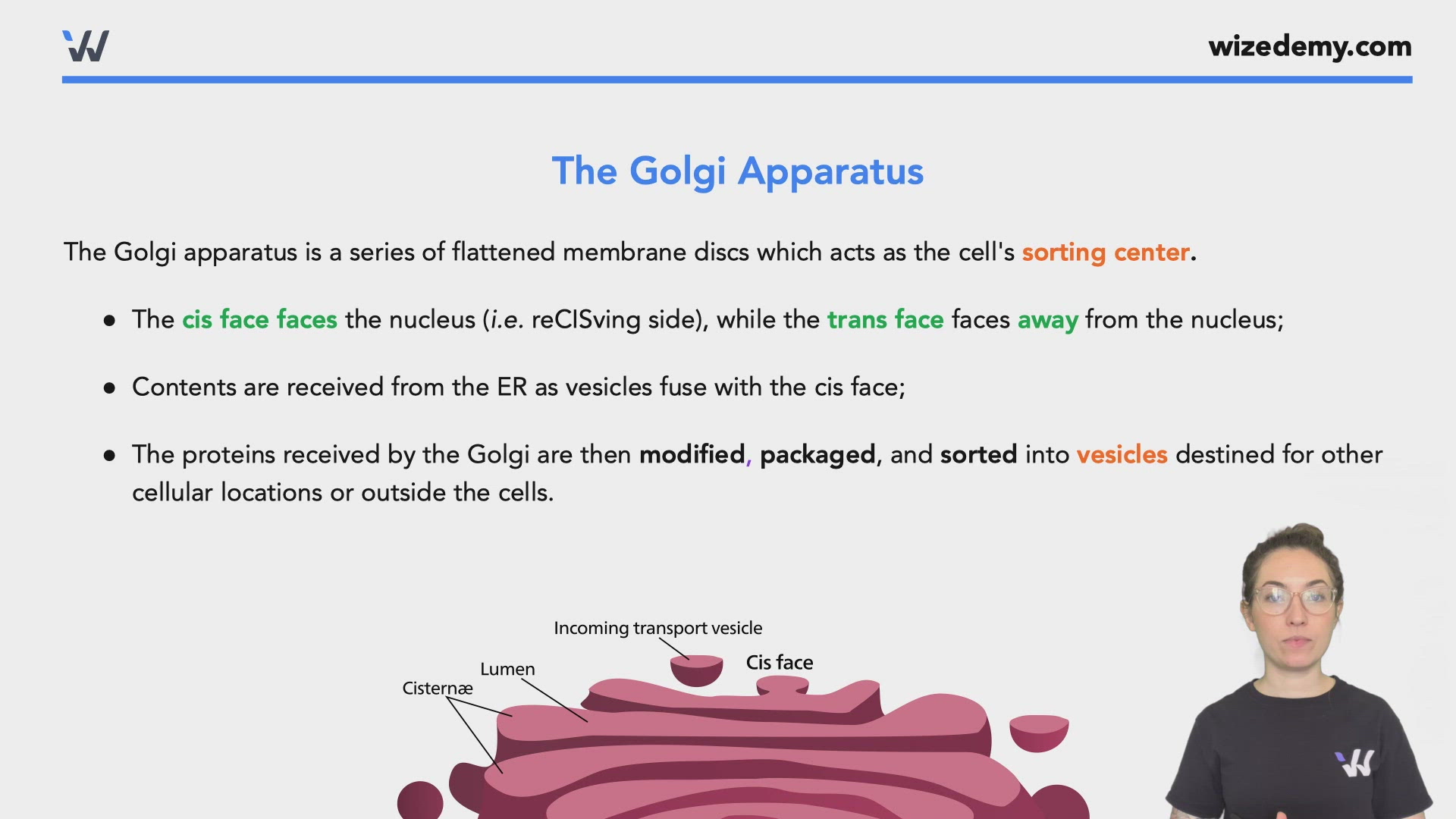
The Golgi Apparatus
The Golgi apparatus is a series of flattened membrane discs which acts as the cell's sorting center.
- The cis face faces the nucleus (i.e. reCISving side), while the trans face faces away from the nucleus;
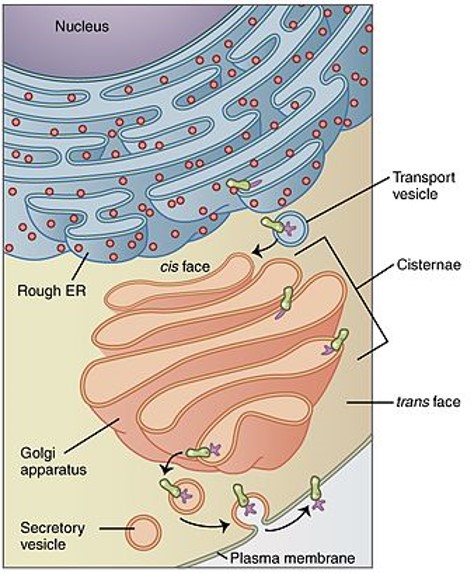
- Contents are received from the ER as vesicles fuse with the cis face;
- The proteins received by the Golgi are then modified, packaged, and sorted into vesicles destined for other cellular locations or outside the cells.



Lysosomes, Vacuoles, and Vesicles
- Lysosomes contain digestive enzymes and have a low pH.
- They fuse with vesicles that have taken contents into the cell through endocytosis, allowing the ingested components to be broken down. Example: bacteria that are taken up by immune cells are broken down in lysosomes.
- Vacuoles store water and waste products in plant cells; they cannot merge with the cell membrane.
- Vesicles are membrane-bound compartments that transport cellular contents between organelles and in/out of the cell.

The Cell Membrane
Vesicles from the Golgi fuse with the cell membrane, allowing for the contents to be released outside of the cell and membrane proteins to be embedded in the cell membrane.
- It envelopes the cell's contents.
- It is the site of endocytosis and exocytosis.
Example: Vacuoles vs Vesicles
What is the difference between vacuoles and vesicles?
Vesicles - carriers. They take things from one area to another using the cytoskeleton.
Vacuoles - storers and "processers". They can hold material for the cell such as water and some also have enzymes that breakdown molecules.