DNA Replication in Cells
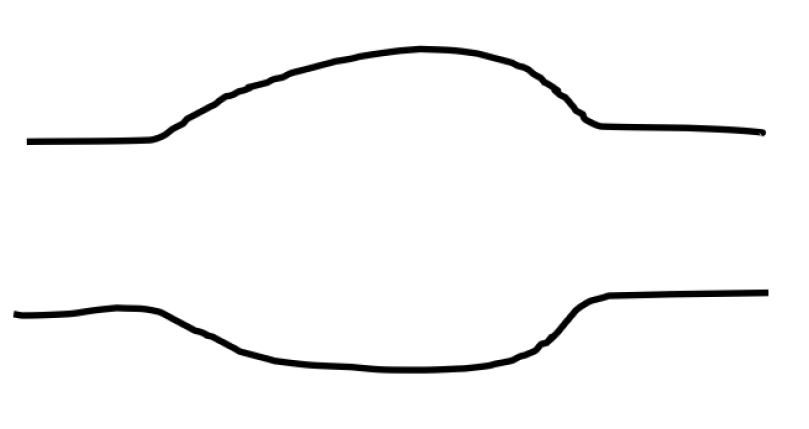
Because DNA within eukaryotic cells is very large, the two strands are not completely separated prior to replication. Instead, replication begins at specific locations designated origins of replication.
- The replication bubbles extend out and eventually the multiple new strands of DNA meet one another and come together to form a brand new strand.
- Prokaryotic chromosomes have one origin of replication and eukaryotic chromosomes have multiple.
- DNA replication is semi-conservative: the newly double stranded DNA contains one strand from the original DNA and one newly synthesized strand.

- The origin of replication in prokaryotes has a special name and is called Ori.
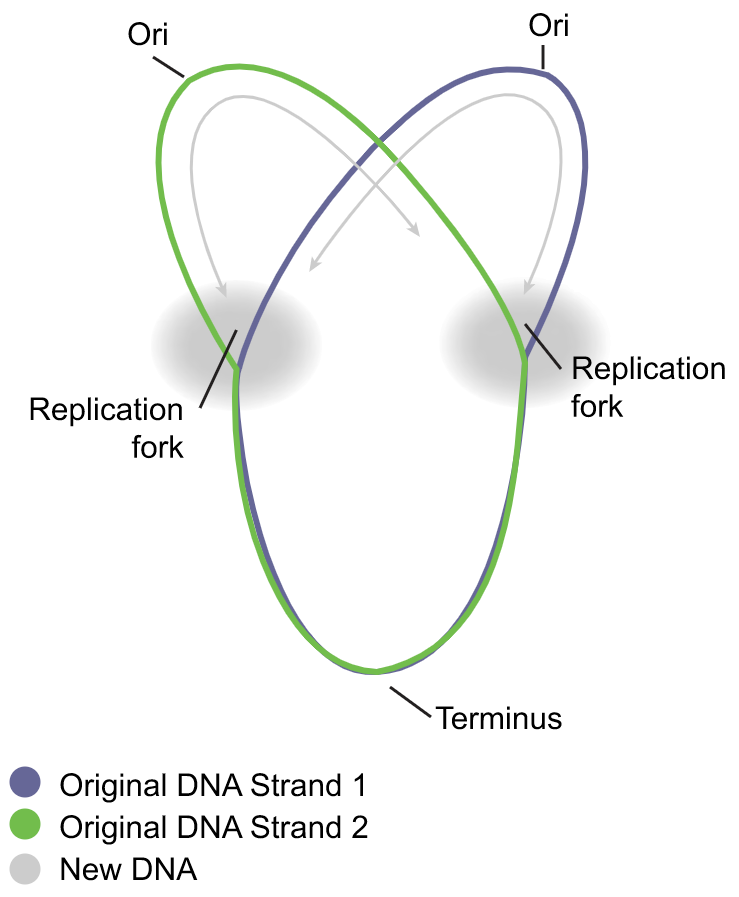
Synthesis of New DNA: Prokaryotic Cells Example
- At the origin of replication, the enzyme helicase begins to unwind the DNA, leaving two anti-parallel strands and creating a replication fork. There are single stranded binding proteins (ssb) that keep the strands apart.
- Topoisomerase is responsible for "relaxing" the supercoiling of DNA.
- The enzyme responsible for grabbing new nucleotides and matching them to the original DNA to create a new strand is DNA polymerase III.
- It can only bind to the parental DNA and start creating a new strand if there is an RNA primer (short RNA sequence) bound to the original strand. This primer is created by an enzyme called primase.
- It can only read DNA in the 3' to 5' direction and creates a new strand in the 5' → 3' direction)
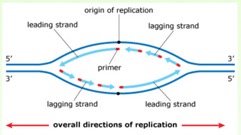
- However, DNA goes both ways (3' to 5' is matched with 5' to 3'); therefore, for one strand the polymerase will move towards the replication fork (leading strand), and for the other strand the polymerase will be moving away from the replication fork (lagging strand).
- Sliding clamp protein tethers DNA polymerase to the strand and replication continues until the adjacent replication bubble is met.
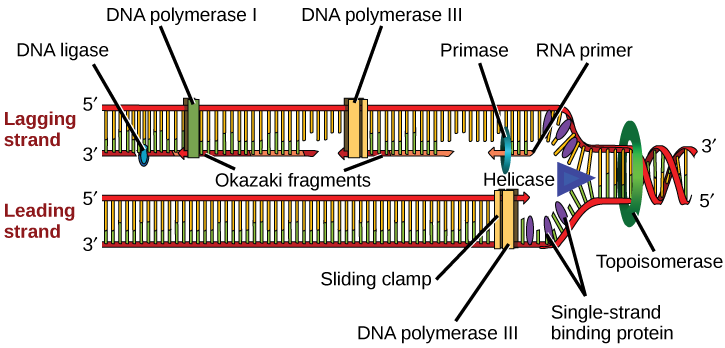
- Leading strand: As the helicase unwinds the DNA at the replication fork, the DNA polymerase III for the leading strand will continue adding more nucleotides to the newly forming strand.
- Lagging strand: The newly exposed parental DNA at the replication fork will require a new primer and DNA polymerase III in order for that region to be replicated. The lagging strand, thus, has multiple primers and polymerases that are added as the DNA unwinds, creating Okazaki Fragments.
- DNA polymerase I removes the primer and replaces it with deoxyribonucleotides and a DNA Ligase moves along the lagging strand and ties the Okazaki fragments together.
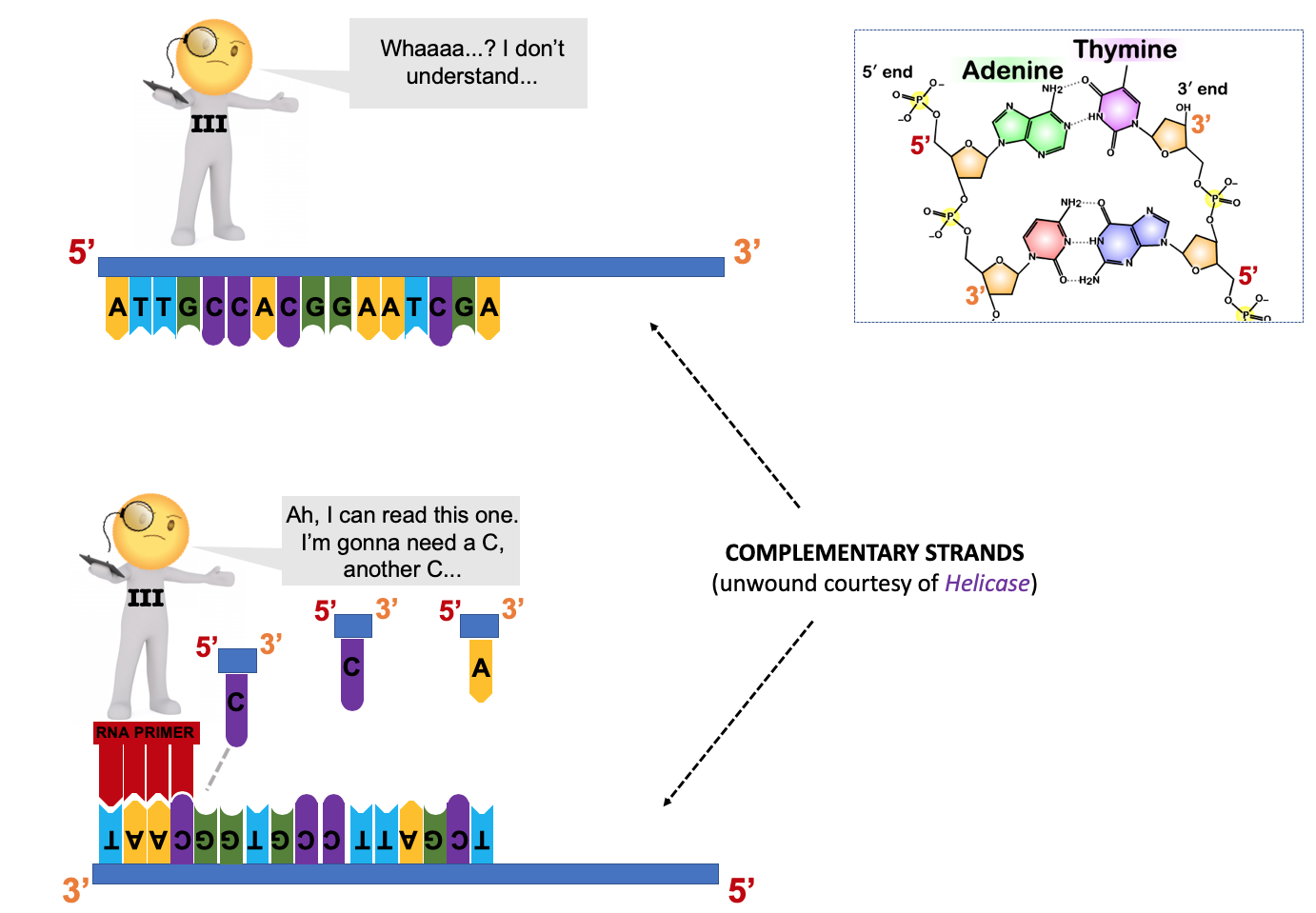


Example: Leading and Lagging Strands
Label the following diagram and include the DNA strand directionalities.

Example: Complete the Replication Bubble
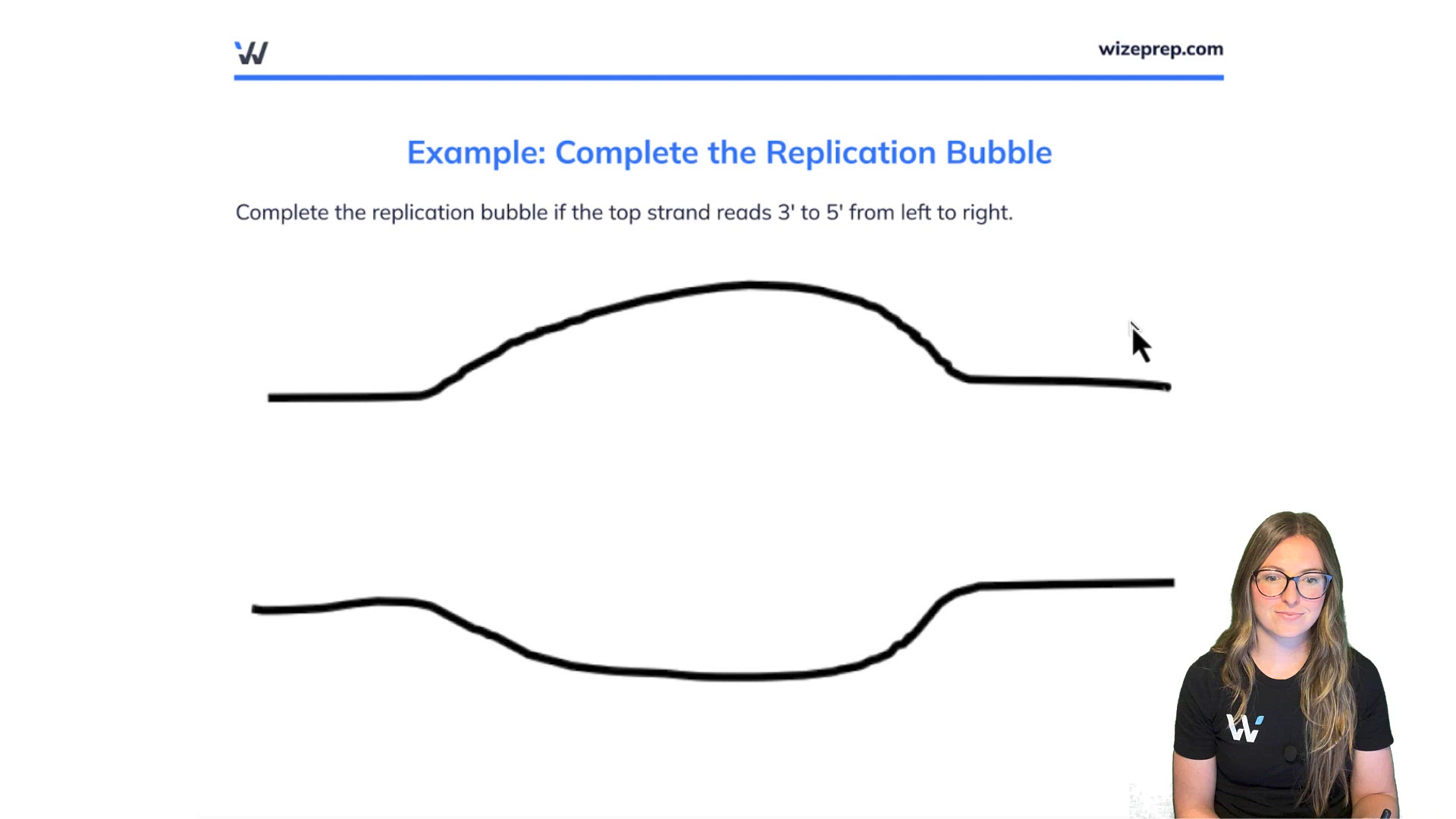
Complete the replication bubble if the top strand reads 3' to 5' from left to right.