Wize University Biology Textbook > Gene Expression & Regulation
Eukaryotic Post-Transcriptional Regulation
Popular Courses
MCAT
General Course
Biology
General Course
General Biology
University Study Guides
BIOLOGY 1002B
Western University
Grade 12 Biology
Canada High School
DAT
General Course
BIOL 200
McGill University
General Biology
University Study Guides
SC/BIOL 1000 3.00
York University
BIOL 200
University of British Columbia
BIOL 311
University of Calgary
BLG 143
Toronto Metropolitan University
BIOLOGY 2581A/B
Western University
BIOL 112
McGill University
BIOL-1101
University of Windsor
BIOL 1201
Western University
BIOL 1P91
Brock University
BS 161
Michigan State University
BIOL 331
University of Calgary
BIOL 1020
University of Manitoba
0:00 / 0:00
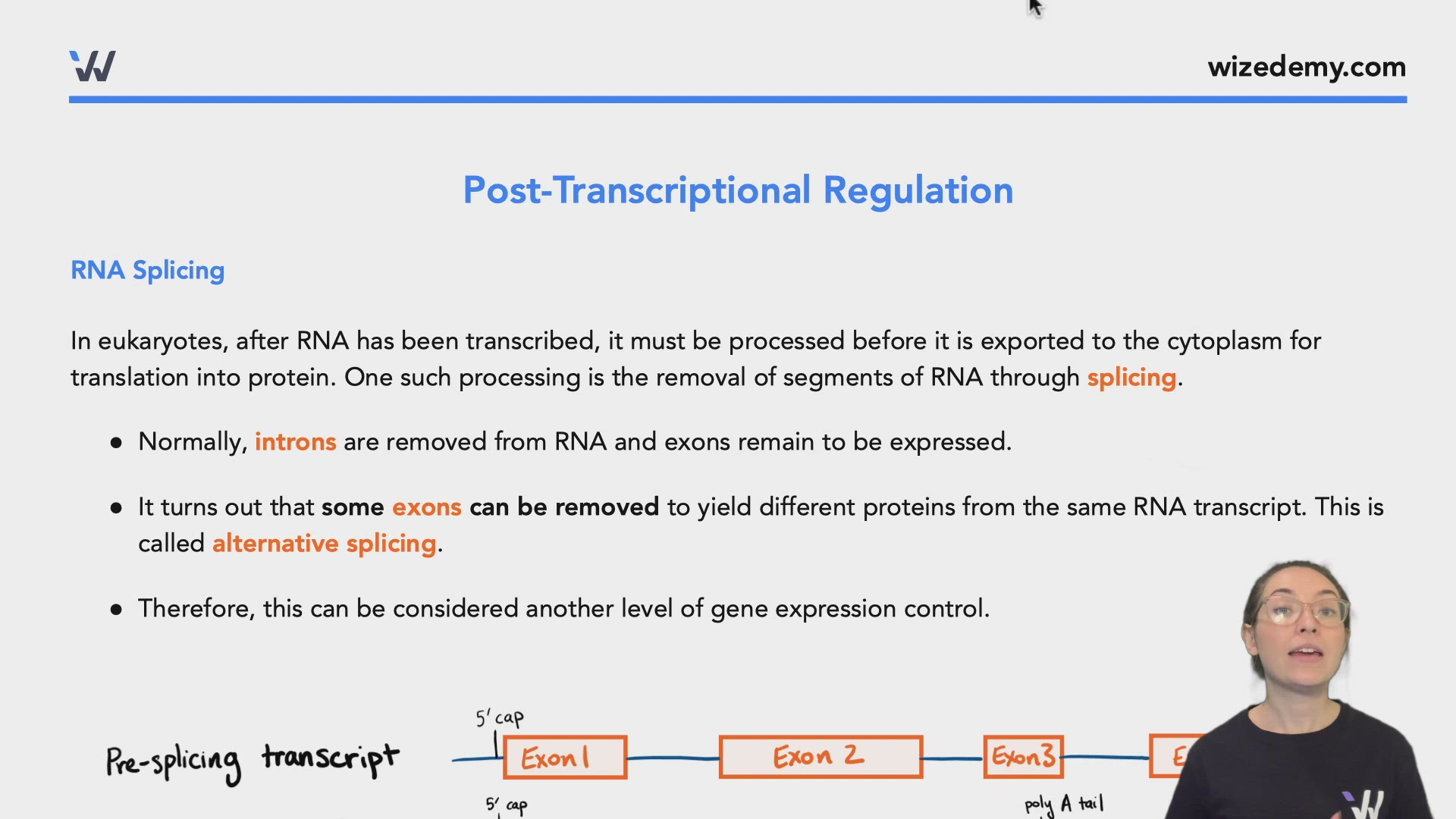
Post-Transcriptional Regulation
RNA Alternative Splicing
In eukaryotes, after RNA has been transcribed, it must be processed before it is exported to the cytoplasm for translation into protein. One such processing is the removal of segments of RNA through splicing.
- Normally, introns are removed from RNA and exons remain to be expressed.
- It turns out that some exons can be removed to yield different proteins from the same RNA transcript. This is called alternative splicing.
- Therefore, this can be considered another level of gene expression control.

RNA Stability
RNA processing also includes the addition of a 5' cap and a poly-A tail to increase its stability and prevent it from degradation before it gets to be translated.
- RNA will inevitably still be degraded. If it degrades very quickly (unstable), little protein can be produced from it.
- RNA-binding proteins (RBPs) can bind to RNA (specifically, to the untranslated regions (UTRs)) to control stability.
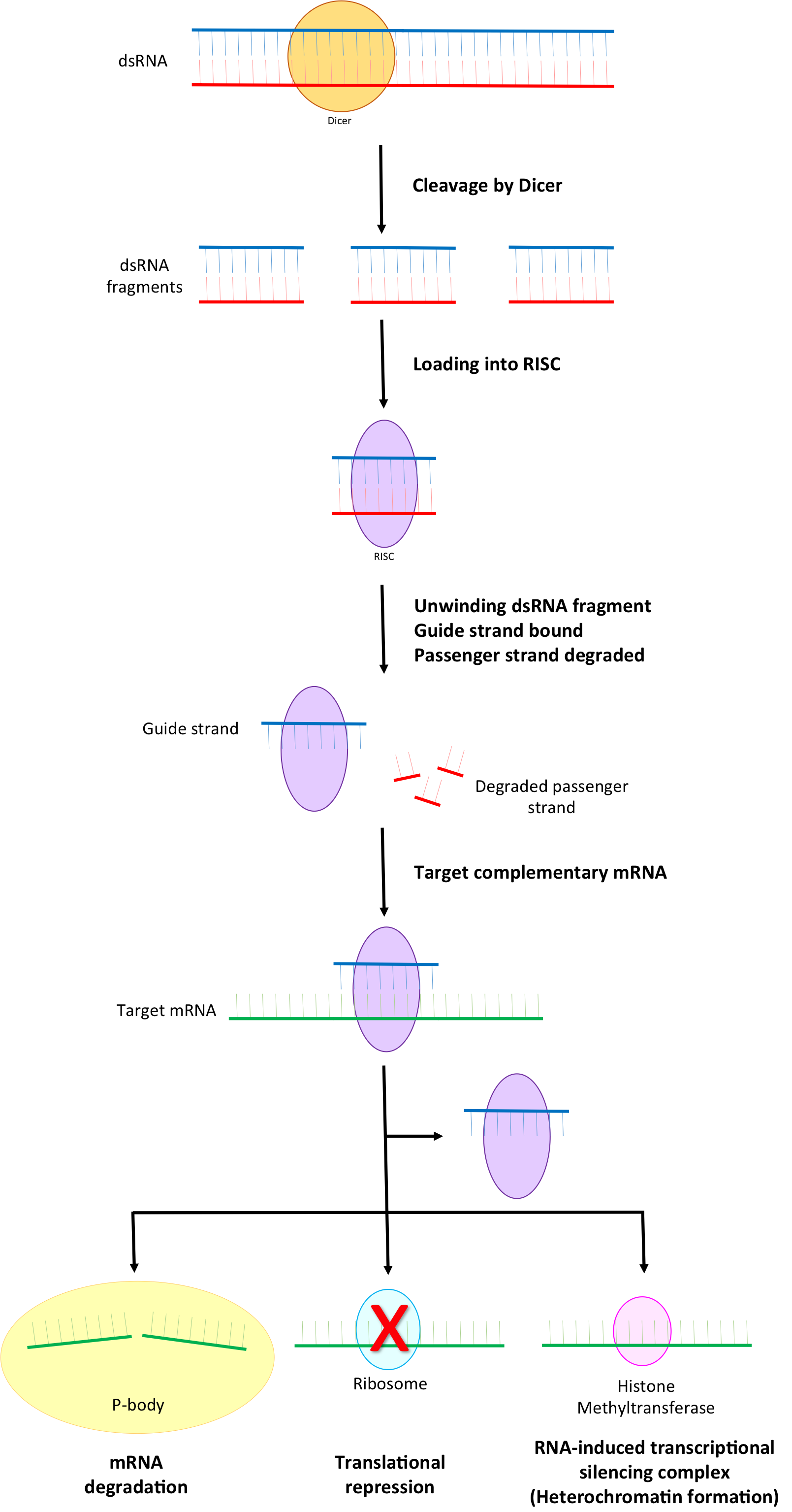
- MicroRNAs (miRNAs) are short RNAs that can bind to protein-coding RNA to be block translation or tag it for destruction by the RNA-induced silencing complex (RISC).
- Short interfering RNAs (siRNAs) work similarly to miRNAs.
Practice: Alternative Splicing
Alternative splicing is...
Practice: Post-Transcriptional Regulation Mechanisms
Which of the following is true?