Wize University Biology Textbook > DNA Replication & Repair
DNA Structure and Sequence
Popular Courses
MCAT
General Course
BIOLOGY 1001A
Western University
Biology
General Course
General Biology
University Study Guides
BIOL 107
University of Alberta
BIOL 102
Queen's University
BIOL 112
University of British Columbia
Grade 12 Biology
Canada High School
DAT
General Course
High School Biology
US High School
BIOL 200
McGill University
BIOL 121
University of British Columbia
BIOL*1090
University of Guelph
BIO120H1
University of Toronto
General Biology
University Study Guides
BIOL 130
University of Waterloo
SC/BIOL 1000 3.00
York University
BIOL 111
McGill University
BIOL 311
University of Calgary
BIO 1141
University of Ottawa
0:00 / 0:00
Review of DNA Structure
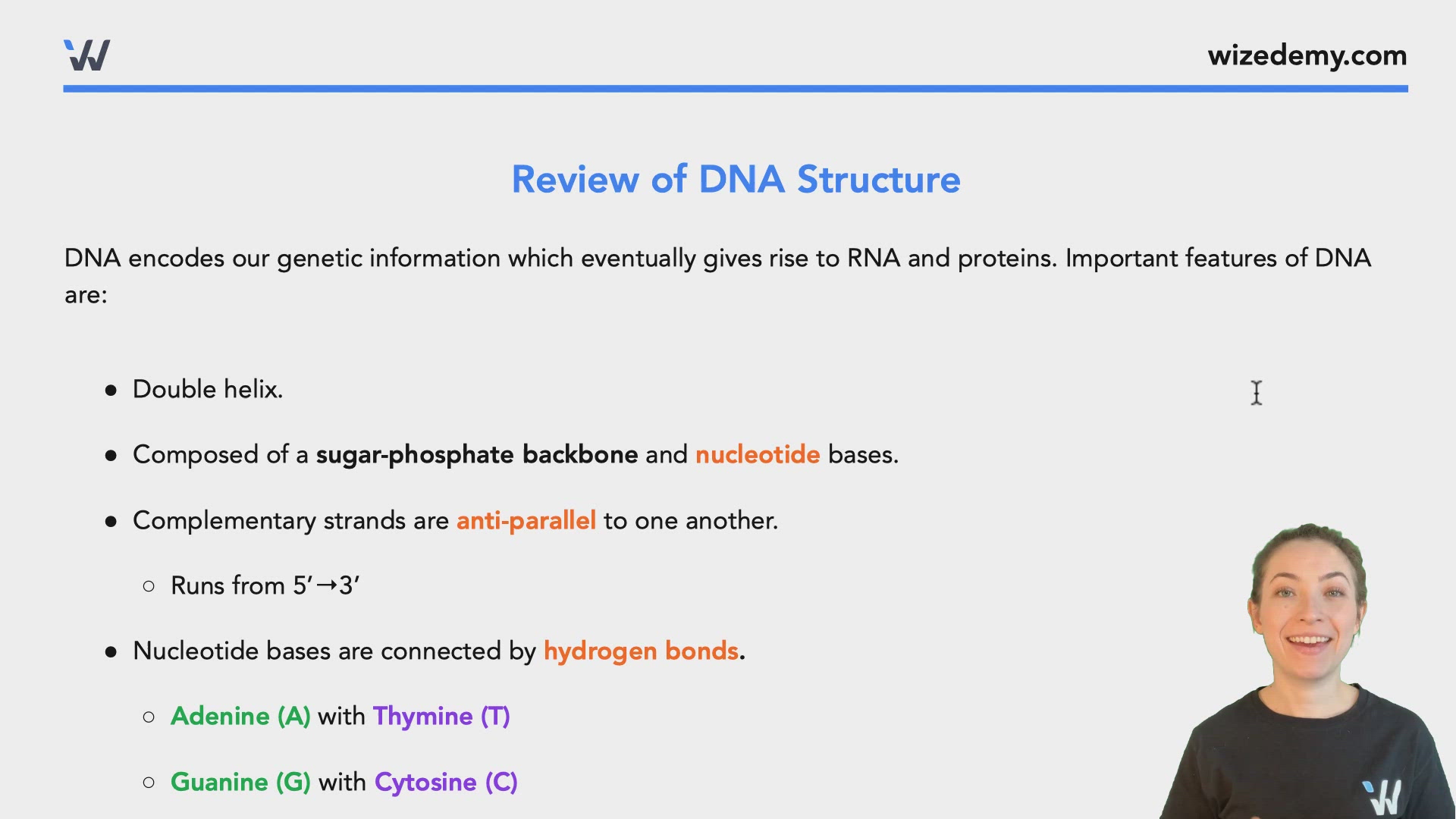
DNA encodes our genetic information which eventually gives rise to RNA and proteins. Important features of DNA are:
- Double helix.
- Composed of a sugar-phosphate backbone and nucleotide bases.
- Complementary strands are anti-parallel to one another.
- Runs from 5’→3’
- Nucleotide bases are connected by hydrogen bonds.
- Adenine (A) with Thymine (T)
- Guanine (G) with Cytosine (C)
- Purines hydrogen bond with pyrimidines:
- Purines = A & G
- Pyrimidines = T & C
- In RNA, Uracyl (U) replaces T
- C and G have 3 hydrogen bonds between one another, while A and T have only two.
- This makes the bonds between C and G harder to break, requiring more energy (i.e. higher temperature).
Wize Tip
Remember the mnemonic below to memorize which nucleotides are purines and which are pyrimidines:
- CUT the Py = Cytosine, Uracil and Thymine are Pyrimidines.
- Pure As Gold = Purines are adenine and Guanine.

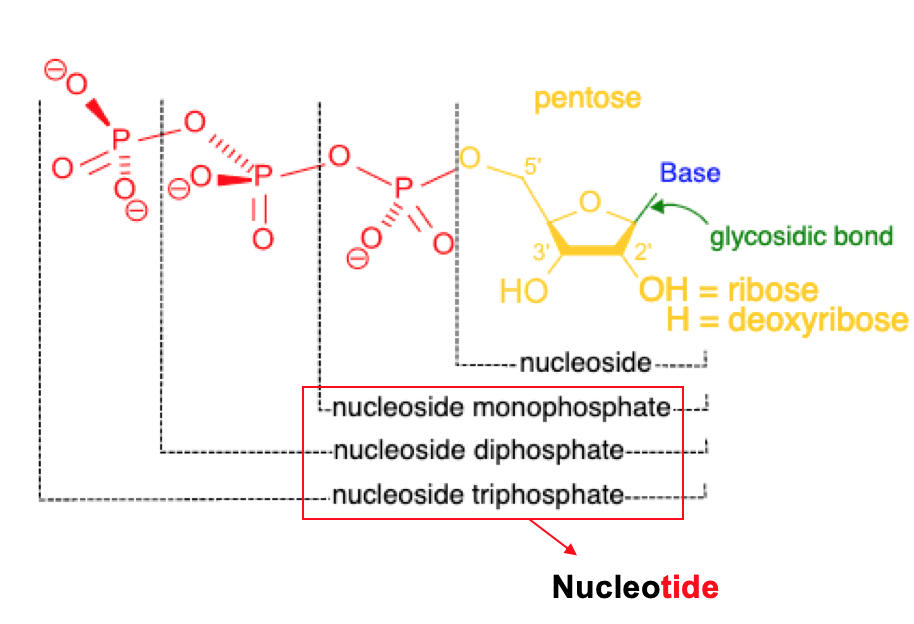
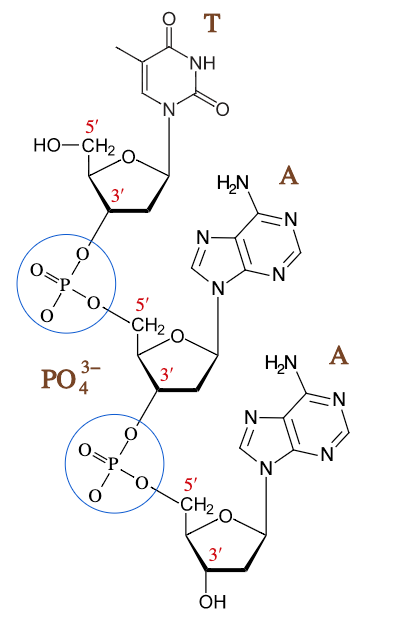
How is the DNA backbone elongated?
- Phosphodiester bonds form between the 3' -OH group of one nucleoside to the 5' phosphate group of an incoming nucleoside.
Practice: Levels of DNA Structure
Select the three levels of DNA structure.
Practice: Nucleotide Base Pairing
Which of the following is the correct 5' to 3' sequence of the complimentary strand to: 5'-AGGTCTGATTCGTA-3' ?